


More than 2.6 million girls remain barred from secondary education, while population growth, inadequate funding and rising enrollment pressures further strain Afghanistan's already fragile school system.
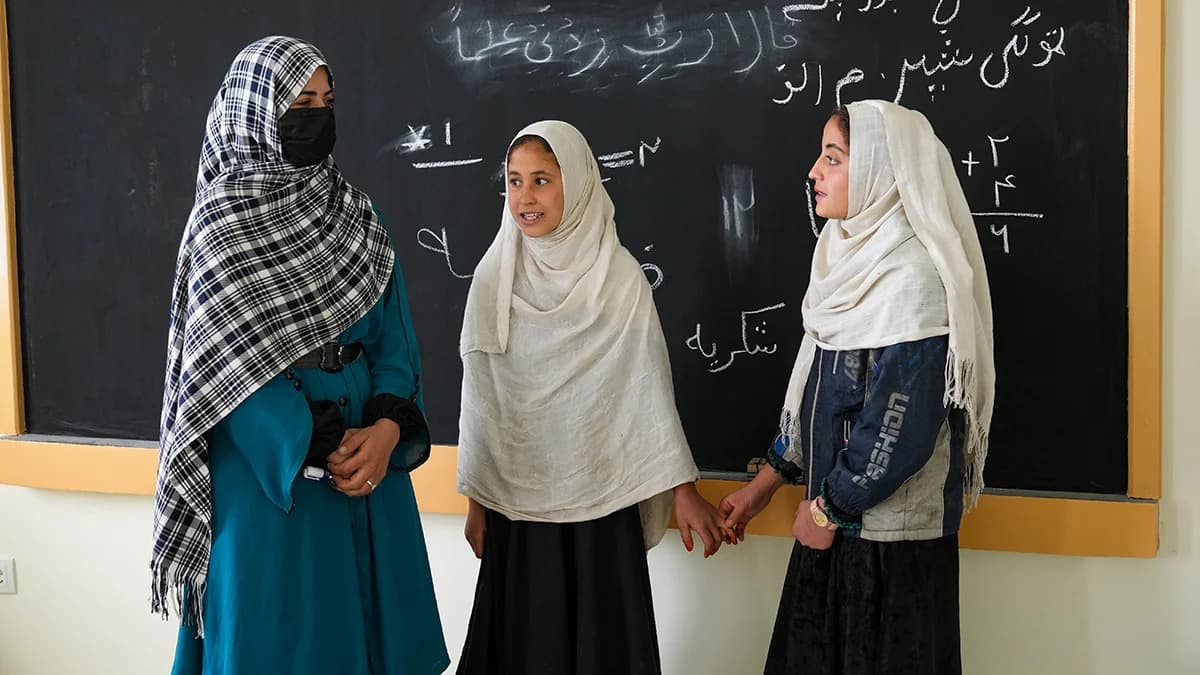
Afghanistan's education crisis has left more than 2.6 million girls without access to secondary education, while women remain barred from universities, according to a new report published by UNESCO and UNICEF.
The report warns that growing educational restrictions and pressure on an already strained school system are putting an entire generation at risk.

The Afghanistan Education Situation report for 2026 highlights a widening gap between families' demand for education and the country's ability to provide adequate learning opportunities.
Population growth, recurring emergencies, insufficient investment and the large-scale return of Afghans from neighboring countries have further intensified the pressure on educational institutions.
The United Nations agencies warned that the situation could have serious consequences for Afghanistan's future recovery and development unless urgent measures are taken. Despite the restrictions and limited access to schools, families across the country continue to seek educational opportunities for their children.
Afghanistan's girls continue to face secondary education ban
The report said that girls have been prohibited from attending school beyond sixth grade since the Taliban returned to power in August 2021. More than 2.6 million girls have been affected by the restriction, leaving teenage girls without access to formal secondary education.
Women also remain excluded from universities, further limiting their opportunities to pursue higher education and professional careers. Although higher education enrollment has recorded a slight increase, the overall number of students remains considerably lower than before the restrictions.
Around 208,000 students are enrolled in higher education institutions in 2026, compared with 189,000 in 2024. However, the figure remains significantly below the approximately 430,000 students enrolled in 2020, the report noted.
Some alternative learning opportunities are still available to teenage girls. These include community-based education, literacy and skills development programs, distance and digital learning, and private tutoring.
However, UNESCO and UNICEF stressed that these arrangements cannot provide an adequate substitute for formal schooling. The report described the available alternatives as "far from sufficient" and emphasized that they cannot replace in-person education or fulfill girls' fundamental right to formal learning.
Growing student population adds pressure on education system
The country's expanding school-age population has added to the challenges facing an education system already struggling with limited resources and infrastructure. The report noted that the number of children aged 7 to 18 increased from approximately 10.4 million in 2019 to 11.5 million in 2024.
This growth has increased demand for schools, teachers and other educational services. However, the existing system has struggled to expand at a pace that can accommodate the rising number of children requiring education.
The situation has been further complicated by recurring emergencies, inadequate funding and the return of large numbers of Afghans from neighboring countries, particularly Pakistan and Iran.
More than one million Afghans returned to the country in 2026 alone, including over 245,000 children. Their arrival has placed additional pressure on an education system that is already facing difficulties in providing sufficient learning opportunities.
The report also highlighted the difference between demand for education and the system's ability to accommodate students, stating, "Afghanistan’s education situation in 2026 is defined by a widening mismatch between strong demand for learning and the capacity of the education system to meet it."
Boys' school enrollment also declining
Although restrictions on girls' education remain the most severe concern, boys are also experiencing declining participation in formal education, according to the report.
Approximately 53% of primary school-age children remain outside formal general education. Participation also remains limited at higher school levels, with the reported figures standing at 67% for lower-secondary education and 79% for upper-secondary education.
The report pointed to an increasingly restricted progression from primary schooling to secondary education, higher studies, skills development and employment opportunities.
It also raised concerns about incomplete information regarding private schools, Islamic educational institutions and alternative learning arrangements. The lack of comprehensive data makes it difficult to assess the full extent of educational access and participation across the country.
Community-based education continues to provide some learning opportunities, particularly for girls who cannot attend formal schools. Approximately 5,300 community-driven classes currently serve around 162,000 learners, with girls accounting for 64% of participants.
However, the United Nations agencies emphasized that these programs cannot compensate for the loss of access to regular schooling. The report's authors stated that "nothing can replace in-person schooling and substitute for their fundamental human right to formal education.”
Afghan families continue to seek education for children
Despite restrictions on girls and growing pressure on schools, families across Afghanistan continue to demonstrate strong interest in education. The report noted that parents are still looking for learning opportunities for their children, including in areas where access to formal schools remains limited.
It emphasized that the exclusion of girls from secondary education is not a result of declining interest among families. Instead, restrictions and limitations in educational facilities have prevented many children from accessing the schooling they need.
A nationwide UN Women survey conducted in 2025 found that 92% of respondents considered secondary education for girls important. Support for girls' education was recorded among both women and men, as well as across rural and urban communities.
Evidence from education programs also indicates that families and local communities continue to support learning opportunities for girls.
However, participation often depends on several factors, including the distance to learning centers, safety, availability of female teachers and access to socially acceptable educational environments.
The report highlighted these challenges, stating, "Barriers to participation reflect both household circumstances and limitations in education provision," the document said.
It further warned that the continued exclusion of girls and women from formal education could gradually weaken Afghanistan's future female professional workforce.
Limited access to secondary and higher education reduces opportunities for women to acquire advanced qualifications and develop skills required for professional careers.
Primary school enrollment rises, but learning outcomes remain weak
The report also recorded an increase in public primary school enrollment, although the growth has not been sufficient to keep pace with the country's expanding child population.
Approximately 6.6 million children enrolled in public primary schools in 2025, representing an increase of around 560,000 students compared with 2022.
Despite the rise, UNESCO and UNICEF noted that enrollment growth has not matched the rate of population expansion. This has added to concerns about the education system's capacity to accommodate all school-age children.
Alongside access to education, the report emphasized the need to improve the quality of classroom instruction, strengthen teacher capacity and provide adequate learning materials.
A nationwide assessment found that fewer than half of fourth-grade students achieved minimum proficiency in language among children aged 8 to 9 years. The findings point to continuing gaps in foundational learning and the need for greater investment in teaching and classroom resources.
The agencies also highlighted the importance of addressing challenges across different stages of education, as limited access to secondary schooling and universities is narrowing opportunities for further studies, skills development and employment.
UN agencies call for restoration of education rights
UNESCO and UNICEF have called for the full restoration of the right to education for girls and women in Afghanistan. They have also urged authorities to remove barriers affecting access to education and the quality of learning.
The agencies warned that the continuing exclusion of millions of girls from secondary schools and universities, combined with growing pressure on educational infrastructure, could have long-term consequences for the country's development.
The report highlighted that more than half of Afghanistan's primary school-age children remain outside formal education, while millions of girls are unable to pursue secondary and higher studies.
It cautioned that without urgent action to address these challenges, an entire generation could lose access to essential educational opportunities, undermining Afghanistan's future recovery, social progress and economic development.

Australia launches free disability resources to help teachers build inclusive classrooms

Australia’s Murri school students turn coffee into career opportunities

What makes oxoboranes so difficult to isolate? Scientists find an answer after 60 years

JEE Main 2027: NTA Introduces Special Registration Option for NRI Candidates Without Aadhaar

Want to learn AI? IIT Roorkee opens registrations for 6-week winter training programs
Australia launches free disability resources to help teachers build inclusive classrooms
What makes oxoboranes so difficult to isolate? Scientists find an answer after 60 years
Want to learn AI? IIT Roorkee opens registrations for 6-week winter training programs
NMC Warns Students Against Fake Medical Colleges, Urges NEET Aspirants to Verify Admission Offers
Generation at risk: UN warns of deepening education crisis in Afghanistan

Australia launches free disability resources to help teachers build inclusive classrooms
Australia’s Murri school students turn coffee into career opportunities
What makes oxoboranes so difficult to isolate? Scientists find an answer after 60 years
JEE Main 2027: NTA Introduces Special Registration Option for NRI Candidates Without Aadhaar
Want to learn AI? IIT Roorkee opens registrations for 6-week winter training programs
Australia launches free disability resources to help teachers build inclusive classrooms
What makes oxoboranes so difficult to isolate? Scientists find an answer after 60 years
Want to learn AI? IIT Roorkee opens registrations for 6-week winter training programs
NMC Warns Students Against Fake Medical Colleges, Urges NEET Aspirants to Verify Admission Offers
Generation at risk: UN warns of deepening education crisis in Afghanistan
Copyright© educationpost.in 2026 All Rights Reserved.