


The research explains the chemical instability of these compounds, identifying the molecular interactions that prevent their isolation and have challenged scientists for decades.
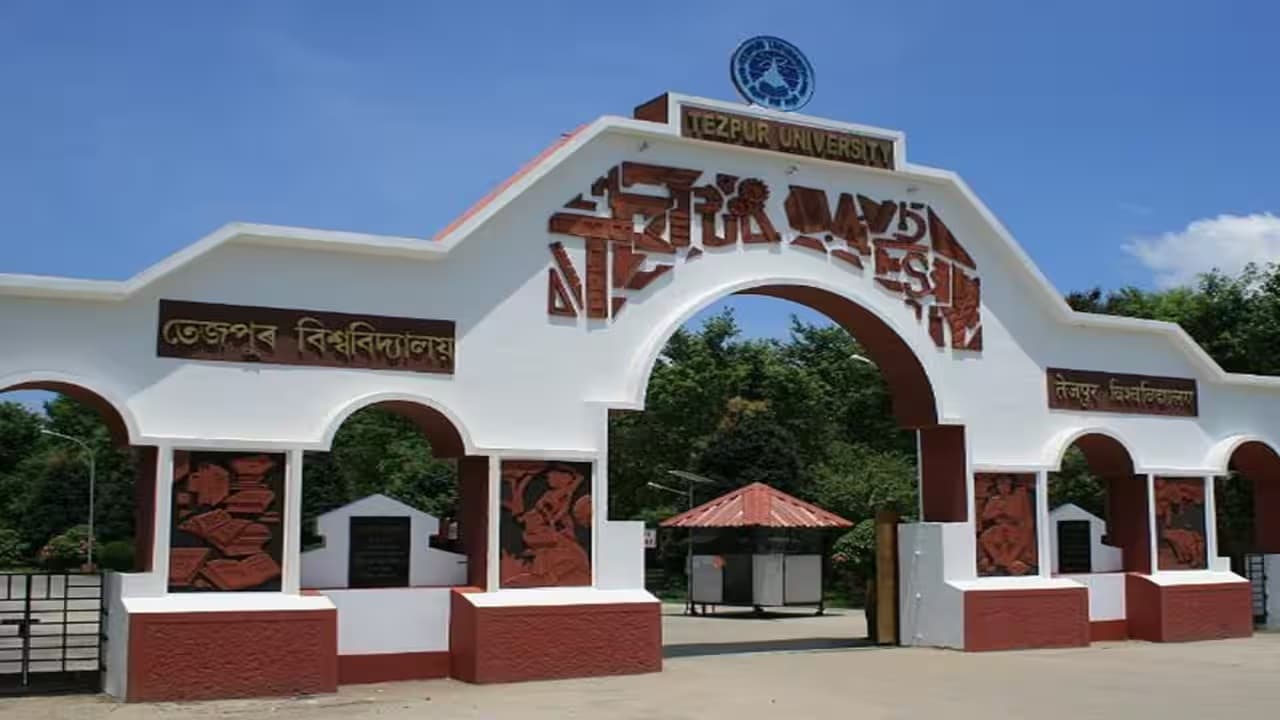
Researchers from Assam's Tezpur University have contributed to an international chemistry breakthrough that resolves a scientific challenge pursued for more than 60 years.
A team led by Professor Ashwini K Phukan provided computational support to researchers at Germany's University of Würzburg in developing a method to prepare and isolate stable oxoboranes, unusual chemical compounds that scientists had struggled to obtain since the early 1960s.

The findings, published in the journal Nature Chemistry, demonstrate how relatively simple chemical reactions can produce molecules previously considered too unstable to isolate.
The discovery could create new opportunities to investigate unusual chemical bonds and develop compounds that have remained inaccessible to researchers.
The international collaboration combined experimental research conducted in Germany with computational chemistry expertise from India. It also highlights the contribution of Indian scientists to fundamental research addressing long-standing questions in chemistry.
What are oxoboranes and why were they difficult to isolate?
Oxoboranes are chemical compounds characterized by a triple bond between boron and oxygen atoms. Although triple bonds are well established in chemistry, forming one involving boron presents considerable challenges because of the element's chemical properties.
For more than six decades, chemists worldwide have attempted to prepare and isolate stable organic oxoboranes. However, producing these molecules in a form that could be separated and examined under laboratory conditions remained difficult.
Scientists had previously detected oxoboranes under extreme experimental conditions and inferred their presence through different chemical reactions. They had also developed related compounds, but obtaining stable examples suitable for detailed laboratory investigations continued to elude researchers.
The challenge formed part of a broader scientific effort to understand unusual chemical bonds involving boron. Professor Holger Braunschweig and his research group at the University of Würzburg had already achieved two major milestones in this area.
In 2012, the researchers reported the first molecule containing a boron-boron triple bond. Their work progressed further in 2025 when they announced the first neutral molecule featuring a boron-carbon triple bond.
The latest discovery adds another achievement to these efforts by demonstrating a method to isolate oxoboranes containing a boron-oxygen triple bond.
Unexpected chemical reaction leads to oxoborane discovery
The breakthrough emerged during experiments involving a chemical compound known as diboracumulene and different ketones, which are commonly used in organic chemistry.
University of Würzburg doctoral researchers Lukas Lubczyk and Christian Markl independently noticed unusual orange and yellow solid materials forming during their respective experiments.
Further examination established that the unexpected products were oxoboranes. The reactions had produced these previously elusive compounds as their main products.
The observation surprised the researchers because they had initially considered several other possible reaction pathways more likely. Instead, the desired molecules formed spontaneously during the experiments.
Another important finding was that the resulting oxoboranes remained stable long enough to be isolated and examined. This made it possible for the researchers to study compounds that had remained difficult to obtain for decades.
Using the newly identified reaction method, the team successfully prepared three different oxoboranes. The result indicates that the approach could potentially be extended to produce other compounds belonging to this chemical family.
The discovery also demonstrates that reactions involving relatively accessible starting materials can lead to the formation of unusual molecular structures that were previously difficult to prepare.
How did Tezpur University researchers contribute to the breakthrough?
The international research project involved collaboration with the group led by Professor Ashwini K. Phukan at Tezpur University in Assam. The Indian researchers provided computational support for the experimental investigations conducted by the German team.
Computational chemistry involves using mathematical models, theoretical calculations and computer-based techniques to examine molecular structures, chemical bonding and reaction mechanisms.
Such calculations help scientists understand how atoms interact, predict the behavior of chemical compounds and interpret observations made during laboratory experiments.
In this research, the computational contribution from Tezpur University supported the experimental work and helped advance the investigation into the formation and properties of oxoboranes.
The collaboration brought together the University of Würzburg's expertise in experimental chemistry and Tezpur University's capabilities in computational research. It also demonstrates how researchers from different countries can combine their expertise to address complex scientific questions.
The research received financial support from the German Research Foundation, the German Academic Exchange Service and India's Department of Science and Technology.
What does the oxoborane discovery mean for future chemistry research?
The researchers are now investigating whether the newly developed method can be applied to prepare a wider range of oxoboranes and other unusual chemical compounds.
The successful synthesis of three different oxoboranes provides a starting point for further experiments to understand how broadly the reaction approach can be used.
The findings could expand the range of molecular structures available to scientists studying chemical bonding, molecular stability and the behavior of compounds containing unusual bonds.
Being able to prepare and isolate these molecules under laboratory conditions could also help researchers investigate their properties in greater detail. However, additional studies will be required to establish the broader scientific potential and possible applications of the discovery.
For Tezpur University, the collaboration marks an international research contribution to a scientific challenge that has remained unresolved for more than 60 years.
It also highlights the importance of computational chemistry in supporting experimental discoveries and advancing fundamental scientific research.

Australia launches free disability resources to help teachers build inclusive classrooms

Australia’s Murri school students turn coffee into career opportunities

What makes oxoboranes so difficult to isolate? Scientists find an answer after 60 years

JEE Main 2027: NTA Introduces Special Registration Option for NRI Candidates Without Aadhaar

Want to learn AI? IIT Roorkee opens registrations for 6-week winter training programs
Australia launches free disability resources to help teachers build inclusive classrooms
What makes oxoboranes so difficult to isolate? Scientists find an answer after 60 years
Want to learn AI? IIT Roorkee opens registrations for 6-week winter training programs

NMC Warns Students Against Fake Medical Colleges, Urges NEET Aspirants to Verify Admission Offers

Generation at risk: UN warns of deepening education crisis in Afghanistan

Australia launches free disability resources to help teachers build inclusive classrooms
Australia’s Murri school students turn coffee into career opportunities
What makes oxoboranes so difficult to isolate? Scientists find an answer after 60 years
JEE Main 2027: NTA Introduces Special Registration Option for NRI Candidates Without Aadhaar
Want to learn AI? IIT Roorkee opens registrations for 6-week winter training programs
Australia launches free disability resources to help teachers build inclusive classrooms
What makes oxoboranes so difficult to isolate? Scientists find an answer after 60 years
Want to learn AI? IIT Roorkee opens registrations for 6-week winter training programs
NMC Warns Students Against Fake Medical Colleges, Urges NEET Aspirants to Verify Admission Offers
Generation at risk: UN warns of deepening education crisis in Afghanistan
Copyright© educationpost.in 2026 All Rights Reserved.