


Microsoft inks 12-year deal to inject 4.9M tons of sewage underground, locking away methane and CO₂ in carbon removal push.
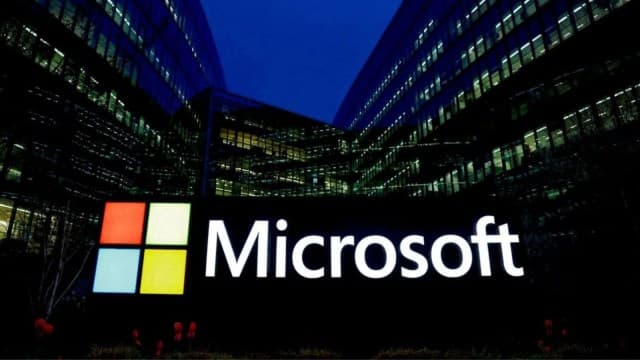
In one of the most unconventional climate bets to date, Microsoft has signed a $1.7 billion deal to bury human and industrial waste deep underground — not for recycling, but to lock away greenhouse gases that would otherwise be released into the atmosphere.
The tech giant’s 12-year agreement with U.S.-based startup Vaulted Deep will see 4.9 million metric tons of organic waste — including sewage sludge, manure, and paper mill byproducts — injected 5,000 feet below the Earth’s surface starting next year. The goal: halt decomposition, and with it, the release of methane and carbon dioxide.

The move underscores Microsoft’s accelerating investment in carbon removal technologies as it races toward its ambitious goal of becoming carbon negative by 2030 and removing all historical emissions by 2050. Between 2020 and 2024 alone, Microsoft emitted over 75 million metric tons of CO₂ — much of it driven by energy-intensive artificial intelligence operations.
“Vaulted Deep is a waste management company that’s become a carbon dioxide removal company,” said Brian Marrs, senior director of energy and carbon removal at Microsoft. “The co-benefits of this approach — climate action and pollution control — made it a compelling investment.”
Founded in 2023, Vaulted Deep specializes in handling bioslurry waste too hazardous or contaminated for reuse. Its process doesn’t involve fancy tech or futuristic machines — just standard drilling equipment and a simple, scalable idea: pump sludge underground and stop it from breaking down.
“It’s the sludgy waste — the stuff we really don’t have any other use for — and they want to inject it underground into permanent geological storage,” explained Daniel Sanchez, assistant professor of cooperative extension at UC Berkeley. “It’s as simple as one can get.”
That simplicity is key. Unlike high-cost options like direct air capture, Vaulted Deep’s method is relatively low-risk and financially feasible — currently costing around $150 per ton, with potential to drop further through co-located infrastructure.
The company already handles roughly 20% of Los Angeles’ biosolids and recently launched a second facility in Hutchinson, Kansas, which aims to remove 50,000 tons of CO₂ annually.
The startup’s origins are as unconventional as its solution. Co-founder Omar Abou-Sayed first applied the underground injection technology to dispose of oil field waste. But when his partner Julia Reichelstein realized the carbon-locking potential, the two pivoted toward climate solutions.
“I remember doing the math and thinking, ‘You’re running one of the world’s largest carbon removal projects — and nobody knows about it,’” Reichelstein recalled.
Microsoft’s investment in Vaulted Deep is part of a broader portfolio of carbon removal initiatives, including reforestation in Panama and capturing emissions from trash incineration in Norway for burial beneath the North Sea.
As climate pressures intensify and tech emissions surge, Microsoft is wagering that waste — even the dirtiest kind — can help clean up the planet.

Over 96,000 Cases Pending Before 38 Judges

Geopolitical Tensions, High Valuations and Investor Selling Weighed on Markets
Democratic Control of Congress Raises Questions Over Trump’s Economic Agenda

New Two-Year Extension Introduced for Agniveers

Joint List Extends Support to Eisenkot as Coalition Talks Continue
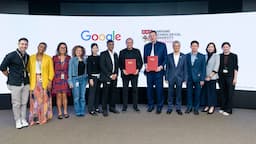
Google invests over US$6 million in AI research and education initiatives in Singapore

Cabinet Approves ₹4,371 Crore VISTAR Scheme to Modernize India's Statistical System

AI tutor outperforms classroom learning in US university trial, OECD report finds

Why will students lose Google Search access if schools reject Google's AI tools? Company announces new rules

Australian experts back school digital detox as concerns grow over AI and screen use

Over 96,000 Cases Pending Before 38 Judges
Geopolitical Tensions, High Valuations and Investor Selling Weighed on Markets
Democratic Control of Congress Raises Questions Over Trump’s Economic Agenda
New Two-Year Extension Introduced for Agniveers
Joint List Extends Support to Eisenkot as Coalition Talks Continue
Google invests over US$6 million in AI research and education initiatives in Singapore
Cabinet Approves ₹4,371 Crore VISTAR Scheme to Modernize India's Statistical System
AI tutor outperforms classroom learning in US university trial, OECD report finds
Why will students lose Google Search access if schools reject Google's AI tools? Company announces new rules
Australian experts back school digital detox as concerns grow over AI and screen use
Copyright© educationpost.in 2026 All Rights Reserved.