Climate migrant workers trapped between shrinking farm incomes and Delhi’s pollution crisis
As emergency curbs shut worksites, migrant workers are pushed back into poverty and uncertainty.
Umer Ahmad06 February 2026 08:20
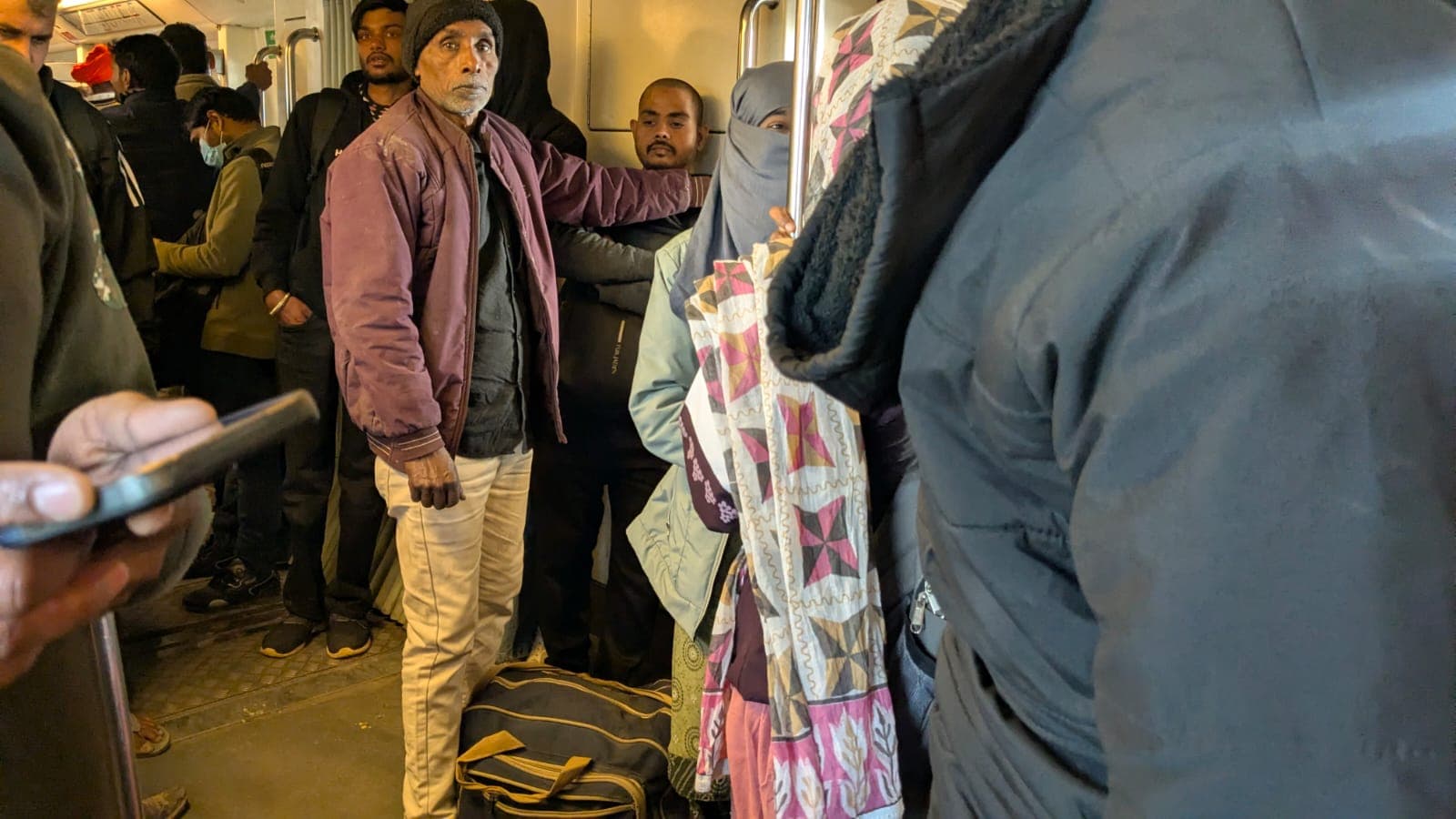
Pooran Singh heads back to Uttar Pradesh after pollution curbs bring construction work in Delhi to a halt.
On January 17, the Delhi government implemented the Graded Response Action Plan (GRAP-IV) as air quality turned severe. Since December 16, 2025, this was the second time GRAP-IV has been implemented in the national capital due to increasing pollution levels. Every year, Delhi’s air quality takes a hit due to bad weather conditions, stubble burning, high-emission projects, and vehicular emissions.
To curb pollution, the government implements temporary measures, including work from home, bans on construction, and other high-pollution-emitting activities. However, daily-wage workers, mostly migrant workers, who live from hand to mouth suffer the most, as there are no government plans in place to help them.
With no effective policy safety net, work shutdowns leave labourers dependent on high-interest loans from contractors and informal lenders, trapping them in cycles of debt.
Hidden costs
Pooran Singh Chouhan was at Sultanpur Metro Station, asking commuters which line would take him to Chandni Chowk. He was travelling back home to Ayodhya, Uttar Pradesh.
Unfamiliar with city life, Chouhan had lost his way while trying to reach Old Delhi, where he could get a bus to Uttar Pradesh. A farmer by profession, he had come to Delhi in the hope of earning a living and supporting his family. The contractors he was working for asked him to return home, as there was no work available due to the city grappling with severe pollution.
“I worked for eight days in Delhi in December 2025, and now I am going back home, as all construction work in the city has been closed,” Chouhan said with a grin. “The contractor is helpless too. What can he do when the government has ordered all construction work to stop? The pollution is very bad, and working in such bad air is also very hard for us.”
Chouhan works as a putty applicator in Delhi. He said that he earned over ₹4,000, out of which he spent more than ₹3,000 on groceries, room rent, and bus fare.
“I am going back home with ₹1,000, and I will return to Delhi when the contractor calls me back,” he added.
Farming is the main source of livelihood for Chouhan. However, agriculture has become less productive for him, forcing him to move to the city in search of work.
“I have three acres of land in Uttar Pradesh, but as the produce continues to decline, I look for other jobs to support my family,” he said.
“Irregular rains, torrential floods, and droughts often destroy my crops. Over the past few years, heatwaves and late, harsh rains have become more common and intense in Uttar Pradesh. Farming is turning more expensive, with no returns.”
Delhi’s pollution lockdown wipes out workdays for daily-wage labourers, becoming a double income shock for those who arrive in cities after losses on their farms.
Climate change is increasingly forcing farmers to take up skilled and unskilled jobs in metropolitan cities like Delhi. However, there appears to be little relief for them.
As pollution levels continue to remain in the severe category, the Delhi government has imposed restrictions on construction and other activities.
Pollution Emergency and lack of policies
According to the Central Pollution Control Board (CPCB), the region has experienced prolonged periods of “very poor” to “severe” air quality, with many zones breaching the “severe” threshold. Exposure to elevated levels of fine particulate matter (PM₂.₅ and PM₁₀) and toxic gases has triggered a sharp rise in respiratory and related health problems among residents.
Air Quality Index (AQI) levels in most parts of Delhi-NCR on December 14 were in the range of 600 to 1,015, with Noida recording the highest AQI at 1,015, according to IQAir. The increase in AQI levels comes despite a significant drop in farm fires in states surrounding the national capital.
To curb pollution levels, the Commission for Air Quality Management (CAQM) implemented GRAP from early November to December 13, 2025. As a result, the majority of Delhi’s construction labourers—both skilled and unskilled—have been out of work.
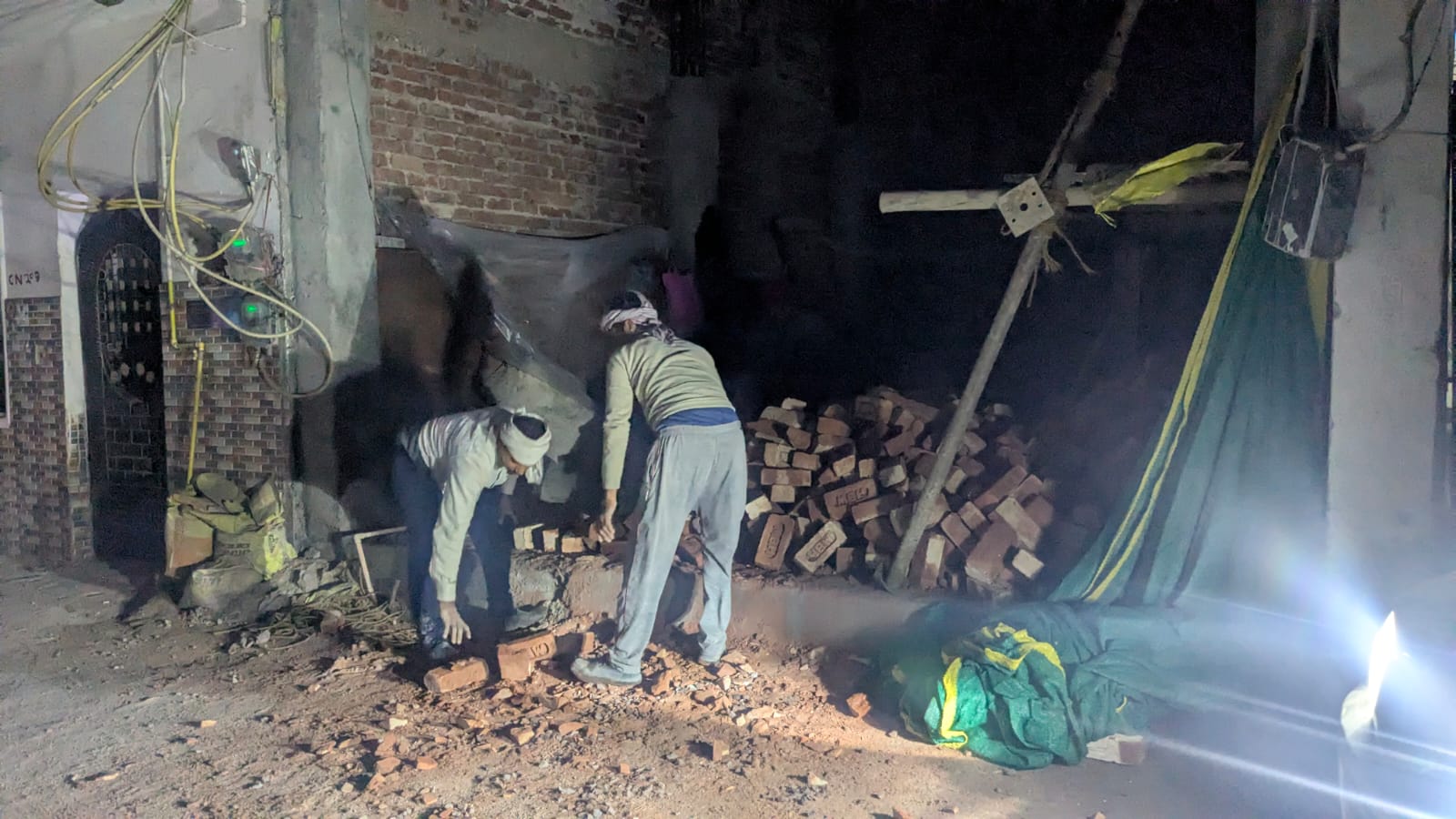
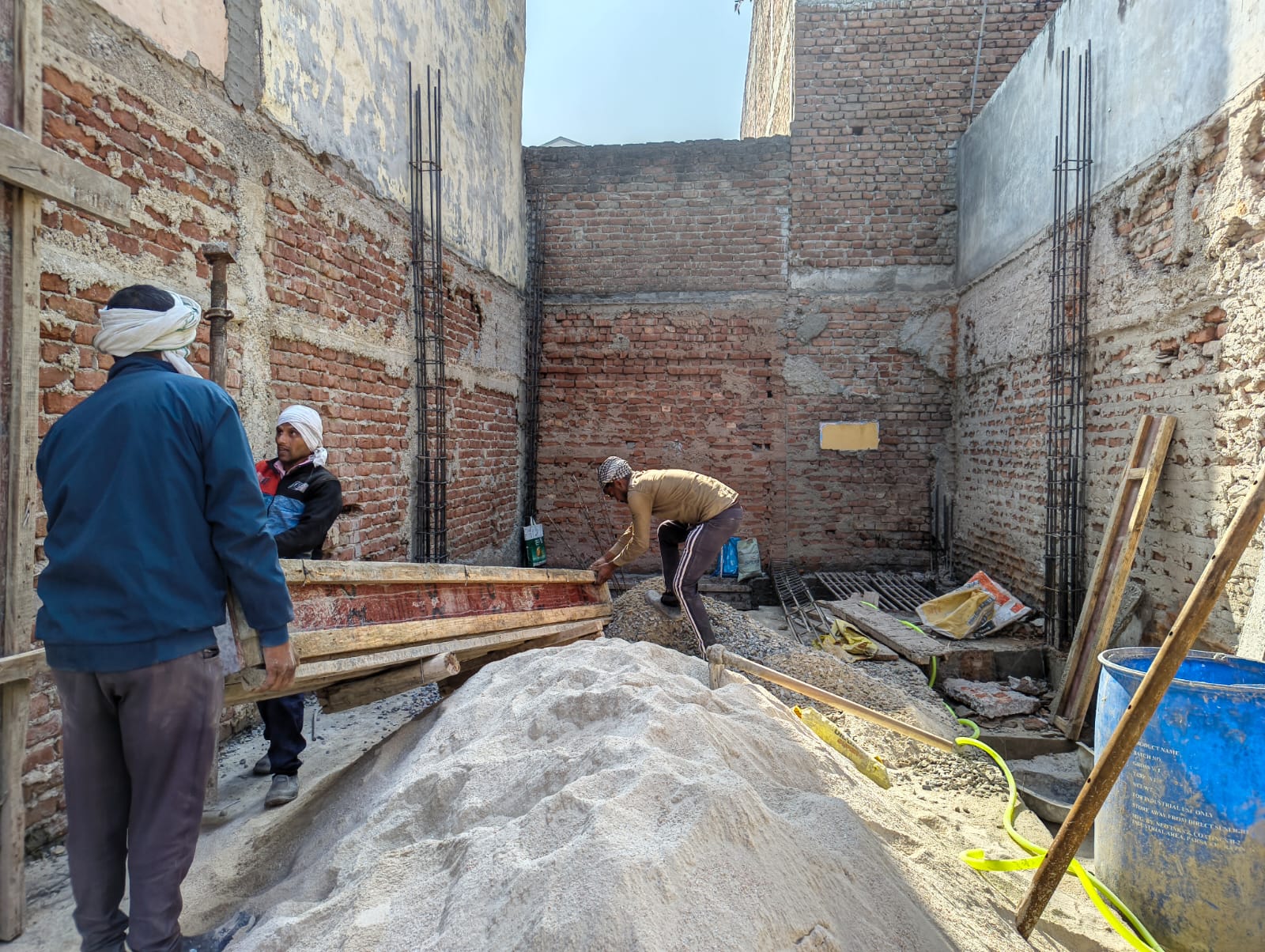
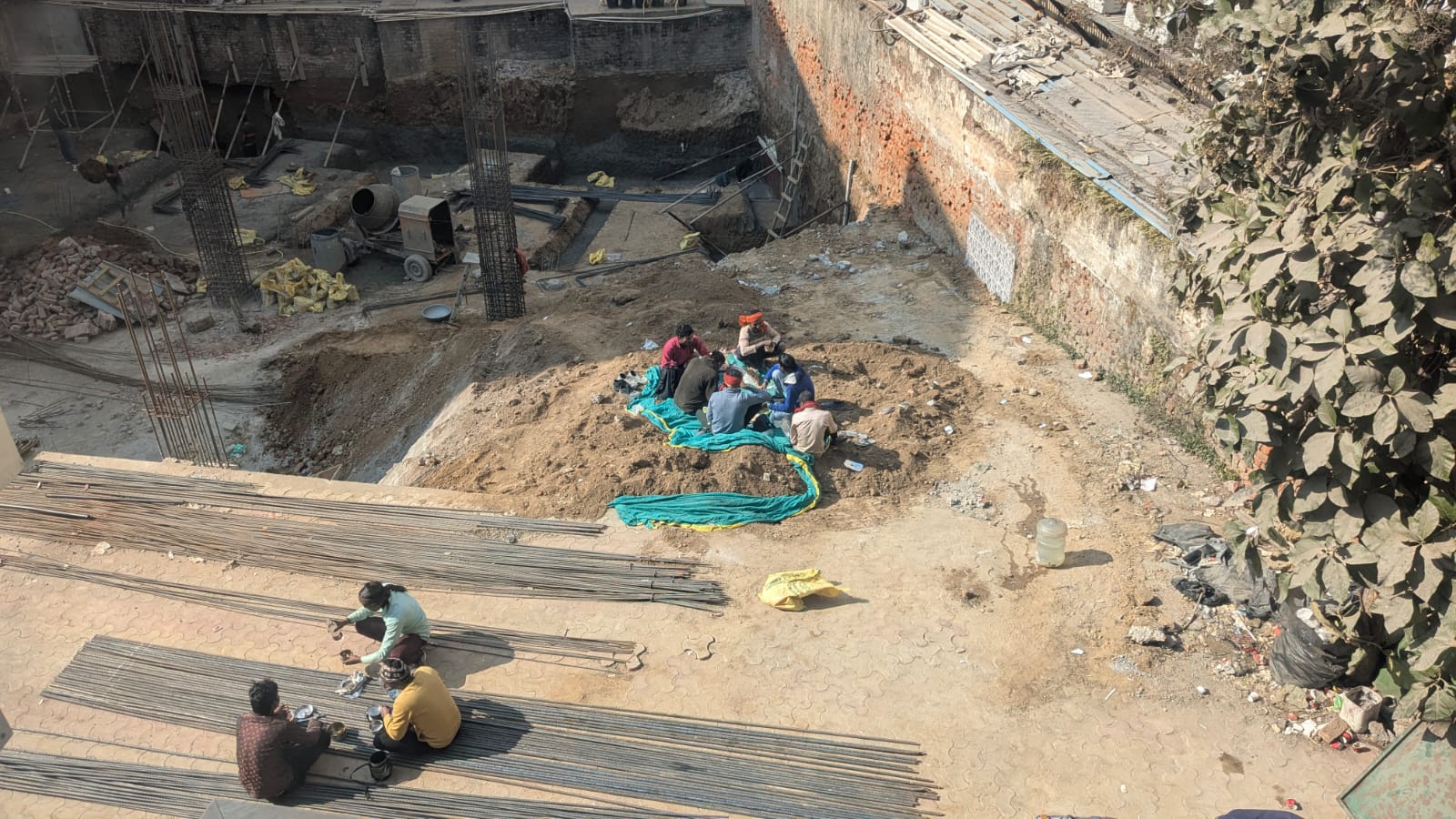
Dabeer Kumar (centre) has worked as a construction labourer for over four years, migrating to Delhi annually to offset farming losses and support his family.
The human cost of the pollution lockdown has been significant, with daily-wage workers bearing the brunt. Despite being willing to work in severe environmental conditions, there is no work available to them, forcing many to either return home or borrow money to survive in the city.
Anveshi Gupta, a Climate Action Specialist, said that pollution control policies in India are based on exclusion rather than distribution. She said the government tries to cut emissions quickly and reduce exposure.
“When the government shuts down construction work and other high-pollution-emission activities, the burden of the policies falls on migrant workers who are not in a position to absorb the downtime,” Gupta said.
Delhi Minister Kapil Mishra on December 17 announced financial assistance to construction workers. Mishra said, “Under GRAP-III, when construction work was completely halted in Delhi, workers were the worst affected. In view of this, the Delhi Labour Ministry has decided that all registered and verified construction labourers will be given ₹10,000 each as GRAP-III compensation through direct benefit transfer (DBT).”
Data from the Delhi Building and Other Construction Workers Welfare Board shows that there are currently 2,57,244 registered construction workers in the city. However, the number of migrant workers is said to be much higher than those registered.
Even though the government offered financial assistance for construction workers, there are wide gaps in the understanding of skilled and unskilled labour forces in India.
“Access to government schemes is one of the biggest issues. Migrant workers fail to provide documents like Aadhaar cards, work contracts, or proof of address to avail financial assistance and to absorb the shock that comes with the implementation of GRAP,” Gupta explained. She added that when the government halts construction work, secondary and tertiary labour forces—who are part of the circular economy and whose workdays depend on primary construction workers—also get impacted, and there is no space for these people in government financial assistance.
“The pollution lockdown, especially for climate migrants, becomes a second layer of vulnerability and income shock. Loss of crops due to floods or other extreme climate events pushes these migrant workers into debt traps,” Gupta added.
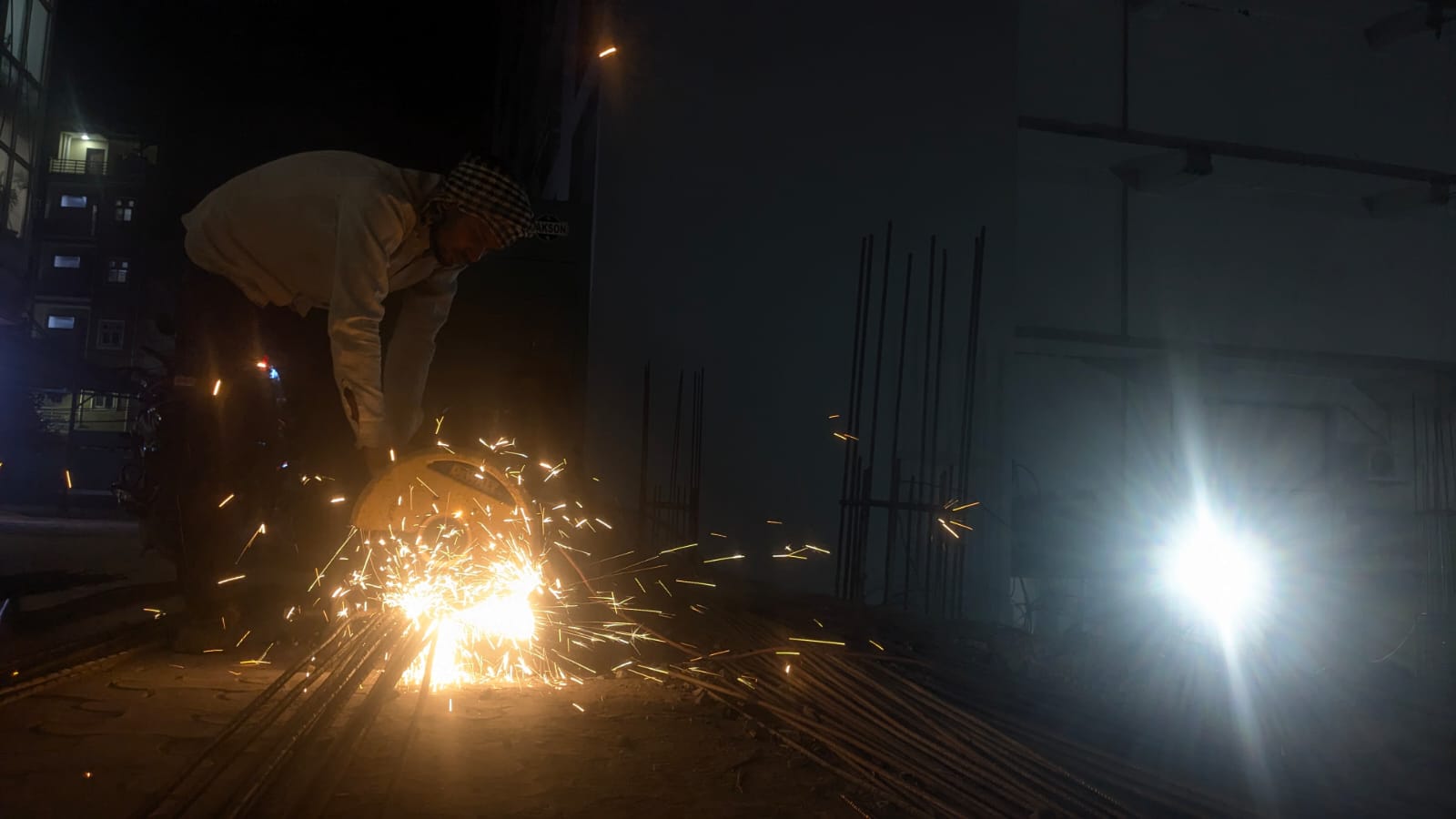
Dabeer, 30, from Katihar, Bihar, lives in a cramped room in Aya Nagar, Delhi, along with six other workers. He works as a mason. Back in Bihar, his family of seven, including his two children, depends on him.
Dabeer owns over four acres of agricultural land. While he struggles to find work in Delhi, the rest of his family remains engaged in farming. In December alone, Dabeer was unemployed for over 20 days. This month, he was able to return to work after GRAP-III was lifted.
“Losing even a single workday has huge consequences for me. I earn ₹15,000 to ₹20,000 a month. Apart from my personal expenses, I manage to send ₹10,000 home,” he said.
“Floods in Bihar in summer are a regular phenomenon. Each year, the jute crop gets damaged either by sudden floods or extreme heatwaves.”
“The extreme weather pattern has changed the entire agricultural practice system. Farmers had a set time for sowing seeds and harvesting crops.”
“Most young people leave villages to work in cities. We plan our work based on our existing knowledge of the crop cycle. However, what is now happening in summers—sudden floods—catches us unprepared,” Dabeer said.
“In India there is no government framework or policy for climate migrants. There is no data or documentation that shows what forces people to leave rural areas. Migration is often associated with better economic opportunities in cities,” Gupta explained. “India is largely an agrarian society, and farmers do not know what else to do. The alternative for them is to move to cities where they already have relatives working in unregulated or other labour sectors. As the cost of living is high in cities, these workers end up living in cramped rooms, tin sheds, or other unregistered areas.”
“Migrant workers often face double migration, as they turn to cities for work and the government frequently carries out demolition drives in alleged illegal settlements where these migrants mostly live,” Gupta said.
According to data from Jan Sahas, a non-profit organisation, there are over 200 million migrant workers in India who are forced to migrate due to a lack of livelihood opportunities at home. However, there is no other dataset maintained by the state or central government that categorises the reasons for migration.
In India, migrants are counted in aggregate, with neither the Centre nor states tracking climate-driven migration or its causes.
Pertinently, as migrant workers face uncertainty in cities, the healthcare crisis caused by worsening air quality in Delhi has also left residents uncertain about their future in the city.
A recent survey by LocalCircles revealed that over 82 percent of the participants, 8,090 out of 34,000, surveyed claimed that they have or had one or more people in their close social network suffering from severe health conditions due to air pollution. More than 73 percent of the participants expressed concern about rising healthcare affordability. Meanwhile, 8 percent of respondents—16,454 residents in Delhi-NCR—said they were likely to move out due to worsening air quality.
As the air pollution crossed the severe threshold and the government’s emergency measures to save citizens choking from bad air, the migrant workers remain tossed between the climate crisis in their villages and the pollution crisis in Delhi.
(Umer Ahmad is a mentee of the Climate Change Media Hub at the Asian College of Journalism. The programme is supported by Interlink Academy, Germany.)