Worried about fake degrees? UGC warns students, releases list of 32 unauthorized universities
The advisory urges applicants to verify institutional recognition, degree-awarding authority, course approvals and permissions for online, distance and off-campus programs before paying admission fees.
Written by: Pragya Kumari · Updated:
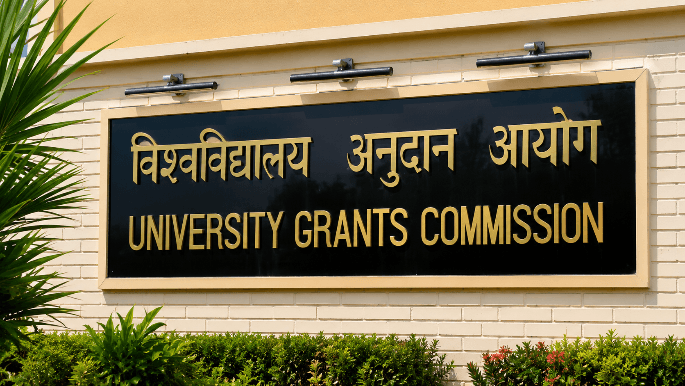
The University Grants Commission (UGC), in its Nov 17 public advisory, has identified 32 fake universities operating across India, with Delhi accounting for the highest number of institutions on the list. The national capital has 12 such institutions, followed by Uttar Pradesh with four.
The commission has issued a fresh public advisory urging students, parents, guardians and the general public to verify the recognition status of universities before applying for admission or making any academic or financial commitment.
The latest warning comes as the number of institutions identified as fake has increased from 20 in March 2023 to 32 in the latest list. A comparison of the two lists shows that 18 of the 20 institutions flagged in March 2023 continue to appear in the February 2026 list.
The UGC shared the advisory through its official X handle, asking prospective students to exercise caution while selecting higher education institutions.
The commission stated, "Students, parents and the public are advised to verify the recognition status of universities and institutions before taking admission. Degrees awarded by institutions not authorised under the UGC Act, 1956, are not recognised for higher education or employment purposes."
The commission has also advised applicants not to rely exclusively on advertisements, institutional websites, brochures or social media claims while assessing the legitimacy of a university.
UGC fake universities: Check the state-wise complete list
According to the UGC's latest available list, 32 institutions across 12 states and Union Territories have been identified as fake universities. Delhi has the highest concentration, with 12 institutions, while Uttar Pradesh has four.
Here is the state-wise list of fake universities released by the commission.
- Delhi
- Mountain Institute of Management & Technology
- World Peace of United Nations University (WPUNU)
- Institute of Management and Engineering
- National Institute of Management Solution
- All India Institute of Public & Physical Health Sciences (AIIPHS) State Government University
- Commercial University Ltd
- United Nations University
- Vocational University
- ADR-Centric Juridical University
- Indian Institute of Science and Engineering
- Viswakarma Open University for Self-Employment
- Adhyatmik Vishwavidyalaya (Spiritual University)
- Uttar Pradesh
- Gandhi Hindi Vidyapith, Prayag, Allahabad
- Netaji Subhash Chandra Bose University (Open University)
- Bhartiya Shiksha Parishad
- Mahamaya Technical University
- Andhra Pradesh
- Christ New Testament Deemed University
- Bible Open University of India
- Karnataka
- Global Human Peace University
- Sarva Bharatiya Shiksha Peeth
- Kerala
- International Islamic University of Prophetic Medicine (IIUPM)
- St. John's University, Kishanattam, Kerala
- Maharashtra
- Raja Arabic University, Nagpur
- National Backward Krushi Vidyapeeth
- Puducherry
- Usha Latchumanan College of Education
- Sree Bodhi Academy of Higher Education
- Rajasthan: Rajeev Gandhi Institute of Technology & Management
- West Bengal
- Indian Institute of Alternative Medicine
- Institute of Alternative Medicine and Research
- Arunachal Pradesh: Indian Institute of Alternative Medicine
- Haryana: Magic & Art University, 308A, Dashmesh Plaza
- Jharkhand: Daksha University (Vocational and Life Skill Education)
The UGC has also published a category-wise list of universities on its official website. Students can access the UGC university list here to check the details and recognition status of institutions.
UGC fake universities: Delhi records highest number of institutions
Delhi accounts for the largest share of institutions identified as fake by the UGC, with 12 universities on the latest list. The number has increased from eight institutions recorded in the national capital in March 2023.
All eight institutions identified in Delhi three years ago continue to appear on the latest list. Uttar Pradesh has four institutions, while six other states and Union Territories have two institutions each.
The remaining institutions are located in Rajasthan, Arunachal Pradesh, Haryana and Jharkhand, with one university listed in each of these states.
The increase from 20 institutions in March 2023 to 32 in the February 2026 list has also raised questions about the effectiveness of enforcement measures against institutions allegedly awarding degrees without the required legal authorization.
However, the continued inclusion of an institution in the UGC list does not necessarily establish that it is still operational or that no enforcement action has been initiated against it.
Supreme Court directs UGC to issue public advisory against fake universities
The latest public warning follows directions issued by the Supreme Court of India, which asked the UGC and other regulatory authorities to alert prospective students about unauthorized educational institutions.
In its Oct 9 order, the Supreme Court directed the commission and other regulators to issue public advisories cautioning students against taking admission to institutions that do not have the necessary authorization.
The intervention came after reports of an alleged fake medical college operating from a farmhouse in Etah, Uttar Pradesh.
Acting on the court's directions, the UGC issued its Nov 17 advisory, reiterating the importance of checking institutional recognition and the legal authority to award degrees before enrolling in a university.
The advisory also highlights the need for students to verify whether an institution has the necessary approvals to conduct academic programs and offer qualifications under the applicable regulatory framework.
UGC action against fake universities: States asked to initiate legal proceedings
The commission had earlier written to state education authorities in April 2023, seeking action against institutions allegedly violating the provisions of the University Grants Commission Act, 1956.
The UGC subsequently issued follow-up communications in July 2023. In a September communication, the commission directed the institutions concerned to submit compliance reports within 15 days.
The issue also featured in an August 2026 parliamentary reply by the Ministry of Education. The ministry stated that state governments had been asked to register First Information Reports (FIRs) and initiate steps to close unauthorized institutions.
Despite these communications and directions, 18 of the 20 institutions identified in March 2023 continue to feature in the latest UGC list.
The continued presence of these institutions in the updated records highlights the importance of sustained monitoring and enforcement by the concerned authorities to prevent students from enrolling in institutions without valid recognition.
UGC fake universities: Key details students must verify before taking admission
The UGC has advised students, parents, guardians and members of the public to independently check the legal status and recognition of an institution before applying for admission.
Prospective students should verify the following details before paying fees, submitting admission applications or making any other academic or financial commitment.
1. Legal establishment or recognition
Students must check whether the university or institution has been legally established or recognized under the applicable laws.
An institution's name, advertisements or claims of offering higher education qualifications should not be treated as proof of its legal status.
2. Authority to offer programs and award qualifications
Applicants must confirm whether the institution is legally authorized to offer the specific academic programme and award the corresponding degree or qualification under the University Grants Commission Act, 1956.
Students should verify the status of both the institution and the programme they intend to pursue.
3. Statutory and regulatory approvals
Before applying, candidates should check whether the institution has obtained the necessary recognition, approvals and permissions from the UGC and other relevant statutory or regulatory authorities.
The required approvals should be verified according to the nature of the course and the applicable regulatory requirements.
4. Permission to offer online and distance education programs
Students planning to pursue online or distance learning courses should also verify whether the university has the necessary authorization to offer such programs.
The UGC advisory specifically asks prospective applicants to check the permissions granted for online, distance and off-campus programs before enrolling.
5. Independent verification through official websites
The commission has cautioned students against relying solely on information published through advertisements, university websites, brochures or social media platforms.
Applicants should independently verify recognition claims through official regulatory websites and the relevant government authorities before making admission-related decisions.
Where can students check the UGC fake university list?
Students seeking admission to undergraduate, postgraduate or other higher education programs can visit the official University Grants Commission website to check the recognition status of universities and institutions.
The commission has advised applicants to complete the verification process before taking admission, as degrees awarded by institutions not authorized under the UGC Act, 1956, are not recognized for higher education or employment purposes.
For additional information about fake universities, recognized institutions and regulatory approvals, candidates can visit the official UGC website at ugc.gov.in.
Also read