West Bengal is set to introduce a revised school curriculum from January 2, 2027, with the state’s Syllabus-cum-Curriculum Committee proposing changes ranging from the inclusion of Syama Prasad Mookerjee’s life and contributions to alterations in history, language and literature content.
The recommendations have been submitted to the state government for approval, with several Bengali and English-language chapters already sent to the government and the remaining portions expected to follow.

Mookerjee to be included across textbooks
The committee has proposed including material on Syama Prasad Mookerjee at the beginning of textbooks across classes.
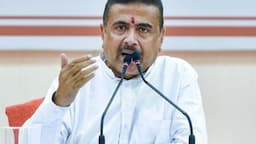
Professor Debashis Chatterjee, chairperson of the committee, told The Indian Express that the material would cover Mookerjee’s life and contributions and would be placed at the beginning of textbooks so students could learn about him.
The proposal follows a September directive from the West Bengal Higher Education Department asking state-aided schools, colleges and universities to include Mookerjee’s life, contributions and legacy in their academic programmes from the 2027 academic session.
Singur and Kanyashree chapters proposed for removal
The committee has proposed removing the chapter on the Singur land movement from the Class VIII history textbook.
The movement was led by then Chief Minister Mamata Banerjee against the Left Front government’s acquisition of land for the Tata Motors project. The chapter was introduced in the school curriculum in 2017.
A chapter on the Kanyashree scheme, currently included in health and hygiene textbooks for Classes VI to VIII, has also been proposed for removal. The state government launched Kanyashree in 2013 as a conditional cash-transfer programme aimed at supporting adolescent girls.
Mughal history and communism sections to be shortened
The committee has also proposed reducing portions dealing with the Mughal period and communism.
Chatterjee said the revised curriculum would give greater emphasis to personalities associated with India’s freedom movement. These changes are part of the committee’s broader review of the curriculum for Classes I to XII.
Changes proposed in Bengali literature
The proposed revision also includes changes to prescribed literary works.
Rabindranath Tagore’s poem ‘Africa’ is proposed to be replaced in the Madhyamik syllabus by his poem ‘Shivaji Utsav’.
Similarly, Sachindranath Sengupta’s play ‘Sirajdoulla’ is proposed to be replaced by Dwijendralal Ray’s ‘Mebar Patan’.
The committee has also proposed changes to some Bengali-language textbook vocabulary. Examples cited by its chairperson include replacing “pani” with “jol” and changes involving words such as “amma” and “abba”.
Revised curriculum to take effect in January
The revised curriculum is scheduled to come into effect from January 2, 2027, when the new academic session begins in state-run and aided schools.
The committee was constituted in July to review and recommend changes to the curriculum, syllabus and textbooks. The recommendations will require government approval before they become final.





.webp&w=256&q=75)