The Indian Institute of Technology Delhi concluded its month-long Hindi Month 2026 programme on Sep 30 with a self-composed poetry recitation competition and an award distribution ceremony organised by the institute’s Hindi Cell.
The programme was held from Sep 1 to 30 and included competitions and activities for students, faculty members, officials and staff across the institute.

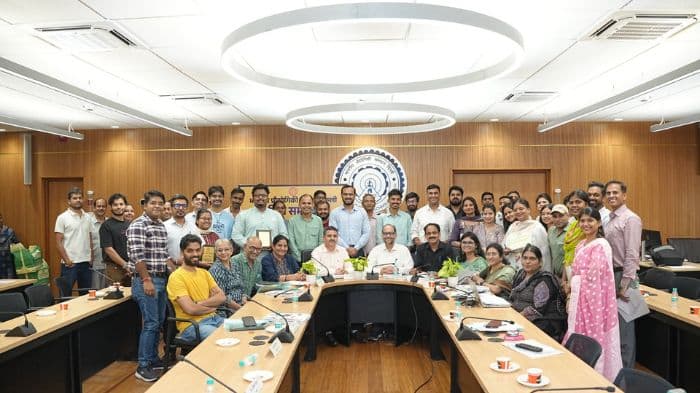
IIT Delhi Director Prof. Rangan Banerjee presided over the closing ceremony. Deputy Director (Operations) Prof. Arvind Kumar Nema, Registrar Atul Vyas, faculty members, officials and staff members also attended the event.
Around 500 entries received during Hindi Month
The programme began on Sep 2 with an interactive session related to the proposed Basic Hindi Learning Programme for international and non-Hindi-speaking students.
Other activities included a Hindi essay writing competition on Sep 7, the Official Language and General Hindi Knowledge Competition on September 10, and a Hindi typing competition on Sep 14.
A discussion on “Women’s Health — Healthy and Empowered at Every Age” was organised on Sep 15. The programme was followed by a Hindi noting and drafting competition on Sep 17 and an “Every Picture Tells a Story” creative writing competition on Sep 21.
A debate competition was held on Sep 24, followed by the self-composed poetry recitation competition at the closing ceremony.
According to IIT Delhi, around 500 entries were received across the competitions, programmes and activities conducted during the month.
Hindi Cell releases 40th issue of Jigyasa
The closing ceremony began with the reading of messages received for Hindi Diwas from Union Home Minister Amit Shah and Union Education Minister Pralhad Joshi, followed by an Official Language pledge.
Dr Neeraj Chaurasia, Head of the Hindi Cell, presented a report on the activities conducted during Hindi Month.
The institute also released the 40th issue of Jigyasa, the Hindi science journal published by its Hindi Cell.
Alongside the journal, IIT Delhi unveiled the Hindi version of its English-language alumni impact report, IIT Delhi Transformed Them They Transformed The World — An IIT Delhi Alumni Impact Report. The Hindi version was titled I.I.T. Delhi: Crafting Excellence — A Narrative of the Global Impact of Former Students.
Winners and departments felicitated
The Director, Deputy Director (Operations), Registrar and Head of the Hindi Cell presented prizes to winners of the competitions conducted during Hindi Month.
The institute also felicitated the top five departments or sections for their contribution to the implementation of the Official Language.
Staff members selected under the Government of India’s Cash Incentive Scheme were also honoured at the ceremony.
The Hindi Cell at IIT Delhi is responsible for implementing the Official Language policy at the institute and conducts activities including Hindi language training, typing and translation workshops, seminars and Hindi Day or Hindi Fortnight programmes. It also publishes Jigyasa, the institute’s Hindi science journal.
The institute said Hindi Month 2026 brought together activities focused on learning, creative expression, communication and participation through Hindi.
IIT Delhi organises Hindi Month as part of its efforts to implement the Government of India’s Official Language policy. The institute’s Hindi Cell, established in 1981, works to promote the use of Hindi in official communication and related activities.
The month-long programme combines these official-language objectives with competitions, creative activities, language learning and academic engagement.






.webp&w=256&q=75)