


The 2026 Global Education Monitoring report examines disparities linked to geography and household wealth, while identifying policy interventions that could help disadvantaged girls complete secondary education.
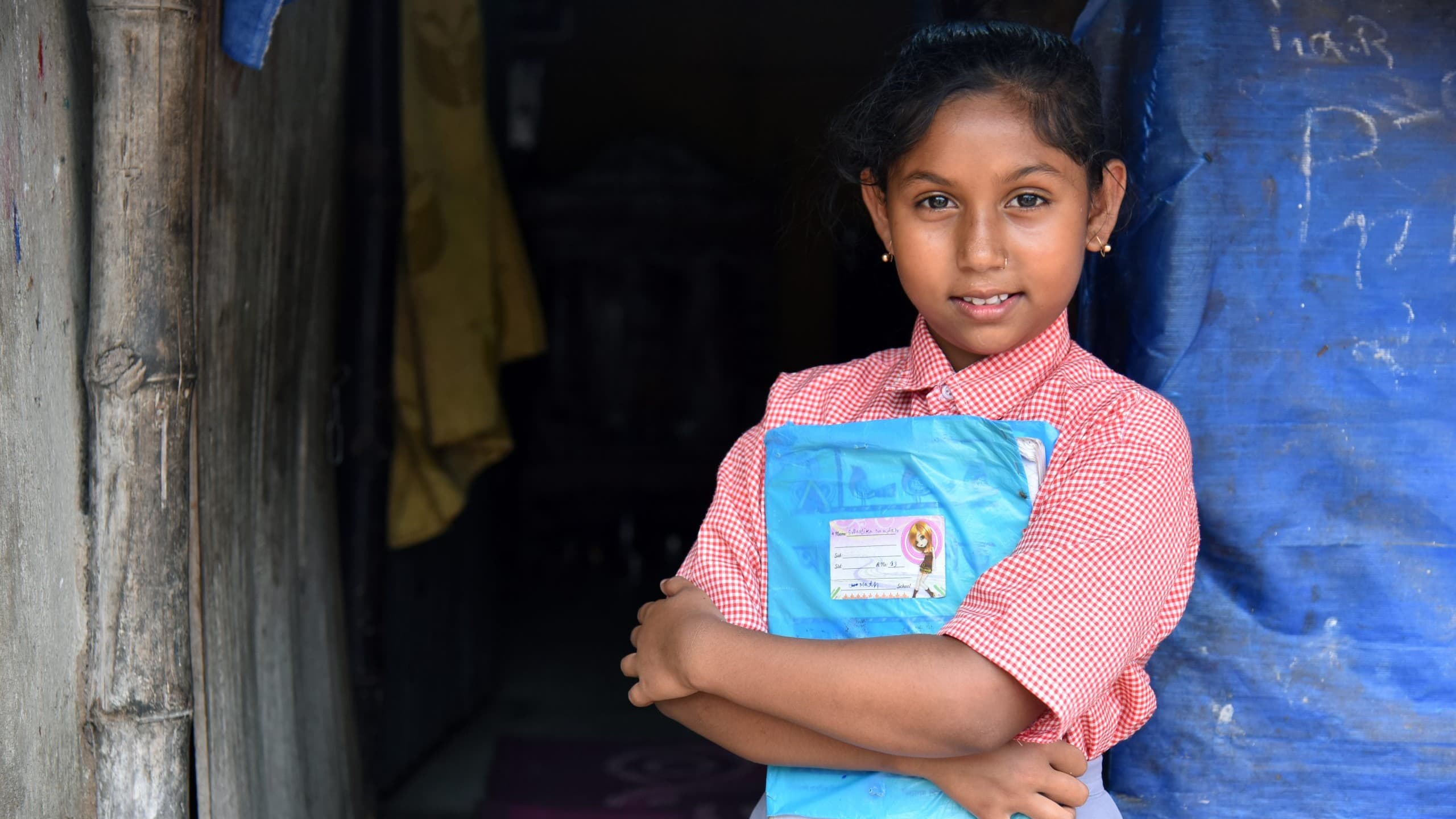
UNESCO released a new report highlighting persistent gender disparities in school completion in India, finding that only 59 girls in rural areas complete upper-secondary education for every 100 boys who reach the same level, while urban areas have achieved gender parity.
The report, titled “Gender Equity in Access to Education,” is part of the 2026 Global Education Monitoring (GEM) Report and examines gender disparities in education across 31 low- and middle-income countries.

Released in Paris, it identifies rural location, household wealth, social norms and education policies as factors shaping whether girls can access and complete their education.
India's adjusted gender parity index (GPI) for upper-secondary completion stands at 0.89 overall, falling to 0.59 in rural areas while reaching 1.0 in urban areas.
A GPI of 1 indicates equal outcomes for girls and boys. The national figure means that for every 100 boys completing upper-secondary education, approximately 89 girls do so. In rural areas, the corresponding number falls to 59 girls for every 100 boys.
The report defines the completion rate as the proportion of people aged three to five years above the official graduation age who have reached the final grade of an education level. The findings therefore concern completion, rather than simply enrollment or attendance.
“Progress towards gender parity does not mean that all groups of children benefit equally from that trend,” the report says, warning that improvements in national indicators can conceal substantial inequalities between rural and urban populations and among households with different economic circumstances.
Rural girls face wider education gaps
The report's analysis of upper-secondary completion across 31 low- and middle-income countries uses data from 2020 to 2024 to examine differences by geographical location and household wealth.
It found that in countries where girls are disadvantaged, the median gender parity index was 0.87. The figure fell to 0.74 in rural areas, compared with 0.96 in urban areas.
India reflects this wider pattern, with rural girls facing a pronounced disadvantage even though urban areas have reached parity. The disparity also highlights how improvements in national education indicators do not necessarily translate into equal opportunities for all students.
Enrollment data point to continuing challenges in retaining older girls in education. The Annual Status of Education Report (ASER) 2024 found that 8.1% of rural girls aged 15 to 16 were not enrolled in school, compared with 7.9% in 2022.
Although these figures measure current enrollment rather than completion, they indicate that a proportion of adolescent girls continue to remain outside the education system.
Household income further influences educational outcomes. Across countries where girls experience educational disadvantages, the median gender parity index was 0.66 among the poorest households, compared with 0.92 among the richest 20% of households.
The difference underscores how financial hardship can compound gender-based barriers to education.
The report argues that these disparities cannot be explained solely by individual decisions. “Gender disparity in access to education does not result from individual choices, but rather from political, economic, social and cultural mechanisms, as well as education policies and practices that exclude children, adolescents and young people,” it says.
It adds that these inequalities must be understood through “the interaction between sex and factors such as poverty, geography and the norms associated with belonging to a social or demographic group."
India makes progress but rural disparities persist
Despite the continuing divide, India is classified under the report's “fast progress” category for gender parity in education. This classification applies to countries that have closed more than 65%, or roughly two-thirds, of their initial gender gap.
India is placed in this category for both timely and ultimate completion. Ultimate completion includes students who finish an education level up to eight years later than the expected timeline.
The report also notes that India was among 47 countries with the largest gender disparities against girls in upper-secondary completion in 2000.
Its subsequent progress reflects improvements in educational access, but the remaining rural disadvantage shows that closing the overall gap has not ensured equal outcomes across locations.
UNESCO cautions against treating gender parity as equivalent to gender equity. A parity index can improve because girls' participation rises faster than boys', but it can also change when boys' participation stagnates or declines. As a result, a better ratio does not necessarily mean that both groups are experiencing improvements in education.
The report also stresses that parity indicators do not capture every aspect of educational equality. Curriculum, teaching practices, teacher attitudes, school violence and other factors can affect students' experiences and outcomes even when enrollment or completion rates appear balanced.
Regional progress does not guarantee equal outcomes
Globally, 63% of girls and 60% of boys completed upper-secondary education in 2024, according to the report. In Central and Southern Asia, the region that includes India, the completion rate was 57% for girls and 60% for boys.
The region has recorded substantial improvements in completion rates over the past two decades. Girls' primary completion rate increased from 42% in 2000 to 90% in 2024. At the lower-secondary level, the rate rose from 30% to 83%, while upper-secondary completion increased from 12% to 57%.
However, the report emphasizes that these regional gains do not necessarily mean that every country or population group benefits equally. India's rural-urban divide illustrates how national and regional improvements can coexist with persistent disadvantages among particular groups of students.
School meals and separate toilets help improve access
The UNESCO report identifies interventions in India that have helped improve girls' participation and reduce the likelihood of leaving school early. These include free school meals, improved sanitation facilities and community programs that support girls' life skills and social networks.
Evidence cited in the report shows that free school lunches had nearly twice the effect on primary school enrollment for girls as for boys in disadvantaged rural communities. The intervention helped close the gender gap in enrollment in these areas.
Early and consistent access to school meals has also been associated with lower dropout rates, particularly among girls. Such support can reduce household expenses and help families keep children in school.
The report notes that the costs of education extend beyond formal tuition fees. Expenses related to books, uniforms, transportation, meals and accommodation can make continued schooling difficult for low-income families. The opportunity cost of children's work can also influence whether they remain in education.
Sanitation infrastructure is another factor affecting girls' participation, particularly during adolescence.
Research cited by UNESCO found that India's national latrine-construction initiative increased enrollment among adolescent girls, especially in schools with separate toilets for boys and girls.
The findings underline the importance of providing facilities that address students' privacy and safety needs, rather than treating the construction of toilets alone as sufficient to improve educational outcomes.
A randomized trial conducted across 121 villages in Karnataka also found that local clubs designed to help girls develop life skills and build social networks modestly improved secondary school completion. However, the study found that early marriage remained a concern for many girls.
These examples suggest that interventions can improve educational access, but their impact may be limited if other social and economic barriers remain in place.
Nepal and Bangladesh offer lessons for gender parity
The report identifies Nepal as an example of sustained progress in reducing gender disparities in education. In 1990, only 8% of girls completed lower-secondary education, compared with 41% of boys.
By 2024, the completion rate had risen to 89% for both girls and boys, bringing the two groups to parity at that level.
UNESCO attributes Nepal's progress partly to constitutional recognition of education as a right, laws guaranteeing free and compulsory basic education, targeted scholarships, expanded secondary education, free textbooks, improved school facilities and examination reforms that made progression to higher grades easier.
Cambodia provides another example of a reversal in gender disparities. In 1981, girls faced a 22-percentage-point disadvantage in primary school completion. By 2024, they had moved to an 11-percentage-point advantage over boys.
Bangladesh's girls' stipend program has also been linked to higher educational attainment and delayed marriage.
However, the report notes that early marriage continues to disrupt girls' education, demonstrating that improvements in access do not automatically remove the social pressures that can prevent students from completing school.
Together, these examples highlight the role of sustained public policy, financial support and improved school infrastructure in reducing gender gaps. They also show why interventions need to address the wider conditions affecting girls' education.
Coordinated policies needed to keep girls in school
The report calls for education policies that address the practical barriers preventing girls from enrolling, attending classes regularly and completing their education.
These include transportation costs, unsafe school environments, inadequate sanitation, early marriage and insufficient support for students who leave school because of pregnancy.
It also highlights the limitations of relying on individual measures without addressing related obstacles. “Abolishing fees does not make education free if transport is unaffordable. Scholarships count for little if schools are unsafe. Re-entry policies cannot be effective if young mothers lack childcare,” the report says.
This approach requires governments to consider how different barriers interact. Financial assistance may be insufficient if a student cannot travel safely to school, while improved facilities may not prevent dropout if household poverty or social expectations push girls toward domestic responsibilities or early marriage.
The report argues that education systems need coordinated measures covering affordability, school meals, proximity to schools, sanitation, safety, counseling and second-chance pathways for students who have discontinued their education.
“There are relatively few robust policy frameworks that tackle all those factors in a coherent and coordinated manner and are implemented with fidelity,” it says.
India's progress toward gender parity demonstrates that improvements are possible, but the rural completion gap remains a major challenge.
With only 59 girls completing upper-secondary education for every 100 boys in rural areas, the report highlights the need for policies that go beyond aggregate parity figures and address the economic, geographical and social barriers that continue to shape girls' educational opportunities.
UNESCO flags India’s rural education gap: 59 girls for every 100 boys

UP Mission Shakti Campaign: 67,951 Students Participate in Women’s Safety Awareness Drive on Day 1

NMAT by GMAC 2026 Registration Deadline: Check Exam Dates, Retake Rules and Latest Update

Madurai Kamaraj University seeks grants for college struggling to pay salaries amid ₹2 crore annual deficit

IISc Study Challenges Chandrasekhar Limit, Finds White Dwarfs Could Grow Far Beyond Expected Mass
UNESCO flags India’s rural education gap: 59 girls for every 100 boys
Madurai Kamaraj University seeks grants for college struggling to pay salaries amid ₹2 crore annual deficit
IISc Study Challenges Chandrasekhar Limit, Finds White Dwarfs Could Grow Far Beyond Expected Mass

Surat medical college ragging case: Two senior doctors arrested after PG student’s death

IIIT Ranchi student death: NHRC to examine allegations of administrative negligence and delayed medical aid

UNESCO flags India’s rural education gap: 59 girls for every 100 boys
UP Mission Shakti Campaign: 67,951 Students Participate in Women’s Safety Awareness Drive on Day 1
NMAT by GMAC 2026 Registration Deadline: Check Exam Dates, Retake Rules and Latest Update
Madurai Kamaraj University seeks grants for college struggling to pay salaries amid ₹2 crore annual deficit
IISc Study Challenges Chandrasekhar Limit, Finds White Dwarfs Could Grow Far Beyond Expected Mass
UNESCO flags India’s rural education gap: 59 girls for every 100 boys
Madurai Kamaraj University seeks grants for college struggling to pay salaries amid ₹2 crore annual deficit
IISc Study Challenges Chandrasekhar Limit, Finds White Dwarfs Could Grow Far Beyond Expected Mass
Surat medical college ragging case: Two senior doctors arrested after PG student’s death
IIIT Ranchi student death: NHRC to examine allegations of administrative negligence and delayed medical aid
Copyright© educationpost.in 2026 All Rights Reserved.