


The Commission has issued repeated directions since 2020, warning universities of punitive action while complaints persist over delayed refunds for students canceling admissions within prescribed deadlines.
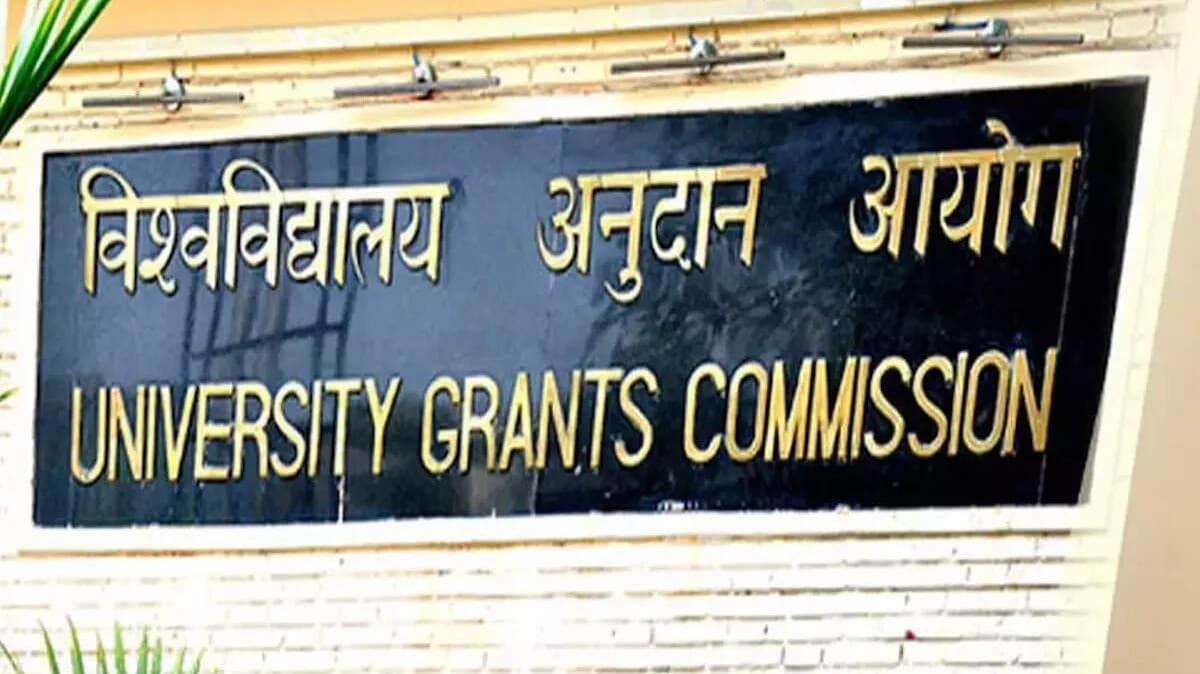
The University Grants Commission (UGC) has approached state governors and sought their intervention to enforce its fee-refund guidelines after finding that several higher education institutions continue to withhold refunds despite repeated reminders and instructions from the regulatory body.
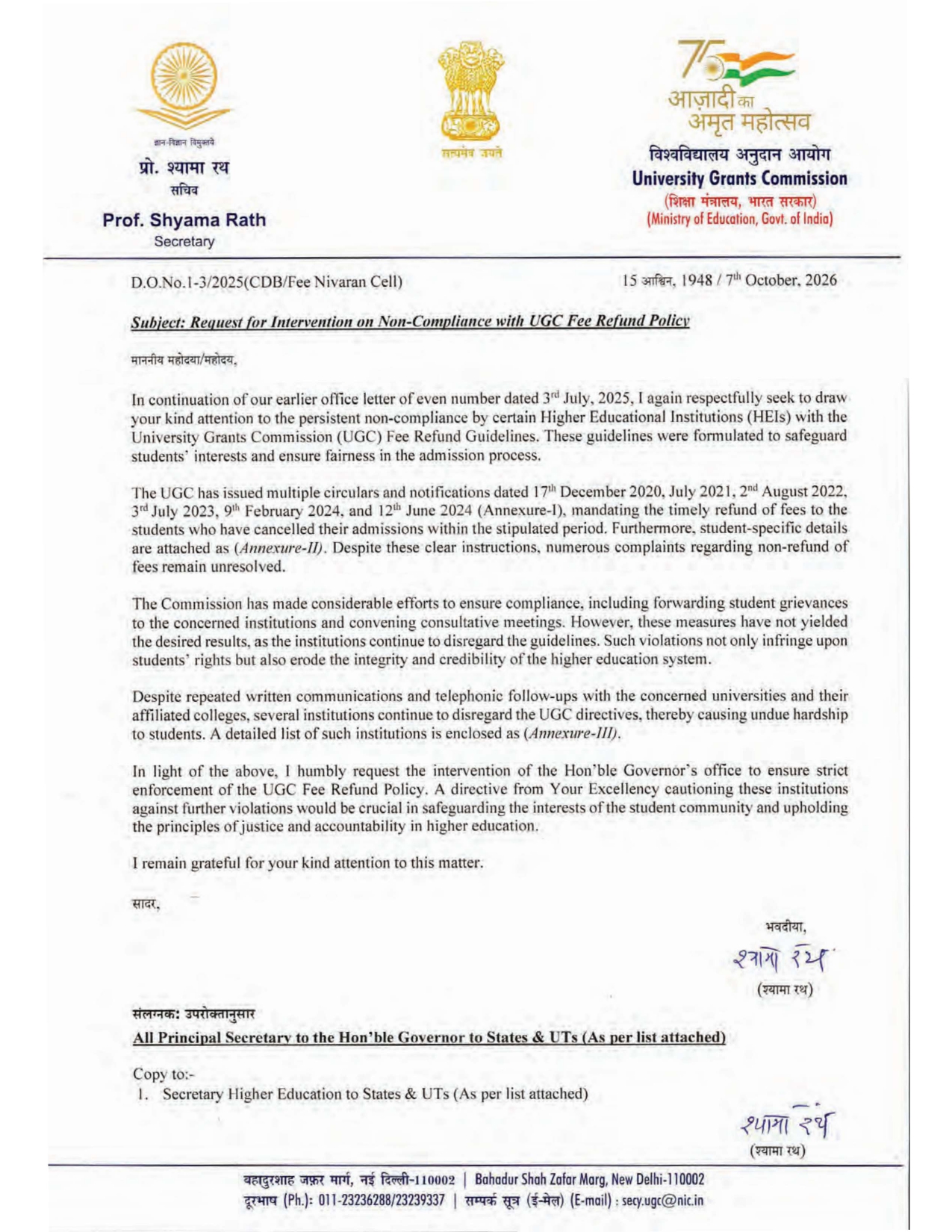
In a recent communication addressed to the principal secretaries to the governors of states and Union Territories, UGC Secretary Shyama Rath highlighted persistent non-compliance with the Commission's fee-refund framework. The guidelines were introduced to protect students' financial interests and ensure fairness and transparency during the admission process.

In the letter, Rath said, “…I seek to draw your kind attention to the persistent non-compliance by certain Higher Educational Institutions with the University Grants Commission Fee Refund Guidelines. These guidelines were formulated to safeguard students’ interests and ensure fairness in the admission process.”
The Commission said it had issued multiple circulars and notifications since December 2020, directing higher education institutions to refund fees promptly to students who cancel their admissions within the prescribed period. However, complaints about institutions failing to return the fees remain unresolved despite these instructions.
The UGC said, “despite these clear instructions, numerous complaints regarding non-refund of fees remain unresolved”. The continued failure to comply with the directions has raised concerns about whether students are receiving the financial protections provided under the Commission's policy.
The regulatory body also cautioned that such violations go beyond individual disputes between students and institutions. According to the UGC, failure to follow the prescribed refund rules infringes upon students' rights and undermines the integrity and credibility of the higher education system.
Seeking action from the governors' offices, Rath said, “…I humbly request the intervention of the Hon’ble Governor’s office to ensure strict enforcement of the UG Fee Refund Policy,” urging the authorities to help ensure that institutions comply with the prescribed requirements.
UGC asks governors to ensure compliance with fee-refund policy
The UGC's communication seeks to use the governors' institutional position to address continuing complaints about fee refunds in higher education. In most states, the governor serves as the ex-officio chancellor of state universities under the applicable state university laws.
This role gives governors a formal leadership position within these institutions and provides an administrative channel through which concerns about compliance can be brought to their attention. The UGC's request seeks their intervention to strengthen enforcement of the fee-refund framework and ensure that higher education institutions follow the Commission's directions.
The move comes after repeated instructions from the regulatory body failed to resolve a number of complaints involving fees that were not returned to students after admission cancellations. The Commission's guidelines are intended to establish a consistent framework for handling such refunds and prevent students from facing unnecessary financial losses when they withdraw from admission within the permitted period.
The issue is particularly relevant to students and families who pay admission fees before deciding to cancel a seat or move to another institution. Timely refunds can help prevent financial hardship, especially when students must pay fees at another institution after changing their admission plans.
The UGC's intervention also highlights the importance of compliance mechanisms in ensuring that institutions implement regulatory directions rather than treating them as optional instructions.
UGC fee-refund framework dates back to October 2018
The Commission's policy on fee refunds and the retention of students' original certificates predates the latest communication to governors. The framework dates back to an October 2018 notification covering the refund of fees and the non-retention of original certificates by higher education institutions.
The notification established an important basis for protecting students during admission-related transactions, including circumstances in which they decide not to continue with an admission. The framework addresses both the financial implications of withdrawal and the handling of students' original documents.
The Commission subsequently issued additional instructions to address fee-refund requirements under changing admission circumstances. These directions were intended to clarify institutions' responsibilities and ensure that students who canceled admissions within the applicable timelines received the refunds due to them.
The guidelines also form part of the UGC's broader regulatory role in protecting students' interests and maintaining fair practices across higher education institutions.
COVID-19 guidelines provided for full refunds during 2020-21
During the COVID-19 pandemic, the UGC issued separate guidelines in September 2020 for the 2020-21 academic session. These provisions allowed for full refunds of fees in cases involving admission cancellation or migration, provided students met the specified timelines.
The measures were introduced to ease the financial burden on parents and students during a period of considerable uncertainty. Changes in admission plans and disruptions associated with the pandemic made clear refund provisions particularly important for families managing education expenses.
By allowing full refunds within the prescribed time limits in the specified circumstances, the guidelines sought to prevent students from losing fees when they canceled an admission or moved to another institution in accordance with the rules.
The pandemic-related directions formed part of the Commission's continuing efforts to establish clear expectations for higher education institutions and provide financial safeguards for students.
UGC warned universities of punitive action in December 2020
In December 2020, the UGC reiterated that its fee-refund directions were mandatory through a letter issued to universities. The Commission also warned that institutions found violating the guidelines could face punitive action.
The warning was intended to reinforce the binding nature of the refund requirements and remind universities of their responsibility to implement the prescribed rules. Institutions were expected to process eligible refunds within the stipulated timelines rather than leave students to pursue unresolved claims.
However, the latest communication indicates that complaints about non-refund of fees continue to reach the Commission despite the earlier circulars, notifications, and warnings.
The UGC's decision to seek the intervention of governors represents a further effort to address these complaints and encourage compliance across higher education institutions. By involving the offices of governors, the Commission is seeking additional institutional support to ensure that students receive refunds in accordance with its policy.
The issue places renewed attention on the responsibilities of universities and colleges in handling admission cancellations, processing refunds, and protecting students from avoidable financial losses. The Commission's stated position is that institutions must follow the prescribed guidelines to safeguard students' rights and maintain confidence in the higher education system.

Virus Linked to Infected Animals and Midge Bites

Chinese Troop Movements and Territorial Claims Fuel Tensions

El Niño Weakens India’s Monsoon and Raises Winter Temperature Concerns

Court Rejects Defence Plea Over Delayed Witness Statements

Court Upholds Mother’s Right to Decide on Pregnancy

Canada announces $813 million research boost to back 450-plus researchers

Abu Dhabi aims to bring 2,000 Emirati teachers into private schools within five years

Australian schools record thousands of student sexual misconduct reports as child safety concerns grow

Egypt insists international schools include Arabic, history in final scores

China’s Chery unveils AI companion robot designed to ease loneliness

Virus Linked to Infected Animals and Midge Bites
Chinese Troop Movements and Territorial Claims Fuel Tensions
El Niño Weakens India’s Monsoon and Raises Winter Temperature Concerns
Court Rejects Defence Plea Over Delayed Witness Statements
Court Upholds Mother’s Right to Decide on Pregnancy
Canada announces $813 million research boost to back 450-plus researchers
Abu Dhabi aims to bring 2,000 Emirati teachers into private schools within five years
Australian schools record thousands of student sexual misconduct reports as child safety concerns grow
Egypt insists international schools include Arabic, history in final scores
China’s Chery unveils AI companion robot designed to ease loneliness
Copyright© educationpost.in 2026 All Rights Reserved.