UGC opens door for HEIs to offer new online and distance programs, applications open till Sept 15
The move aims to widen access to flexible higher education while ensuring universities and colleges meet prescribed standards for academic quality, infrastructure, delivery and student support.
Pragya Kumari07 September 2026 09:25
The University Grants Commission (UGC) has opened the application window for eligible Higher Educational Institutions (HEIs) seeking recognition to offer academic programs through Open and Distance Learning (ODL) and online modes for the 2026-27 academic year.
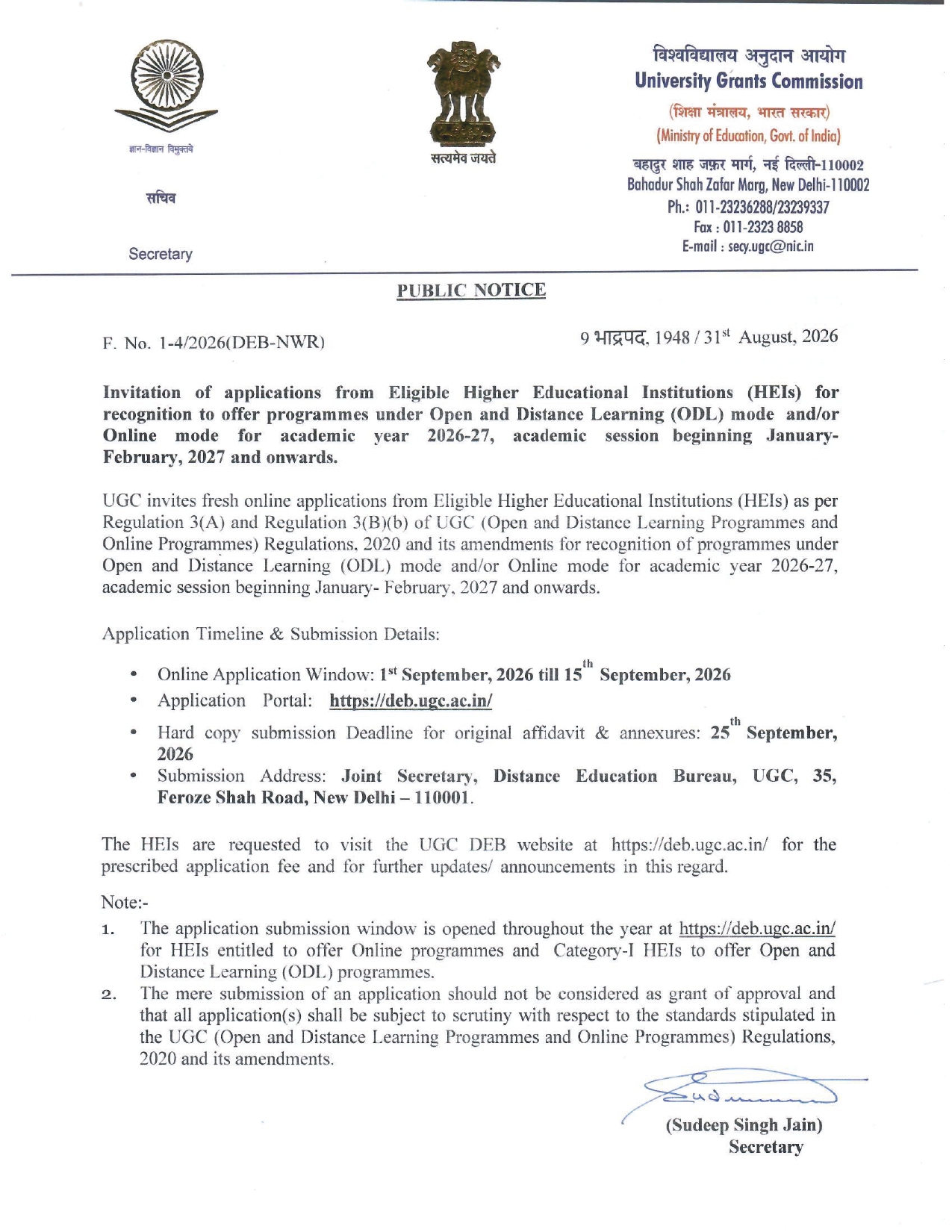
The recognition process covers programs scheduled to commence from the January-February 2027 academic session and subsequent sessions. Eligible institutions can submit their applications through the official UGC Distance Education Bureau (DEB) portal from Sept 1 to Sep 15, 2026.
The latest application cycle follows a public notice issued by the UGC on Aug 31, 2026, under Regulation 3(A) and Regulation 3(B)(b) of the UGC (Open and Distance Learning Programmes and Online Programmes) Regulations, 2020, and subsequent amendments.
The Commission's process is aimed at ensuring that institutions offering degrees and other academic programs through distance and online modes meet the regulatory, academic, infrastructure and technology standards prescribed for such programs.
UGC ODL and online recognition: Key dates
Particular
Details
UGC public notice
August 31, 2026
Online application window
September 1 to September 15, 2026
Application portal
deb.ugc.ac.in
Hard-copy submission deadline
September 25, 2026
Session covered
January-February 2027 and subsequent sessions
Regulatory body
UGC Distance Education Bureau (DEB)
Who can apply for UGC recognition?
The latest notice applies to eligible HEIs intending to offer academic programs through ODL and/or online modes.
Institutions seeking fresh recognition as well as those covered by the applicable recognition framework must satisfy the eligibility requirements prescribed under the UGC's 2020 regulations and their amendments.
Recognition is mandatory for HEIs seeking to offer programs through these modes. Institutions cannot treat submission of an application as permission to begin admissions or conduct an ODL or online program.
The eligibility of an institution is determined under the applicable UGC regulations. The Commission has prescribed requirements concerning areas such as faculty, infrastructure, technology and other institutional capabilities for recognition.
Certain categories of programs may also be restricted from being offered through ODL or online modes. Institutions are therefore required to examine the relevant regulations, amendments and DEB instructions before submitting their applications.
How can HEIs apply?
Eligible institutions must complete the recognition process through the official DEB portal at deb.ugc.ac.in.
The application process requires institutions to register, provide the prescribed institutional and program-related information, complete the application form and submit the required documents.
The basic application process includes:
Visit the official DEB website at deb.ugc.ac.in.
Access the HEI registration and recognition section.
Enter the required institutional details.
Complete the application form and provide the prescribed information and documents.
Submit the application within the notified deadline.
Download and retain the confirmation or submitted application for institutional records.
Institutions should check all information carefully before final submission to avoid discrepancies during scrutiny.
Hard copies required after online submission
Completing the online application is not the final step in the recognition process.
After submitting the application through the DEB portal, institutions must send the original affidavit and required annexures in hard copy to the Joint Secretary, Distance Education Bureau, UGC, New Delhi.
The documents must reach the DEB office at Distance Education Bureau, UGC, 35 Feroze Shah Road, New Delhi 110001.
The deadline for submission of the hard copies is Sept 25, 2026.
Institutions seeking recognition for the January-February 2027 session should therefore account for both deadlines, rather than treating Sept 15 as the only date relevant to the process.
Application does not mean automatic recognition
The UGC has specifically cautioned institutions that submitting an application does not amount to recognition or approval.
"The mere submission of an application should not be considered as grant of approval, and all applications shall be subject to scrutiny with respect to the standards stipulated in the UGC Regulations, 2020 and its amendments," the commission stated in its official notice.
This means an HEI may complete registration and submit an application but still fail to receive recognition if it does not meet the prescribed standards.
Applications will be examined against the requirements established under the UGC (Open and Distance Learning Programmes and Online Programmes) Regulations, 2020, and subsequent amendments.
Recognition will be granted only after the institution and its proposed programs satisfy the applicable regulatory conditions.
Institutions should consequently not advertise or enroll students in programs on the assumption that an application itself constitutes approval.
ODL and online education already offered by major universities
Distance and online education is already an established component of India's higher education system, with several major universities offering programs through dedicated centers.
The University of Delhi, for instance, runs the School of Open Learning (SOL), which offers programs through the open and distance learning mode.
Its offerings include undergraduate and postgraduate programs such as Bachelor of Arts, Bachelor of Commerce, Master of Arts and Master of Commerce, along with other academic programs under its ODL framework.
Jamia Millia Islamia also operates the Centre for Distance and Online Education (CDOE), which offers undergraduate, postgraduate, certificate and diploma programs through flexible learning modes.
Its offerings include programs such as Bachelor of Arts, Bachelor of Commerce, Master of Arts, Master of Commerce and Master of Business Administration, in addition to specialized certificate and diploma courses.
The expansion of such offerings shows how ODL and online education has moved beyond traditional correspondence-based learning.
Universities are increasingly using digital platforms to provide academic degrees as well as shorter, skill-oriented programs for students and working professionals.
However, the recognition status of individual programs remains important. A university's overall reputation or recognition does not mean every course offered through every mode is automatically approved under the UGC-DEB framework.
SWAYAM adds another layer to online learning
India's online learning ecosystem also includes SWAYAM, the government's national online learning platform, which provides access to courses offered by universities and other higher education institutions.
SWAYAM courses cover a wide range of subjects, including humanities, management, computer science, artificial intelligence, data science and data analytics, among other disciplines.
Year-round application window for certain HEIs
The UGC has also clarified that the September application window is not the only opportunity available under the broader recognition framework.
Institutions that are eligible to offer online programs can apply through the DEB portal throughout the year. Category-I HEIs that are eligible to offer ODL programs also have access to a year-round application facility.
However, institutions planning to offer or continue programs from the January-February 2027 session must follow the application schedule specified in the latest notice.
HEIs should therefore determine their eligibility and the applicable recognition category before proceeding with their applications.
Why the recognition process matters
The recognition mechanism is intended to regulate the expansion of higher education through distance and digital modes while maintaining academic and institutional standards.
ODL and online education have enabled students, working professionals and other learners to pursue higher education without attending conventional full-time, campus-based programs. These modes can provide greater flexibility to learners who may not be able to relocate or attend regular classes.
At the same time, the growth of online and distance education has increased the importance of regulatory oversight. UGC recognition provides a mechanism through which institutions and their programs can be assessed against prescribed standards.
For institutions, recognition is therefore not simply an administrative formality. It determines whether they meet the regulatory requirements necessary to offer programs through the relevant mode.
What students should check before enrolling
The latest UGC recognition cycle is primarily directed at HEIs, but the outcome will also be important for students planning to pursue distance or online education in 2027.
Prospective students should verify the recognition status of both the institution and the specific program before paying an admission fee. The safest source for this verification is the official DEB portal.
A university may have recognition for conventional programs or for a particular mode of delivery without necessarily having approval for every program it offers through ODL or online education.
Students considering admission should therefore check:
What to verify
Why it matters
Institution's UGC-DEB status
Confirms whether the HEI is recognized for the relevant mode
Specific program
Recognition may apply to particular programs rather than every course
Mode of delivery
Check whether the approval covers ODL or online learning
Academic session
Ensure recognition covers the intended admission cycle
Official admission details
Helps avoid relying on unauthorized advertisements or claims
DEB listing
Provides an official reference for recognized institutions and programs
Students and parents should rely on official UGC and DEB information instead of social media posts, forwarded messages or claims from third parties promising guaranteed recognition.
The fact that an institution has submitted an application should not be interpreted as confirmation that its program has been approved.
UGC advises institutions to review requirements
The Commission has advised eligible institutions to examine the regulations, eligibility conditions and documentation requirements before submitting their applications.
HEIs should also consult the Distance Education Bureau website for information on applicable application fees and other instructions related to the recognition process.
The application should be completed within the notified period, and the required original affidavit and annexures should be dispatched in time to reach the DEB office by Sept 25.
The UGC's recognition framework is designed to ensure that institutions entering or continuing in the ODL and online education space have the necessary academic, faculty, infrastructure and technological capacity.
UGC's role in higher education
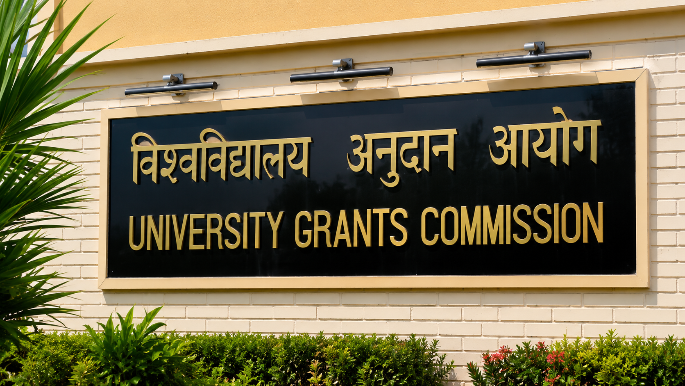
The University Grants Commission is India's apex statutory body for coordinating and maintaining standards in higher education. Established in 1956 under an Act of Parliament, the UGC functions under the Ministry of Education.
Its responsibilities include coordination and maintenance of standards in higher education, recognition of universities and other regulatory functions.
Within the distance and online education space, the Distance Education Bureau is responsible for overseeing recognition and regulatory compliance for ODL and online programs.
The Commission's official notices are published through its official channels, while the DEB portal provides information relating to recognized institutions and programs.
What happens after applications are submitted?
Once the application window closes, the submitted proposals will be scrutinized against the applicable provisions of the UGC's ODL and Online Regulations and their amendments.
The scrutiny will determine whether the concerned institutions satisfy the requirements for recognition. The submission of an application alone does not establish eligibility or guarantee approval.
The subsequent publication of recognized institutions and programs on the DEB portal will therefore be significant for both HEIs and students preparing for the January-February 2027 academic session.
Institutions and learners can expect the DEB portal to remain the key source for updates on recognized HEIs, approved programs, application requirements, fees and any further clarifications issued by the Commission.
Jamia Millia Islamia adds 11 distance and online programs
Meanwhile, Jamia Millia Islamia (JMI) has expanded its distance and online education offerings for the 2026-27 academic year, with its Centre for Distance and Online Education (CDOE) introducing 11 new certificate and diploma programs.
With the additions, the center now offers a total of 60 programs.
The newly introduced courses include certificate programs in French, Spanish, Chinese, Persian, Arabic and Russian. JMI has also added certificate programs focused on photography and video editing, anchoring and broadcast presentation, and Indian Knowledge Systems.
The CDOE has further introduced a Diploma in Artificial Intelligence and Digital Media and an Advanced Diploma in Conflict Analysis and Peace Building.
The expansion is aimed at providing learners with greater access to flexible higher education while offering academic, language and industry-oriented skills.
JMI Vice-Chancellor Mazhar Asif and Registrar Md Mahtab Alam Rizvi welcomed the addition of the programs and emphasized the importance of expanding academic opportunities through courses linked to practical and relevant skills.
JMI extends admission deadline
JMI has also extended the deadline for applications to its CDOE programs until September 8, 2026. The earlier deadline had been August 10.
The university said the extension followed requests from prospective applicants. The recommendation for extending the deadline was made by CDOE Director Aslam Khan.
The move gives prospective students additional time to apply for the expanded range of certificate, diploma and advanced diploma programs offered through the center.
The Jamia development comes as the UGC continues to strengthen the regulatory framework governing distance and online higher education.
While institutions can use these modes to broaden access to learners, recognition and compliance remain central requirements under the UGC framework.
For HEIs seeking recognition for the January-February 2027 session, the immediate deadlines are Sept 15 for online applications and Sept 25 for submission of the required hard copies. Institutions must await the outcome of the UGC's scrutiny before treating their programs as recognized.
For students, the corresponding safeguard is to verify the final recognition status of the institution and program on the DEB portal before enrolling.













.jpg&w=256&q=75)