


The bench accepted that the textbook content was prepared collectively without malicious intent, while maintaining that the chapter discussing judicial corruption and delays remained “wholly undesirable.”
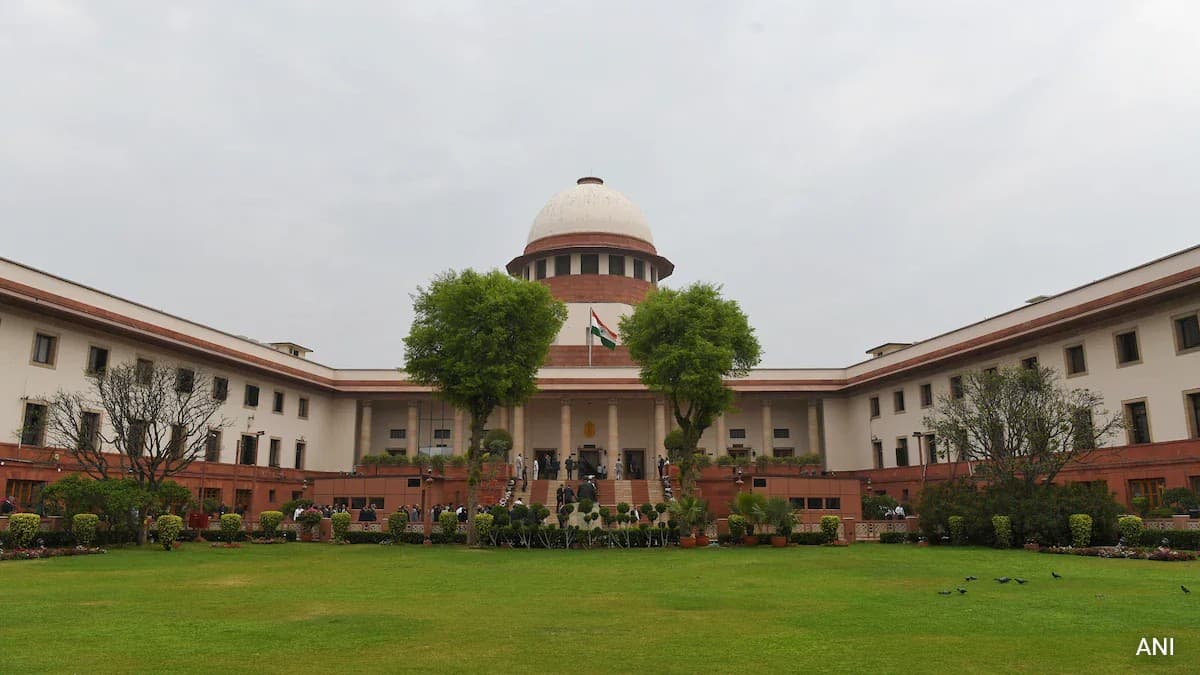
The Supreme Court has removed restrictions imposed earlier on three academics linked to a controversial NCERT Class 8 textbook chapter on judicial corruption, allowing them to participate again in academic projects connected with public educational institutions.
The court also withdrew its earlier observation that the academics had “deliberately and knowingly” presented facts in a manner intended to create a negative perception of the judiciary among school students.

The decision was passed by a bench comprising Justice Surya Kant, Justice Joymalya Bagchi, and Justice Vipul Pancholi while hearing applications filed by Professor Michel Danino, Suparna Diwakar, and Alok Prasanna Kumar.
The controversy relates to an NCERT Class 8 social science chapter that discussed issues such as corruption in the judiciary and delays in the justice delivery system.
Earlier this year, the Supreme Court had ordered the removal of the chapter and prohibited circulation of textbooks carrying the content.
During the latest hearing, the bench maintained that the chapter itself was “wholly undesirable" but accepted submissions that the material had been prepared collectively and without malicious intent.
The court clarified that the Union government and state authorities would remain free to independently decide whether to engage the three academics in future academic assignments without being influenced by the court’s earlier remarks.
The matter arose from a suo motu case initiated over concerns regarding the textbook content and its portrayal of the judiciary before school students.
Senior Advocate Shyam Divan, appearing for Professor Michel Danino, argued that the earlier order dated March 11 had been passed without hearing the academics. He also told the court that the chapter was not the work of any one individual author.
Senior Advocate Gopal Sankaranarayanan, representing Alok Prasanna Kumar, defended the inclusion of discussions around institutional shortcomings in school education.
He argued that students should be encouraged to understand institutions realistically, “with warts and all."
However, Justice Joymalya Bagchi observed during the hearing that the chapter appeared one-sided because it focused heavily on corruption within the judiciary while not adequately discussing the institution’s positive contributions.
Senior Advocate J Sai Deepak, appearing for Suparna Diwakar, argued that the earlier observations of the court had adversely affected the academics and could damage their professional careers and livelihoods.
During the proceedings, Solicitor General Tushar Mehta informed the bench that the Union government had already decided not to involve the three academics in future projects.
The Supreme Court also observed that wider concerns relating to textbook content and educational material could be examined by the expert committee headed by former Supreme Court judge Justice Indu Malhotra.

India AI Fellowship 2026: UG Students to Get ₹1 Lakh, PG Students ₹2 Lakh

New Zealand teachers work nearly five hours more than OECD average
.jpg&w=256&q=75)
New Zealand reforms could leave more students without school qualifications
Gujarat School Entry Rules 2026: Outsiders Need Written Permission to Enter School Campuses
Himachal Pradesh to Introduce Moral Science from Class 1, CM Sukhu Directs Education Department
New Zealand reforms could leave more students without school qualifications

Alfred Nobel’s will created one of the world’s most recognised prizes. Here’s how

Pepperdine University earns Google recognition and Digital Education Council membership for AI initiatives
Dhirubhai Ambani International School breaks into global top 10 with record IB score
.jpg&w=256&q=75)
Meta faces $25 billion penalty in New Mexico privacy ruling

India AI Fellowship 2026: UG Students to Get ₹1 Lakh, PG Students ₹2 Lakh
New Zealand teachers work nearly five hours more than OECD average
New Zealand reforms could leave more students without school qualifications
Gujarat School Entry Rules 2026: Outsiders Need Written Permission to Enter School Campuses
Himachal Pradesh to Introduce Moral Science from Class 1, CM Sukhu Directs Education Department
New Zealand reforms could leave more students without school qualifications
Alfred Nobel’s will created one of the world’s most recognised prizes. Here’s how
Pepperdine University earns Google recognition and Digital Education Council membership for AI initiatives
Dhirubhai Ambani International School breaks into global top 10 with record IB score
Meta faces $25 billion penalty in New Mexico privacy ruling
Copyright© educationpost.in 2026 All Rights Reserved.