


The court rejected a review plea by NGO Justice For All, ruling that Delhi’s policy of transferring uniform assistance directly to eligible students does not violate the Right to Education Act.
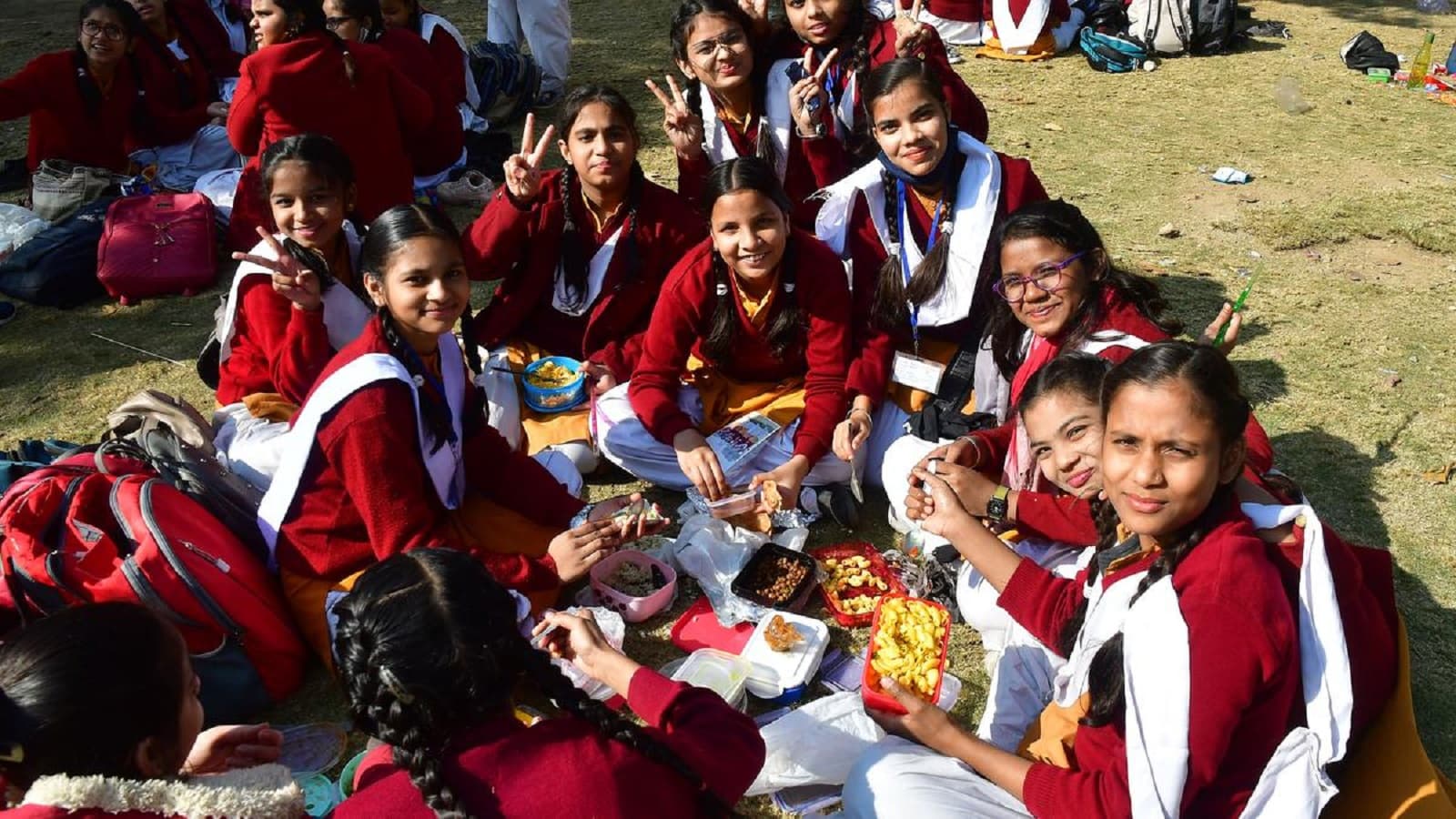
The Delhi High Court has upheld the Delhi government’s policy of providing financial assistance instead of physical school uniforms to students from Economically Weaker Section (EWS) and Disadvantaged Group (DG) categories enrolled in private schools.
A bench comprising Justices Subramonium Prasad and Renu Bhatnagar dismissed a review petition filed by NGO Justice For All, which sought reconsideration of the court’s January 23, 2026, judgment approving the government’s direct benefit transfer (DBT) mechanism for school uniform assistance.

In its October 12 order, the court held that the grounds raised by the petitioner largely repeated arguments that had already been considered. It found no apparent error in the earlier judgment that would justify reopening the matter.
The dispute concerns the implementation of provisions under the Right of Children to Free and Compulsory Education (RTE) Act, 2009, which provides for free uniforms, textbooks and other learning materials for eligible children.
Justice For All argued that the government should supply uniforms directly to eligible students in aided and unaided private schools rather than transfer money to their accounts.
The Delhi government, however, maintained that procuring and distributing uniforms presented significant administrative challenges. These included collecting individual measurements, purchasing materials, arranging stitching for different school designs and ensuring delivery before the academic session began.
The government introduced a revised policy in June 2025 to provide financial assistance for uniforms instead of distributing them physically.
The court found that the decision, taken in view of these operational difficulties, could not be considered so arbitrary or unreasonable that judicial intervention was warranted.
In dismissing the review plea, the bench observed that the petitioner was attempting to reargue the case rather than establish a clear error in the previous judgment.
The court noted that the government’s policy dated June 10, 2025, along with the relevant note submitted to the Council of Ministers, had already been examined before the January ruling.
It also rejected the contention that the policy was inconsistent with the RTE Act and the applicable Delhi rules, reiterating its earlier conclusion that the cash-assistance mechanism was not contrary to the statutory framework.
The bench found no apparent error on the face of the record and no relevant material that had been overlooked in the earlier proceedings.
The ruling allows the Delhi government to continue providing eligible students with financial assistance to purchase school uniforms rather than supplying the garments directly.
The government had cited the practical difficulties involved in handling different uniform designs, sizes and procurement requirements across schools. It argued that direct transfers would enable families to arrange uniforms in time for the start of the academic session.
The policy forms part of the broader implementation of the RTE Act for children admitted under EWS and DG categories in recognised private schools. The applicable assistance is governed by the government’s prescribed rates and eligibility conditions.
The ruling does not remove the entitlement to uniform assistance; it upholds the government’s chosen method of providing that support.
The latest decision follows the High Court’s January 23, 2026, judgment, which accepted the Delhi government’s request to modify its earlier directions concerning the provision of uniforms.
The matter originated in proceedings initiated by Justice For All over the implementation of free educational materials for eligible children under the RTE framework.
The government subsequently formulated its June 2025 policy after considering the administrative and logistical difficulties associated with supplying uniforms in kind.
By dismissing the latest review petition, the High Court has declined to revisit its earlier conclusion that the financial assistance policy is legally permissible.

Delhi High Court Upholds Cash Assistance Policy for EWS Students’ School Uniforms
Tamil Nadu School Holiday Today: Classes Suspended in Several Districts, Chennai Schools to Remain Open

Delhi Government to Set Up Medical Rooms in 1,086 Schools With Menstrual Health Support

Australia’s international student decline hits vocational and English-language courses harder

Bihar Board Extends Class 9, 11 Registration Deadline for 2028 Exams to November 6

AI boom puts forward deployed engineers on track for ₹1 crore annual packages

Reed College’s concrete owl stolen, frozen and set on fire

Canada announces $813 million research boost to back 450-plus researchers

Abu Dhabi aims to bring 2,000 Emirati teachers into private schools within five years

Australian schools record thousands of student sexual misconduct reports as child safety concerns grow

Delhi High Court Upholds Cash Assistance Policy for EWS Students’ School Uniforms
Tamil Nadu School Holiday Today: Classes Suspended in Several Districts, Chennai Schools to Remain Open
Delhi Government to Set Up Medical Rooms in 1,086 Schools With Menstrual Health Support
Australia’s international student decline hits vocational and English-language courses harder
Bihar Board Extends Class 9, 11 Registration Deadline for 2028 Exams to November 6
AI boom puts forward deployed engineers on track for ₹1 crore annual packages
Reed College’s concrete owl stolen, frozen and set on fire
Canada announces $813 million research boost to back 450-plus researchers
Abu Dhabi aims to bring 2,000 Emirati teachers into private schools within five years
Australian schools record thousands of student sexual misconduct reports as child safety concerns grow
Copyright© educationpost.in 2026 All Rights Reserved.