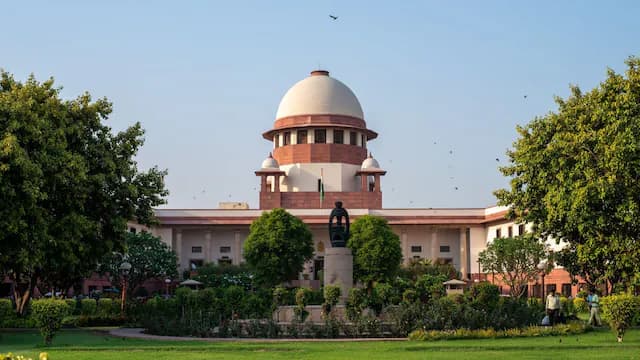
The Supreme Court on January 29 stayed the University Grants Commission’s (UGC) newly notified Promotion of Equity in Higher Education Institutions Regulations, 2026, expressing serious concern over the way caste-based discrimination has been defined and restricted under the rules.
A Bench led by Chief Justice Surya Kant and Justice Joymalya Bagchi held that the regulations, in their present form, are prima facie vague, exclusionary and capable of misuse, and warned that allowing them to operate could have a “dangerous impact” on society.

“If we do not intervene, it will have a grave impact and may divide society,” the court observed while issuing notice to the Union government and the UGC on a batch of petitions challenging the regulation. The matter has been listed for further hearing on March 19. Until then, the 2026 regulations will remain in abeyance, with the 2012 UGC equity rules continuing to operate.
At the heart of the challenge is the UGC’s definition of caste-based discrimination, which limits protection and grievance redressal mechanisms to members of the Scheduled Castes (SCs), Scheduled Tribes (STs) and Other Backward Classes (OBCs).
Petitioners argued that this narrow framing excludes students and staff from the general or non-reserved categories, even though caste-based harassment can cut across social classifications.
The Bench echoed these concerns, noting that by confining institutional safeguards to select categories, the UGC has effectively denied protection to others who may also face bias or humiliation on account of caste.
Raising a hypothetical scenario, CJI Kant questioned whether Regulation 3(e) was broad enough to address real-world discrimination. He asked whether sarcastic or humiliating remarks directed at a student from one region studying in another — where the caste identities of the victim and the perpetrators are not known — would fall within the regulation’s ambit.
The court also suggested that the regulations should be revisited by a committee of eminent jurists, underscoring the need for a more inclusive, precise and constitutionally sound framework.
Notified on January 13, the 2026 regulations mandated all higher education institutions to constitute equity committees comprising representatives from OBC, SC and ST communities, persons with disabilities, and women, to address discrimination complaints and promote equity on campuses. These rules replaced the UGC (Promotion of Equity in Higher Educational Institutions) Regulations, 2012, which were largely advisory in nature.
However, the new framework triggered widespread opposition, with student organisations and civil society groups staging protests across several regions, demanding its immediate rollback on the ground that it institutionalised an exclusionary understanding of caste discrimination.
With the Supreme Court’s interim stay, the future of the UGC’s 2026 equity regulations now hinges on judicial scrutiny — and a possible rethink of how caste-based discrimination is defined and addressed within India’s higher education system.