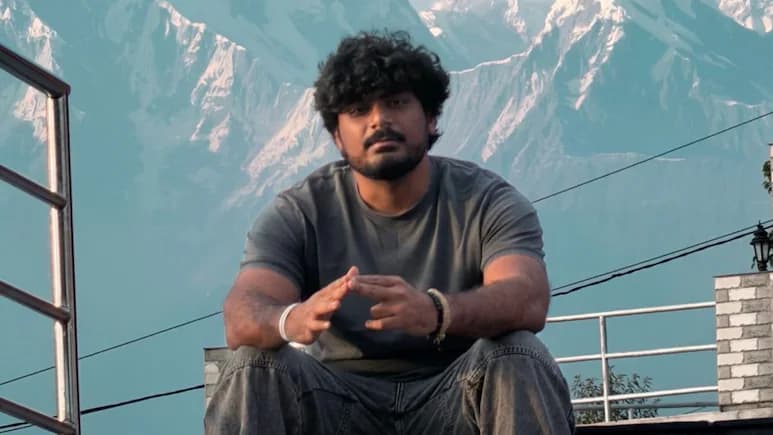
For Pavan Chindukuri, a career that began with a ₹3,000 monthly salary eventually led to earnings of around ₹58 lakh a year through remote work. Now, after losing that job in a layoff, the software professional is once again looking for an opportunity — this time as a Software Development Engineer or AI Engineer/FDE.
Chindukuri's journey has drawn attention on LinkedIn and X, particularly because he built his career after dropping out of college and without following the conventional degree-to-job route.

His story began during a period of financial hardship for his family. His father, an auto driver, struggled to support the family and pay for his children's education, while his mother contributed by selling her gold and taking loans, Chindukuri told NDTV.
He initially enrolled in Computer Science and Engineering at Lovely Professional University but found it difficult to adjust to living away from home. He later joined an NIT but eventually had to leave college as financial pressures mounted.
"I first joined Lovely Professional University's Computer Science and Engineering (CSE), but as I never left my place, and that being a distant place from my home, I wasn't able to be present and it took a mental toll on me. I dropped out from there and got into NIT the next year," he said.
From an old laptop to his first job
After leaving college, Chindukuri considered working as an Uber driver. Instead, friends encouraged him to learn technology skills through YouTube.
His uncle lent him a seven-year-old laptop, while Chindukuri borrowed money from friends to buy a keyboard and mouse and pay for a six-month Wi-Fi plan.
He began learning independently and joined online communities on Reddit and Discord, where he connected with other professionals and explored job opportunities.
His first job paid just ₹3,000 a month.
That was the beginning of a career that would see his earnings rise several times over.
Salary climbed from ₹3,000 to ₹2 lakh a month
According to a LinkedIn post detailing his career progression, Chindukuri later joined a Dubai-based startup, where he earned around ₹60,000 a month.
A LinkedIn connection subsequently helped him land a role at Mosaic Wellness, taking his monthly earnings to around ₹1.2 lakh.
A post by Praveen Singampalli, later reposted by Chindukuri, said he had more than six years of experience, all in remote roles. It listed his career progression from ₹3,000 a month in his first job to ₹60,000 in the second and ₹1.2 lakh in the third.
His fourth and fifth jobs paid around ₹1.8 lakh and ₹2.1 lakh a month, respectively.
Remote role pushed earnings to ₹58 lakh a year
Chindukuri's biggest jump came through a remote job that paid him by the hour.
Speaking to NDTV, he said his hourly rate initially stood at $28 and later rose to $32. Based on a 40-hour work week, he said his post-tax earnings worked out to around ₹58 lakh a year.
Without deductions, he estimated the annual figure at around ₹63.5 lakh.
The high-paying role, however, came to an end when he was laid off.
Chindukuri is now seeking hybrid opportunities as a Software Development Engineer or AI Engineer/FDE. He has also reached out to his professional network for job leads.
Why he wants companies to look beyond degrees
For Chindukuri, his career has also become an argument for skills-based hiring.
He credited the startups that gave him opportunities despite his lack of a degree and prior professional experience, particularly Mosaic Wellness and its CTO Shouvik, whom he said trusted his skills and gave him an opportunity to prove himself.
He also thanked Swapnil, whom he credited with helping him secure his first job.
Chindukuri believes the rapid growth of artificial intelligence makes it even more important for employers to identify talent beyond conventional academic credentials.
"I believe that in this era of AI, companies need to look for genuinely talented candidates rather than judging by a degree or the college it came from," he said.
He also criticised job postings that restrict applications to candidates from Tier-1 or Tier-2 institutions.
His own journey, from borrowing an old laptop and earning ₹3,000 a month to reaching ₹58 lakh a year, has put that question at the centre of his career story: how much should a candidate's college determine the opportunities they get?