From NEET paper leak to Pralhad Joshi's appointment: Inside controversy that led to a leadership change, reshaped India's education system
The developments spanning nearly three months included a nationwide re-examination, student protests, a CBI probe, sweeping policy reforms, and the resignation of Union Education Minister Dharmendra Pradhan.
Pragya Kumari27 July 2026 05:46
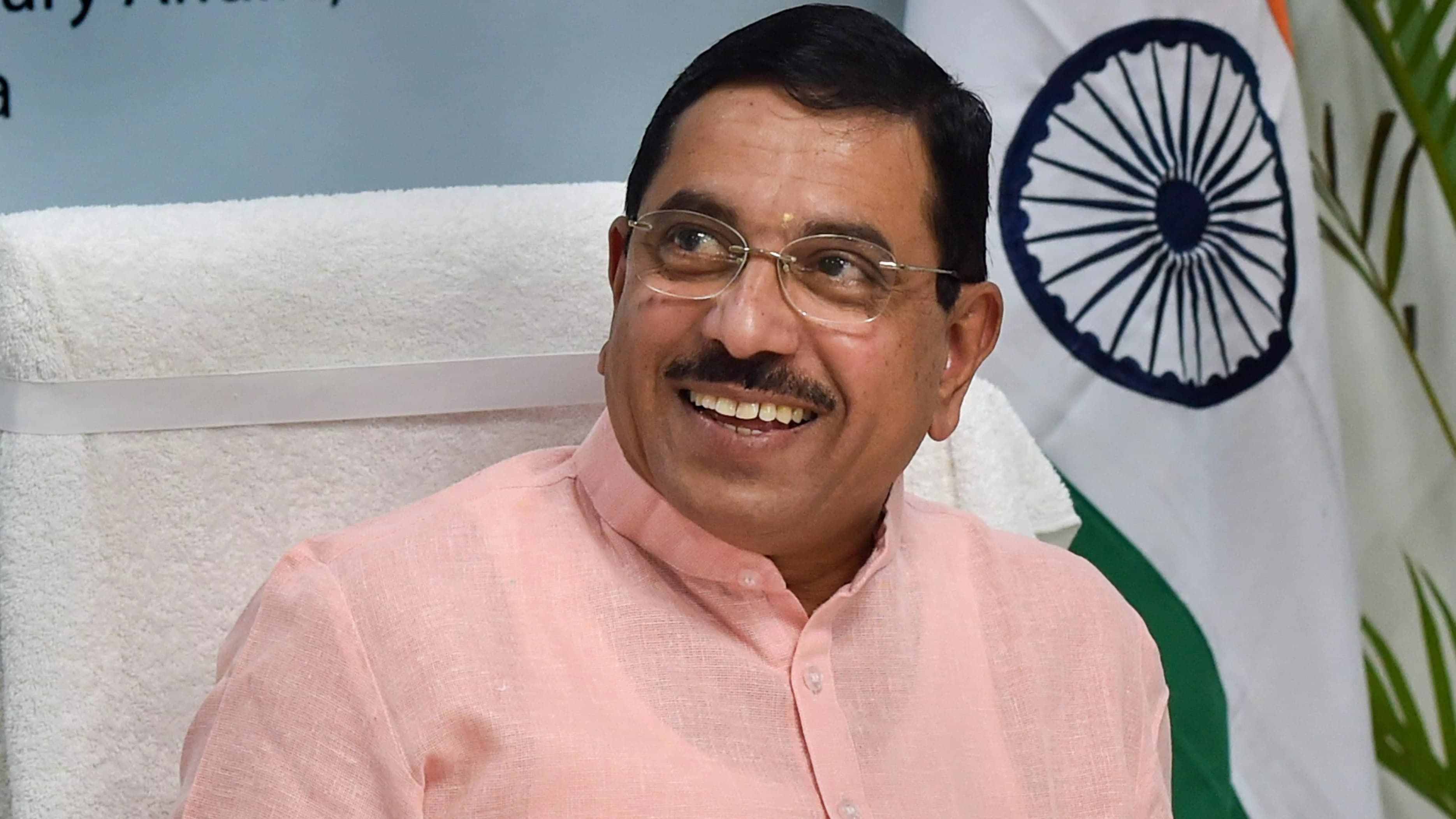
Union Minister Pralhad Joshi assumed additional charge of the Ministry of Education following the resignation of Dharmendra Pradhan, stepping into the role at a time when the government is implementing a series of reforms after the NEET UG 2026 paper leak controversy.
The change in leadership comes after nearly three months of investigations, student protests, policy announcements, and political developments that brought India's examination system under intense public scrutiny.
President Droupadi Murmu accepted Pradhan's resignation from the Union Council of Ministers and, on the advice of Prime Minister Narendra Modi, assigned the Education Ministry to Joshi in addition to his existing responsibilities.
According to a notification issued by Rashtrapati Bhavan, "As advised by the Prime Minister, the President has directed that Pralhad Joshi, Cabinet Minister, be assigned the charge of the Ministry of Education, in addition to his existing portfolio."
Soon after assuming office, Joshi thanked the Prime Minister for the responsibility and said he would work to strengthen the ministry's ongoing initiatives. "I accept it with humility and a deep sense of duty," he said.
A five-time Lok Sabha MP from Karnataka's Dharwad constituency, Joshi currently heads the Ministries of Consumer Affairs, Food and Public Distribution and New and Renewable Energy. He has previously served as Union Minister for Parliamentary Affairs, Coal, and Mines.
The leadership change follows Pradhan's resignation, which came amid sustained protests over alleged irregularities in NEET UG 2026. In his resignation, Pradhan said he was stepping down in the interest of students and to ensure the issue was not exploited by "anti-national forces."
The resignation followed weeks of nationwide demonstrations demanding greater transparency, accountability, and structural reforms in the conduct of competitive examinations.
NEET UG controversy triggered ministry's leadership change
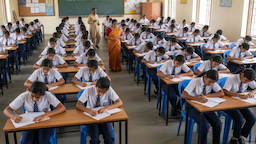
The developments that culminated in the change of leadership began after the National Eligibility cum Entrance Test Undergraduate (NEET UG) 2026 was conducted on May 3 for more than 22 lakh candidates seeking admission to undergraduate medical and allied health courses.
Soon after the examination, Rajasthan-based tutor Shashikant Suthar alleged that several questions in the NEET UG paper matched a PDF that had allegedly circulated before the examination.
According to Suthar, the similarities were particularly noticeable in the Chemistry section. He said he reported the matter to the National Testing Agency (NTA), the Ministry of Education, and other authorities.
The allegations prompted the NTA to conduct an internal verification before the matter was transferred to the Central Bureau of Investigation (CBI) for further investigation.
Following its review, the NTA canceled the examination and announced a nationwide re-test for nearly 22.79 lakh candidates.
The decision marked the first time since the NTA began conducting NEET in 2019 that the examination had been canceled across the country.
The episode also revived comparisons with NEET UG 2024, when allegations of paper leaks had surfaced but did not result in the cancellation of the examination.
The re-examination was conducted on June 21, with the NTA stating that almost all affected candidates appeared for the test. It became one of the largest re-examinations conducted in the country.
While the government viewed the successful conduct of the re-test as an important corrective measure, many students maintained that the issue extended beyond the examination itself and required wider institutional reforms.
Online campaign develops into nationwide student movement
Alongside the investigation, an unrelated development in the Supreme Court unexpectedly shaped the public response to the controversy.
During a hearing on May 16, remarks made by Justice Surya Kant were widely interpreted on social media as referring to unemployed youth as "cockroaches." Although the Supreme Court later clarified that the remarks had been taken out of context, the phrase quickly gained traction online.
The same day, a student proposed the formation of a satirical "Cockroach Janta Party" (CJP) through a social media post.
Initially intended as an online campaign representing frustrated students and job aspirants, the initiative rapidly evolved into an organized protest movement.
Within weeks, thousands of students across the country identified with the campaign, which gradually shifted its focus toward examination reforms.
The organization demanded stronger safeguards against paper leaks, greater transparency in the functioning of the National Testing Agency, reforms in competitive examinations, and the resignation of Union Education Minister Dharmendra Pradhan.
Meanwhile, the investigation continued.
On May 22, according to CBI remand documents and media reports, investigators arrested a Pune school headmistress who had previously worked as an NTA subject expert.
She was accused of reconstructing examination questions from memory after the test, sharing them with others, and later attempting to destroy evidence.
The arrest added momentum to the investigation and intensified public debate over examination security.
By the end of May, what had started as allegations surrounding one examination had developed into a nationwide discussion on transparency, accountability, and the credibility of India's competitive examination system.
Protests expand across the country
The movement gained further momentum in early June when students began organizing demonstrations at Jantar Mantar in New Delhi.
Thousands of aspirants gathered at the protest site, demanding comprehensive reforms in the examination system and accountability for the alleged irregularities in NEET UG.
As the demonstrations continued, the movement attracted participants preparing for other competitive examinations, broadening its scope beyond medical entrance tests.
Student organizations, activists, and civil society groups from different states also extended support, giving the campaign a nationwide presence.
Although the government canceled the examination and conducted a fresh test, protest leaders argued that re-examination alone could not restore confidence in the system.
Instead, they called for structural reforms and accountability within institutions responsible for conducting national-level examinations.
The center held discussions with representatives of the Cockroach Janta Party in an effort to end the protests.
However, the meetings failed to produce an agreement, with student representatives continuing to insist on Dharmendra Pradhan's resignation.
The movement received wider public attention on June 28 when education reform advocate Sonam Wangchuk visited Jantar Mantar and announced a solidarity fast in support of the students.
His participation drew national attention to the protests and expanded the conversation beyond examination reforms.
By the beginning of July, demonstrations had spread to several states, with student organizations and civil society groups organizing rallies demanding reforms in competitive examinations and stronger safeguards against paper leaks.
The campaign reached its peak on July 20 during the "Chalo Sansad" march in New Delhi.
Thousands of protesters attempted to march toward Parliament before being stopped by security personnel. Clashes broke out after police prevented the march from proceeding.
Police used tear gas and baton charges to disperse the protesters, while several demonstrators were detained.
Images and videos of the confrontation circulated widely on television and social media, bringing the movement into the national spotlight.
Authorities later dismantled the protest site at Jantar Mantar, but demonstrators returned the following day and resumed the agitation.
Despite allegations by organizers that restrictions had been imposed on some of the movement's social media platforms, protests continued in Delhi and other parts of the country.
By this stage, the resignation of the Union Education Minister had become the movement's principal demand.
Center announces reforms as pressure on government intensifies
As demonstrations continued across the country, the Centre announced a series of measures aimed at strengthening the security and transparency of competitive examinations.
On July 24, Prime Minister Narendra Modi outlined additional reforms through a video message, emphasizing the government's commitment to preventing future paper leaks and ensuring accountability in the examination process.
The measures included the creation of fast-track courts to expedite paper leak cases, stricter penalties against organized examination fraud, and continued investigations into the NEET UG controversy. The government also reiterated its commitment to overhauling the examination ecosystem through institutional and technological reforms.
Among the key proposals was the transition of NEET to a Computer-Based Test (CBT) format from 2027, a move intended to reduce the risk of paper leaks and strengthen examination security. The ministry also announced plans to improve monitoring mechanisms and reinforce safeguards within the National Testing Agency.
Despite these announcements, student organizations maintained that reforms alone would not address concerns over accountability.
Representatives of the Cockroach Janta Party continued to press for Dharmendra Pradhan's resignation, arguing that administrative responsibility should accompany structural reforms.
Pradhan resigns after weeks of protests
Dharmendra Pradhan resigned as Union Education Minister, bringing an end to weeks of speculation over his future amid sustained student protests.
The resignation marked the most significant political development since the NEET UG controversy began and paved the way for Pralhad Joshi's appointment as head of the Ministry of Education.
In a letter addressed to the country's youth and shared on X, Pradhan defended the government's handling of the controversy while explaining the reasons behind his decision to step down.
He said the Center had acted immediately after allegations of irregularities surfaced by transferring the investigation to the Central Bureau of Investigation, canceling the examination, and announcing a nationwide re-examination.
"The Government of India immediately took cognisance of the matter, handed over the investigation to the CBI, cancelled the examination and announced a fresh date for the re-examination," he wrote.
Pradhan also referred to the June 21 re-examination, describing it as the result of a "whole-of-government approach" involving the Centre, state governments, district administrations, students, parents, and guardians.
He maintained that he had accepted responsibility from the beginning of the controversy. "From the very first day, I took responsibility and never turned away from this situation," he said.
According to Pradhan, the government's priority throughout the crisis had been to ensure that deserving candidates did not suffer because of the actions of what he described as the "examination mafia."
Referring to the NEET UG results declared on July 16, he said they demonstrated that students from economically weaker backgrounds had continued to perform well despite the disruption.
Without naming any individual or political organization, Pradhan alleged that certain people holding responsible positions had attempted to mislead students during the controversy, adding that those developments had caused him "deep anguish."
Explaining why he chose to resign, he wrote, "This is not a matter of personal prestige for me."
Pradhan said he had decided to step down to ensure that "anti-national forces do not take advantage" of the situation, that "the country's unity remains intact," that "not a single student's future gets entangled in legal complications," and that students could return to focusing on their education and careers.
He concluded the letter by thanking Prime Minister Narendra Modi, members of the Union Cabinet, ministry officials, and staff for their support, adding that serving the nation would remain "the highest priority" of his life.
Student group withdraws agitation after leadership change
Pradhan's resignation prompted celebrations among protesters gathered at Jantar Mantar, where demonstrations had continued for more than a month.
Later the same day, representatives of the Cockroach Janta Party met Union Ministers J P Nadda and Jitendra Singh for another round of discussions.
Following the meeting, the organization announced that it was ending its 37-day protest after receiving assurances from the government regarding its remaining demands.
The decision brought an end to one of the country's largest student-led protest movements in recent years.
Although the agitation concluded, the controversy significantly influenced the government's approach to examination reforms and accelerated plans to strengthen mechanisms designed to prevent future irregularities.
Pralhad Joshi takes charge of the Education Ministry
Hours after Pradhan's resignation was accepted, Pralhad Joshi formally assumed charge of the Ministry of Education.
According to the notification issued by Rashtrapati Bhavan, President Droupadi Murmu accepted Pradhan's resignation with immediate effect and assigned the Education Ministry to Joshi in addition to his existing responsibilities.
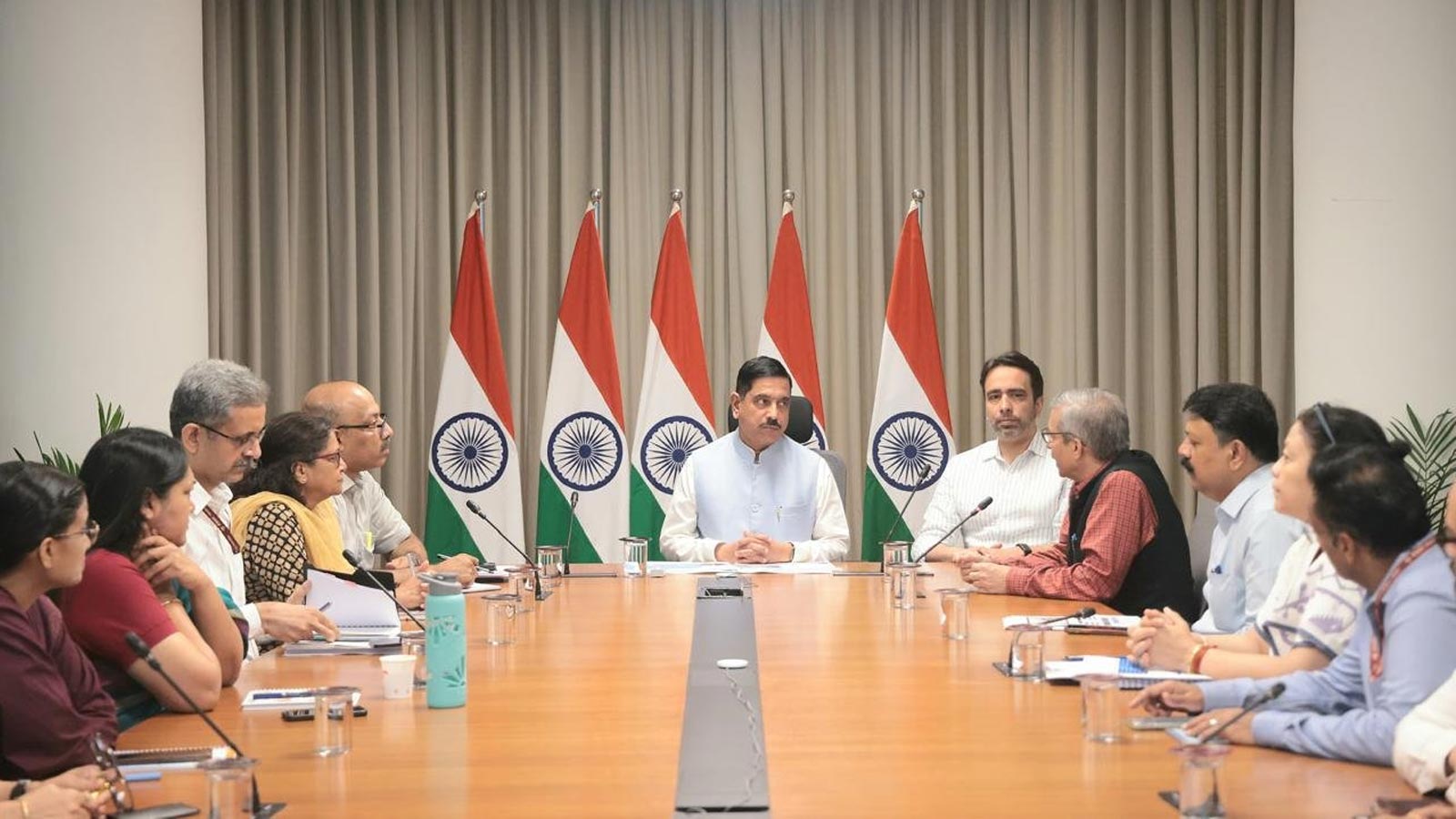
Soon after taking charge, Joshi chaired a review meeting with senior officials to assess the status of key programs and ongoing initiatives under the ministry.
The meeting was attended by Minister of State for Education Jayant Chaudhary, Higher Education Secretary Dr Vineet Joshi, School Education and Literacy Secretary T K Anil Kumar, and other senior officials.
Addressing the media after assuming office, Joshi said he would continue the reforms initiated by the ministry while working under the guidance of the Prime Minister.
"I accept this responsibility with a sense of duty and humility. I am thankful to the Prime Minister. In the last four to five years, Dharmendra Pradhan implemented the National Education Policy and several important initiatives. Under the guidance of the Prime Minister, I will work to the best of my ability and fulfill my responsibilities with dedication," he said.
Senior parliamentarian assumes new responsibility
Born on November 27, 1962, in Karnataka's Bijapur district, Joshi completed his schooling in Hubballi before earning a Bachelor of Arts degree from Shri Kadasiddheshwar Arts College.
He entered electoral politics in 2004 after winning the Dharwad Lok Sabha seat and has retained the constituency in every general election since then.
Over the past two decades, Joshi has handled several important responsibilities in the Union government. Between 2019 and 2024, he served as Union Minister for Parliamentary Affairs, Coal, and Mines.
Following the 2024 Lok Sabha elections, he was assigned the Ministries of Consumer Affairs, Food and Public Distribution and New and Renewable Energy.
As Renewable Energy Minister, he has overseen key government initiatives, including the National Green Hydrogen Mission, PM Surya Ghar Muft Bijli Yojana, PM-KUSUM, and programs aimed at expanding renewable energy capacity.
The Education Ministry represents a new portfolio for Joshi, who now assumes responsibility for implementing the National Education Policy, overseeing reforms within the National Testing Agency, supervising the proposed transition of NEET to a Computer-Based Test from 2027, and monitoring higher education and school education initiatives.
Ministry enters next phase of examination reforms
The change in leadership concludes one chapter of the NEET UG 2026 controversy but marks the beginning of a new phase for the Ministry of Education.
Over the past three months, the ministry has overseen the cancellation of one of the country's largest entrance examinations, a nationwide re-test involving more than 22 lakh candidates, a CBI investigation, and multiple policy announcements aimed at strengthening examination security.
The government has since announced measures including fast-track courts for paper leak cases, stricter action against examination fraud, reforms within the National Testing Agency, and the transition of NEET to a Computer-Based Test.
With Pralhad Joshi now leading the ministry, the focus shifts from managing the immediate fallout of the controversy to implementing those reforms and ensuring that future competitive examinations are conducted with greater transparency, security, and public confidence.