


The initiative will combine community-contributed datasets, speech translation, digitized manuscripts and human validation to improve Konkani language resources, preserve Goa's cultural heritage and expand multilingual access to digital services.
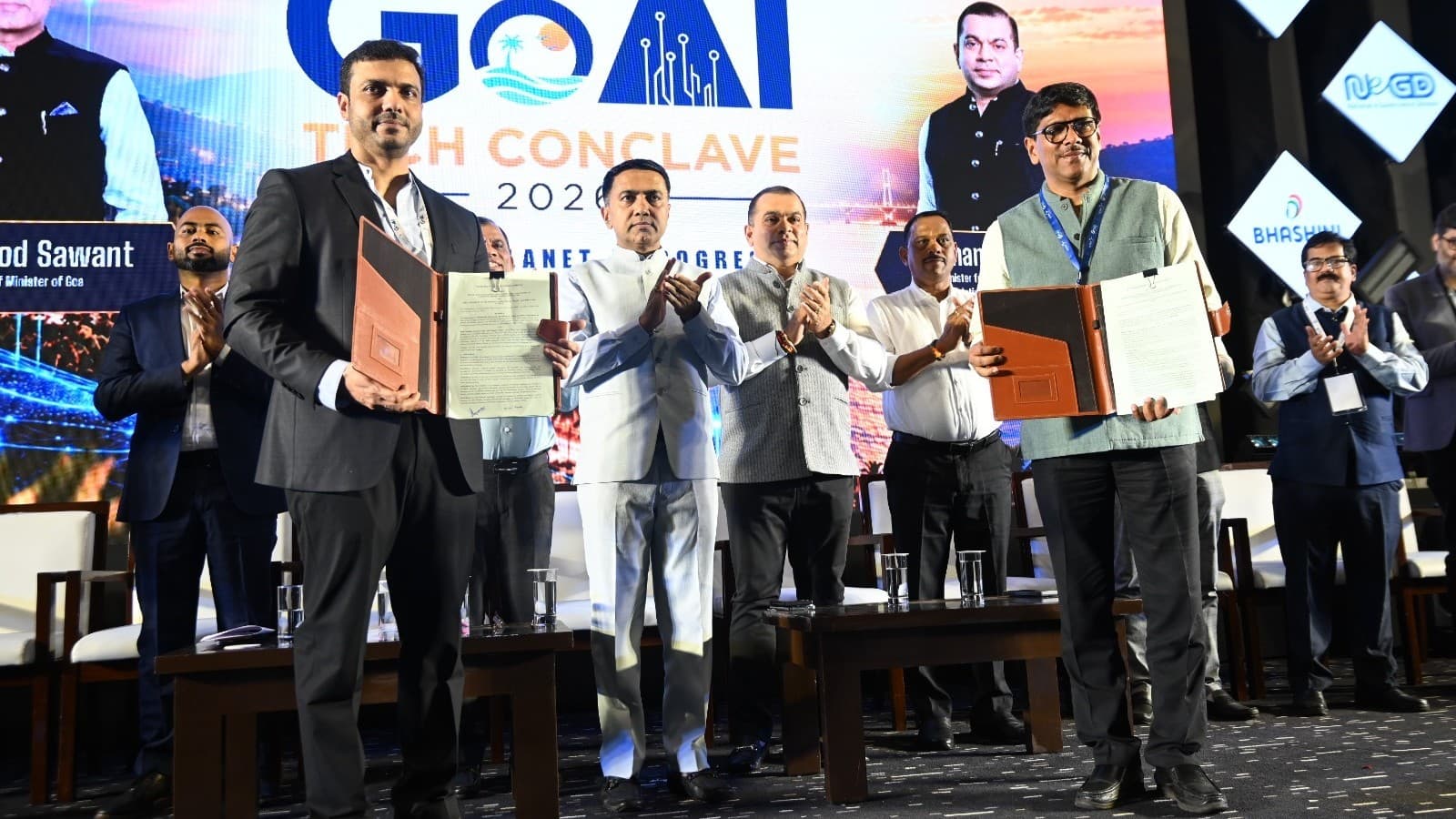
The Digital India BHASHINI Division (DIBD) has launched a Konkani Large Language Model (LLM) at the Goa AI Tech Conclave 2026, marking an initiative to strengthen artificial intelligence capabilities in the language and expand the availability of language technology rooted in Goa's linguistic and cultural identity.
The conclave was held on Oct 22 and 23 at INOX in Panaji. Organized by the Department of Information Technology, Electronics and Communications, Government of Goa, the event focused on the theme “AI for People, Planet and Progress.”

DIBD, operating under Digital India Corporation (DIC) and the Ministry of Electronics and Information Technology (MeitY), Government of India, participated in the event to showcase its work in multilingual artificial intelligence and demonstrate how language technologies can improve communication and access to digital services.
The launch of the Konkani LLM was a key highlight of the inaugural session, during which the BHASHINI team presented its approach to developing AI systems capable of understanding and generating Konkani through text and speech. The initiative aims to establish a stronger technological foundation for the language while supporting its continued use in digital environments.
The model's development builds on Goa's linguistic strengths and ongoing efforts to preserve and promote Konkani. Creating effective language AI systems requires high-quality datasets that accurately capture a language's vocabulary, expressions, spoken forms, and cultural context.
Konkani presents additional considerations because it is written in multiple scripts, including Devanagari, its official script in Goa, as well as Roman and Kannada. Representing this diversity in digital language resources is important for developing AI systems that reflect the language's richness and serve its different communities.
BHASHINI highlights language data collection and validation for Konkani AI
During the inaugural session, the BHASHINI team explained its approach to building the Konkani LLM, emphasizing the importance of reliable language datasets, content generation, and human validation. These elements are essential to developing AI systems that can accurately process and generate language while reflecting its linguistic and cultural characteristics.
The presentation also highlighted the potential of Bhasha Daan and the proposed Data Daan pilot in Goa to expand the resources available for Konkani AI. The initiatives could bring together educational institutions, language experts, and Konkani-speaking communities to contribute language material and improve its quality through validation.
Bhasha Daan enables people to contribute language resources that can be used to develop and improve AI models. The proposed Data Daan pilot in Goa is intended to build on this approach by involving colleges, institutions, language specialists, and local communities in content creation, digitization, and validation.
The effort aims to expand the availability of high-quality Konkani language resources while drawing on the state's existing linguistic expertise. Contributions from speakers and specialists can help ensure that the datasets reflect the vocabulary, expressions, regional variations, and cultural context needed for more effective language technologies.
The BHASHINI CEO described data as “oil for the AI world,” underlining the importance of language resources in developing artificial intelligence applications. The proposed pilot is expected to focus on strengthening the data foundation required to build and improve AI models for Konkani.
Goa CM and IT minister highlight AI's role in language and heritage preservation
Goa Chief Minister Dr Pramod Sawant spoke about BHASHINI and Bhasha Daan in the context of advancing artificial intelligence for Konkani. His remarks highlighted the role of language technology initiatives in supporting the development of AI capabilities for the state's language.
Goa Minister for Information Technology, Electronics and Communications and Tourism Shri Rohan Khaunte discussed the potential of AI to research, document, and preserve India's civilizational knowledge and Goa's cultural heritage.
Khaunte also spoke about the proposed Center of Excellence for Indic Knowledge Systems and Heritage Intelligence. The proposed center is envisioned as a platform that combines modern AI capabilities with efforts to preserve history, manuscripts, languages, traditions, and cultural identity.
The initiative is intended to explore how emerging technologies can support the documentation and preservation of India's knowledge systems and cultural resources. AI tools could help organize and make historical and linguistic material more accessible while supporting efforts to safeguard heritage for future generations.
Khaunte also emphasized responsible AI development, human oversight, and collaboration among government, industry, and academia. These priorities are relevant to the development of language technologies, where human expertise and validation remain important for maintaining the accuracy and cultural relevance of AI-generated content.
BHASHINI demonstrates real-time Konkani-English speech translation
BHASHINI's language technology was deployed during the conclave's inaugural session to provide real-time speech translation and transcription of addresses delivered by the Goa chief minister, the state IT minister, and other dignitaries.
The demonstration showcased the platform's ability to facilitate multilingual communication through Konkani-to-English and English-to-Konkani translation. By translating and transcribing speeches as they were delivered, the technology illustrated how AI-based language tools can help audiences access information across language barriers.
The deployment also demonstrated the potential use of speech technologies in public events and government communication, where participants may speak or understand different languages. Such applications can help make information more accessible to multilingual audiences and support communication in Indian languages.
At the BHASHINI exhibition stall, visitors were able to experience live demonstrations of the platform's language technology solutions and applications. One of the highlights was a welcome extended to the Goa IT minister in English, which BHASHINI's speech-to-speech translation technology converted into Konkani in real time.
The team also demonstrated the BHASHINI mobile application and other language technology use cases. These demonstrations highlighted how multilingual AI tools can support communication and improve access to digital services in Indian languages.
The exhibition provided visitors with an opportunity to see how language technologies can be applied beyond text-based translation. Speech-to-speech translation, transcription, and mobile applications can support interactions in different languages and help users access digital platforms in their preferred language.
Granthika can help digitize Konkani's literary and cultural heritage
Alongside Bhasha Daan, Granthika can support efforts to digitize and preserve Konkani's literary and cultural heritage. Its potential applications include digitizing books, manuscripts, and literary works, helping make these resources available in digital formats.
The initiative can also contribute to preserving folk tales, local histories, and the memories and lived experiences of senior citizens. Documenting these materials could help safeguard oral traditions and community knowledge that may otherwise remain outside formal digital archives.
Such efforts can contribute to the creation of a more extensive digital repository of Konkani language and heritage. The resulting resources could serve future generations while also supporting the development of AI applications that require authentic linguistic, historical, and cultural material.
Digitizing literary works and documenting community knowledge can complement the development of the Konkani LLM by expanding the material available for language research and AI development. Together, language data collection, content digitization, and human validation can help strengthen the digital representation of Konkani.
The focus on heritage preservation also connects language technology development with broader efforts to protect cultural identity. By making linguistic and historical resources more accessible, these initiatives could support both cultural documentation and the development of future language-based digital services.
BHASHINI expands multilingual digital access across Indian languages
BHASHINI's participation in the Goa AI Tech Conclave 2026 highlighted the role of multilingual language technologies in improving communication, expanding access to digital services, and strengthening AI development in Indian languages.
The launch of the Konkani LLM, demonstrations of real-time speech translation, and discussions on language data collection and heritage digitization illustrated different ways AI can support regional languages. The initiatives also highlighted the importance of collaboration among government institutions, educational organizations, language experts, and communities in building effective language resources.
Through these efforts, BHASHINI aims to advance language technologies that make digital services more accessible while supporting the preservation and use of India's linguistic diversity.
About Digital India BHASHINI Division
The Digital India BHASHINI Division (DIBD), operating under Digital India Corporation (DIC) and the Ministry of Electronics and Information Technology (MeitY), Government of India, is working to advance India's Language-First Digital Public Infrastructure (DPI) and enable multilingual access to digital services.
BHASHINI brings together datasets, AI models, application programming interfaces (APIs), and applications to make digital services more accessible across Indian languages. The platform is designed to help people interact with digital services in languages they understand, reducing language barriers to technology adoption.
According to the information provided by the organization, BHASHINI powers more than 800 government websites and has recorded over 9 billion cumulative inferences, with support for more than 24 million inferences daily.
The platform supports text technologies in 36 Indian languages, voice technologies in 23 Indian languages, and 35 international languages. These capabilities are intended to expand multilingual access across digital platforms and support the development of AI-powered applications for diverse linguistic communities in India.

UAE flags 88 education advertising violations in AI-led review of 3,970 adverts

BHASHINI launches Konkani large language model at Goa AI Tech Conclave 2026
NCERT develops computational thinking and AI module for Classes 9 to 12

Who will shape India’s 6G future? C-DOT and IIT BHU join forces on next-gen networks

UP Board Sets October 26 Deadline for 940 Schools to Submit Classes 9–12 Student Lists

Abu Dhabi aims to bring 2,000 Emirati teachers into private schools within five years

Australian schools record thousands of student sexual misconduct reports as child safety concerns grow
Egypt insists international schools include Arabic, history in final scores

China’s Chery unveils AI companion robot designed to ease loneliness

New Zealand reforms could leave more students without school qualifications

UAE flags 88 education advertising violations in AI-led review of 3,970 adverts
BHASHINI launches Konkani large language model at Goa AI Tech Conclave 2026
NCERT develops computational thinking and AI module for Classes 9 to 12
Who will shape India’s 6G future? C-DOT and IIT BHU join forces on next-gen networks
UP Board Sets October 26 Deadline for 940 Schools to Submit Classes 9–12 Student Lists
Abu Dhabi aims to bring 2,000 Emirati teachers into private schools within five years
Australian schools record thousands of student sexual misconduct reports as child safety concerns grow
Egypt insists international schools include Arabic, history in final scores
China’s Chery unveils AI companion robot designed to ease loneliness
New Zealand reforms could leave more students without school qualifications
Copyright© educationpost.in 2026 All Rights Reserved.