


India’s 1947 Kashmir airlift: how the Indian army saved Srinagar from tribal invasion
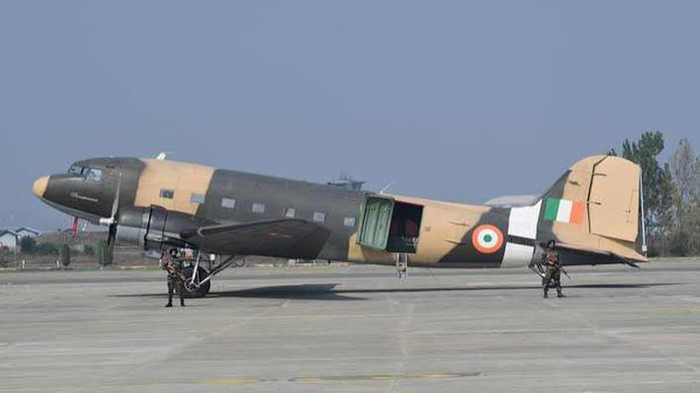
The princely state of Jammu and Kashmir became a major point of contention between India and Pakistan following Independence in August 1947. Established in 1846 under the Treaty of Amritsar, the state was ruled by Maharaja Hari Singh of the Dogra dynasty. Popular movements had challenged Dogra rule over the preceding decades.
At Independence, Hari Singh initially chose not to accede to either India or Pakistan. Pakistan signed a standstill agreement with the state to maintain existing administrative and supply arrangements. However, relations deteriorated as Kashmir’s government accused Pakistan of disrupting essential supplies to pressure the Maharaja into joining Pakistan.

On October 22, 1947, tribal fighters from Pakistan’s Northwest Frontier Province and adjoining regions invaded Kashmir. Elements of the Pakistani administration supported the operation, known as Operation Gulmarg, which aimed to capture the state through an advance by tribal forces.
The raiders seized Muzaffarabad, Domel and Uri before advancing towards Srinagar. Capturing the summer capital would have weakened the Maharaja’s government and potentially enabled Pakistan to establish control over the state.
Srinagar was also strategically important because its airport provided the principal route for rapidly transporting Indian troops into the Kashmir Valley, which had limited road connectivity with the rest of India.
As the invasion intensified, the Indian government dispatched V P Menon, Secretary of the Ministry of States, to Srinagar on October 25, 1947, to assess the situation. With the Maharaja’s government facing imminent collapse, Hari Singh signed the Instrument of Accession to India on October 26, enabling Indian military intervention.
The government simultaneously prepared an emergency airlift to transport troops and supplies to the valley. An Army Airlift Committee coordinated the operation, while approximately 25 aircraft, primarily Dakota transport planes, were assembled in Delhi. Home Minister Vallabhbhai Patel also appealed to civilian aircraft operators to assist with the emergency deployment.
The operation involved significant risks. Mountainous terrain, limited airport infrastructure, inadequate communication facilities and uncertainty over the safety of the Srinagar airstrip complicated the mission. Nevertheless, the airlift proceeded.
On October 27, 1947, Indian Army troops began landing at Srinagar airport, marking a decisive intervention in the conflict. Soldiers and supplies were transported by air to defend the airport, protect the capital and prevent the raiders from advancing further into the valley.
By November 6, India had deployed approximately 3,500 troops in Srinagar. Indian forces subsequently pushed the raiders back towards Uri, helping secure the Kashmir Valley. The operation also facilitated the evacuation of British residents and tourists from Srinagar.
The airlift demonstrated the strategic importance of aviation in military operations, particularly where difficult terrain and limited road connectivity restricted troop movement. It also became a defining episode in the early military history of independent India.
October 27 is commemorated as Infantry Day by the Indian Army in recognition of the troops who were airlifted to Srinagar in 1947 to defend Jammu and Kashmir.
Karnataka LKG, UKG Admission 2026-27: 581 Government Schools Approved for Pre-Primary Classes

IIT Gandhinagar to Organise Amalthea 2026 on October 31 and November 1; Check Key Attractions

Indian Students Prioritise Post-Study Jobs While Planning to Study Abroad: IDP Report
Kashmir’s accession dispute and the beginning of the 1947 invasion

Promotion Must Be Based on Service Rules and Eligibility

NTU Singapore, VFT launch joint research lab to develop safer batteries for renewable energy storage
ULLAS 2026: Will B.Ed. Students' Academic Credits Depend on Adults Passing Literacy Tests?

Earth’s life story may not have begun with comets, new study finds

Can India's Biggest Examinations Become Leak-Proof?

Less juggling for parents? Singapore to unite kindergarten learning and after-school care by 2030

Karnataka LKG, UKG Admission 2026-27: 581 Government Schools Approved for Pre-Primary Classes
IIT Gandhinagar to Organise Amalthea 2026 on October 31 and November 1; Check Key Attractions
Indian Students Prioritise Post-Study Jobs While Planning to Study Abroad: IDP Report
Kashmir’s accession dispute and the beginning of the 1947 invasion
Promotion Must Be Based on Service Rules and Eligibility
NTU Singapore, VFT launch joint research lab to develop safer batteries for renewable energy storage
ULLAS 2026: Will B.Ed. Students' Academic Credits Depend on Adults Passing Literacy Tests?
Earth’s life story may not have begun with comets, new study finds
Can India's Biggest Examinations Become Leak-Proof?
Less juggling for parents? Singapore to unite kindergarten learning and after-school care by 2030
Copyright© educationpost.in 2026 All Rights Reserved.