The Indian Space Research Organisation has continued advancing preparations for the Gaganyaan Mission, marking a significant milestone in the country’s journey toward human space exploration. The mission aims to send Indian astronauts into low Earth orbit, demonstrating the nation’s growing technological capabilities in the space sector.
As part of the programme, astronaut training is progressing steadily under specialized facilities and international collaborations. Selected astronauts, often referred to as “Gagannauts,” are undergoing intensive physical, technical, and mission-related training to prepare for the complex demands of spaceflight. The training includes simulations, survival exercises, and scientific mission preparation.

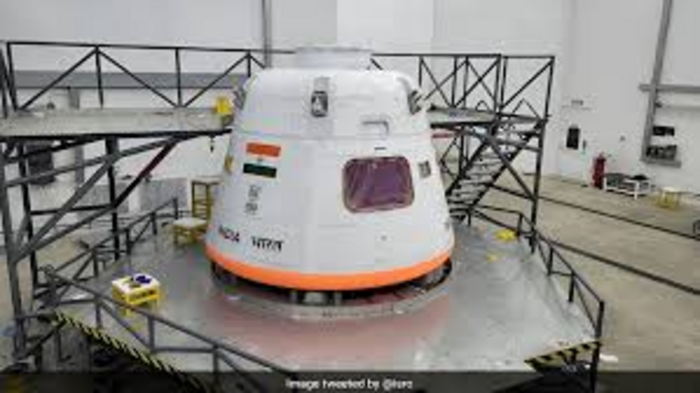
In parallel, ISRO scientists and engineers are working on the development of the crew module, which will carry astronauts safely into space and bring them back to Earth. The crew module is designed to ensure safety, stability, and reliability during launch, orbit, and re-entry phases. Extensive testing and validation processes are being carried out to meet stringent safety standards.
Another critical component of the mission is the development of advanced life-support systems. These systems are designed to maintain a habitable environment inside the spacecraft by regulating oxygen levels, temperature, pressure, and waste management. Ensuring the reliability of these systems is essential for the safety and well-being of astronauts during the mission.
The Gaganyaan programme represents a major leap in India’s space capabilities and technological self-reliance. Successful execution of the mission would place India among a select group of countries that have independently developed the capability to send humans into space.
Experts note that the mission will also generate significant advancements in areas such as space medicine, robotics, materials science, and advanced engineering. These technological developments are expected to have long-term benefits for both the space sector and other scientific industries.
The progress made in the Gaganyaan programme highlights India’s growing role in global space exploration. It also reflects the country’s commitment to advancing scientific research, innovation, and international cooperation in space technology.










.webp&w=256&q=75)
