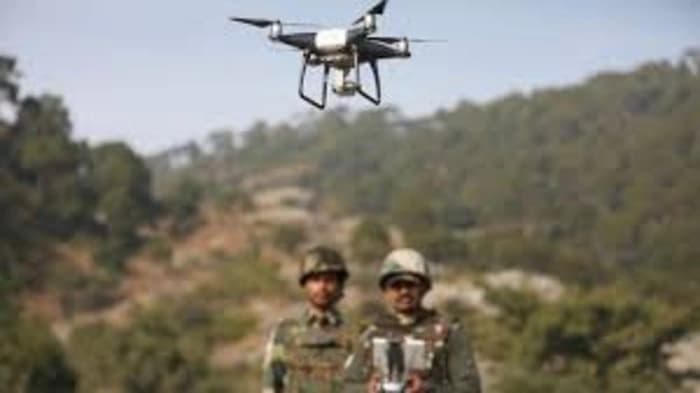
The recent discovery of a downed Indian Air Force (IAF) unmanned aerial vehicle (UAV) near the India–Pakistan border in Jaisalmer has triggered a wider discussion on the vulnerabilities and strategic considerations surrounding India’s drone-based border surveillance. The incident raises critical questions about whether the crash resulted from a technical malfunction or an external threat, a distinction that has significant security implications.
Source: The Indian Express
Operational and Tactical Concerns
Drone operations in sensitive border regions are inherently complex. The Thar desert’s harsh climatic conditions—high temperatures, heavy dust, and strong winds—can put pressure on airborne platforms, increasing the likelihood of mechanical failure. However, given the long-standing tensions along the western border, the possibility of electronic interference, including GPS jamming or spoofing, cannot be ruled out. Determining the cause is essential for improving operational safeguards.

The crash also highlights the strategic role of UAVs within India’s border management doctrine. Drones provide persistent surveillance, real-time imagery, and early warning intelligence in areas where human patrols are limited or risky. A damaged UAV, therefore, creates temporary surveillance gaps and may lead adversaries to test vulnerabilities or reading it as a sign of reduced vigilance.
Strategic Signaling and Diplomatic Sensitivity
The incident has implications beyond immediate security concerns. UAV crashes near contested borders risk misinterpretation or political signalling, potentially escalating diplomatic tensions. Transparent handling of the investigation, paired with calibrated communication, becomes crucial to avoid misreading of intentions by Pakistan.
Policy Needs and Future Preparedness
The episode underscores the need for:
- More resilient UAV platforms, with better weather endurance and electronic shielding.
- Robust command-and-control systems, ensuring drones can operate securely even under hostile electronic environments.
- Clear recovery and attribution protocols, enabling quick assessment, minimising intelligence leaks, and preserving strategic stability.
As UAV deployments expand, strengthening technological self-reliance and integrating drones into a multi-layered border security framework will be essential for India’s long-term border management strategy.