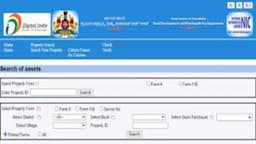
What is the Initiative?
The Government of Karnataka has launched e-Swathu 2.0, an upgraded digital platform designed to streamline rural property record management. The platform aims to regularise nearly 9.5 million rural properties, many of which currently lack formal documentation or have incomplete ownership details.
The system is managed by the Rural Development and Panchayat Raj (RDPR) Department and integrates key services such as:

- Digital generation of Form-9 and Form-11 (documents related to property ownership and taxation in rural areas)
- Geo-tagging of properties for accurate mapping
- Online mutation process to update ownership after sale, inheritance, or transfer
- One-stop access to village-level property records for both citizens and panchayat officials
By digitising all rural property transactions, the government intends to increase administrative efficiency and reduce disputes related to unclear or fraudulent land records.
Why It Matters
The launch of e-Swathu 2.0 is significant for several reasons:
1. Greater Transparency and Land Record Clean-Up
The platform helps eliminate inconsistencies in rural land records by ensuring:
- Uniform documentation standards
- Reduced manual errors
- Lower chances of manipulation or illegal occupation
This strengthens trust among citizens and improves governance at the grassroots level.
2. Boost to Rural Property Security
With clearly documented ownership, rural households—especially small farmers—can:
- Use property documents as collateral for loans
- Transfer land legally and easily
- Avoid long-standing family or community disputes
This enhances financial inclusion in rural areas.
3. Potential Revenue Increase for the State
Regularisation of 9.5 million properties will bring more assets into the formal tax net. This may lead to:
- Higher revenues from property tax
- More predictable revenue streams for gram panchayats
- Better fund availability for rural development projects
4. Support to Rural Economic Formalisation

A digital property registry improves:
- Ease of doing business in rural real estate
- Planning for infrastructure projects
- Identification of properties for welfare schemes, disaster relief, and compensation
Overall, it contributes to long-term rural economic development.
Conclusion
The upgraded e-Swathu 2.0 signals Karnataka’s major push toward modernising rural governance. By digitising millions of property records and bringing them into the formal system, the initiative is set to enhance transparency, boost rural incomes, improve planning, and increase state revenues. It also aligns with India’s broader goals of Digital India and land record modernization across states.