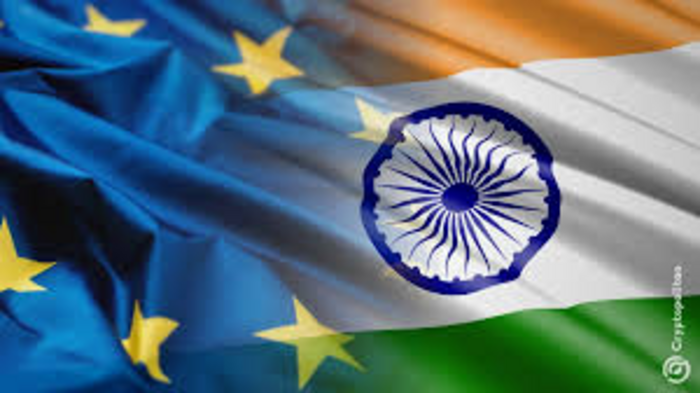
India and the European Union (EU) finalised a comprehensive Free Trade Agreement (FTA) on 27 January 2026, marking a watershed moment in bilateral economic relations after nearly two decades of intermittent negotiations. Described by leaders on both sides as the “mother of all deals,” the agreement is expected to significantly deepen trade, investment and strategic cooperation between the two economies.
The India–EU FTA aims to progressively reduce tariffs and non-tariff barriers across a wide range of goods and services. Key sectors covered include automobiles, machinery, chemicals, pharmaceuticals, textiles, information technology and professional services. The agreement will provide Indian exporters enhanced access to the EU’s large consumer market, while opening India’s expanding market to high-quality European goods and services.

A major highlight of the deal is its emphasis on trade facilitation and regulatory cooperation. Simplified customs procedures, harmonisation of standards and stronger intellectual property protection are expected to improve ease of doing business and reduce transaction costs for companies operating across borders. Provisions on services and mobility are also expected to benefit Indian professionals in sectors such as IT, engineering and healthcare.
The FTA includes dedicated chapters on sustainable development, climate action and labour standards, reflecting the EU’s focus on values-based trade. Cooperation on green technologies, renewable energy and clean manufacturing is expected to support India’s energy transition while aligning with the EU’s climate goals.
Strategically, the agreement strengthens India–EU ties amid global economic uncertainty, supply-chain disruptions and rising geopolitical competition. By diversifying trade partnerships and reducing overdependence on limited markets, both sides seek to enhance economic resilience.
Experts view the India–EU FTA as a major boost to bilateral trade and foreign direct investment, with the potential to create jobs, promote technology transfer and integrate Indian firms into global value chains. The agreement also reinforces India’s broader trade strategy and its role as a key economic partner for advanced economies in an increasingly multipolar world.