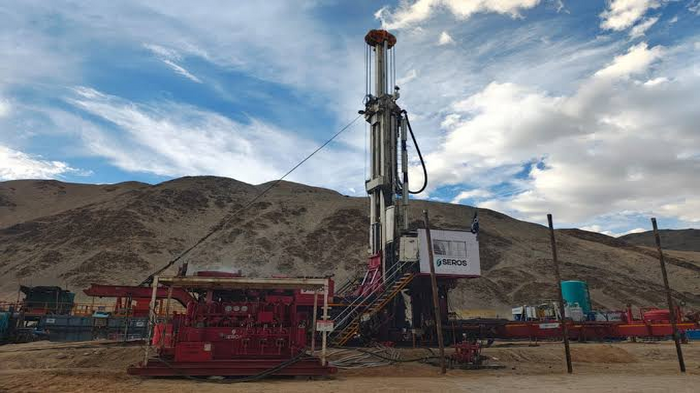
Public sector Oil and Natural Gas Corporation (ONGC) has completed drilling its second geothermal well in Ladakh's Puga Valley, in a significant step toward developing India's first pilot geothermal power plant.
The upstream oil giant’s research and development arm, ONGC Energy Centre, drilled the well to a depth of 1,000 metres at an altitude of more than 14,000 feet in about a month, improving on the timeline and cost of its first geothermal drilling campaign, according to an ONGC statement.

The latest well builds on the success of ONGC's first geothermal well in Puga, which produced steam at temperatures above the boiling point of water, demonstrating the area's geothermal resource potential, the statement said.
ONGC said the second well would support the development of India's first 1-megawatt electric (MWe) pilot geothermal power plant and could pave the way for commercial exploitation of geothermal energy in the country.
The project's next phase includes plans to set up a 1-megawatt electric (MWe) pilot geothermal power plant and the longer-term development of geothermal resources to provide reliable baseload electricity for Ladakh.
The Puga geothermal field, located in eastern Ladakh, is considered India's most promising geothermal resource.
Geothermal energy harnesses heat from beneath the earth's surface to generate electricity and provide heating, and offers a source of round-the-clock, low-carbon power. It is considered a reliable and dependable source of energy, unlike solar and wind energy, which are more dependent on weather conditions.
The Puga geothermal field in Ladakh has long been identified as India's most promising geothermal resource. While exploratory work has been carried out intermittently over the years, commercial geothermal power generation has yet to achieve the required breakthrough due to the technical and economic challenges involved.
Meanwhile, India is well on track to achieve its target of 500 GW of non-fossil fuel energy capacity by 2030. The country’s non-fossil fuel capacity has increased from 81 GW in 2014 to 288 GW at present, registering a growth of over 256 per cent . Solar energy capacity has risen from 2.8 GW to 155 GW, while wind energy capacity has grown from 21 GW to 56.4 GW.
The next phase will require deeper integration of generation, storage and transmission systems, along with enhanced grid resilience.