


Promoting Sustainable, Low-Emission Urban Mobility
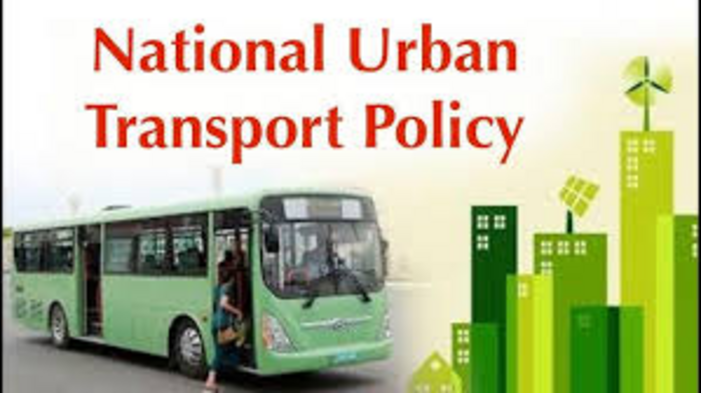
The Government of India has revised the National Urban Transport Policy (NUTP) with a renewed focus on sustainable and inclusive urban mobility. The updated policy aims to reduce reliance on private vehicles, promote public and non-motorized transport, and create low-emission zones in cities, aligning urban transport planning with environmental and climate objectives.
A key objective of the revised policy is to strengthen public transport systems. This includes investment in metro networks, bus rapid transit (BRT) corridors, and integrated multimodal transport hubs. By improving frequency, accessibility, and affordability, the policy seeks to make public transport a preferred option for daily commuters, thereby reducing congestion and vehicle emissions.

The policy also emphasizes non-motorized transport, encouraging walking and cycling through dedicated lanes, pedestrian-friendly infrastructure, and safety measures. Urban design interventions are proposed to create connected, livable neighborhoods that reduce the need for motorized travel.
Another important feature is the introduction of low-emission zones and clean vehicle incentives. Cities are encouraged to designate areas with restricted high-emission vehicles, adopt electric and hybrid fleets, and promote clean fuel technologies. This aligns with India’s broader climate commitments under the National Electric Mobility Mission and the country’s Net Zero targets.
The policy calls for data-driven planning, inter-agency coordination, and citizen participation. Use of digital traffic management systems, smart mobility solutions, and monitoring frameworks is encouraged to optimise urban transport networks and ensure environmental sustainability.
Significance
The revised National Urban Transport Policy reduces urban pollution, improves mobility, and promotes climate-resilient cities. By encouraging public transport, non-motorized travel, and low-emission strategies, it supports sustainable urban development and contributes to India’s environmental and Net Zero commitments.

NIOS October Exam 2026: Class 10, 12 Theory Hall Tickets Released; Download Link Here

Haryana Open School Exams 2027: BSEH Extends Application Deadline to October 31

Gauhati University Places Six Faculty Members in World’s Top 2% Scientists List 2026

DU VC asks DUSU leaders to lead drug-free campus campaign, proposes wellness centers

Russia seeks to curb multiple university applications with upfront payment rule
.jpg&w=256&q=75)
From Class 8 to hospital owner: Rajasthan Police expose alleged fake doctor registration

Who will lead Keralam's universities? Government begins steps to appoint permanent VCs
%20(1)%20(1).jpeg&w=256&q=75)
Why does cracking JEE Advanced depend on coaching? IIT Kanpur Director calls for a revamp
.jpg&w=256&q=75)
NEET-PG 2026 answer key row: Supreme Court seeks NBEMS response on missing question papers
.png&w=256&q=75)
42 Iraqi universities feature in QS Arab Region University Rankings 2027

NIOS October Exam 2026: Class 10, 12 Theory Hall Tickets Released; Download Link Here
Haryana Open School Exams 2027: BSEH Extends Application Deadline to October 31
Gauhati University Places Six Faculty Members in World’s Top 2% Scientists List 2026
DU VC asks DUSU leaders to lead drug-free campus campaign, proposes wellness centers
Russia seeks to curb multiple university applications with upfront payment rule
From Class 8 to hospital owner: Rajasthan Police expose alleged fake doctor registration
Who will lead Keralam's universities? Government begins steps to appoint permanent VCs
Why does cracking JEE Advanced depend on coaching? IIT Kanpur Director calls for a revamp
NEET-PG 2026 answer key row: Supreme Court seeks NBEMS response on missing question papers
42 Iraqi universities feature in QS Arab Region University Rankings 2027
Copyright© educationpost.in 2026 All Rights Reserved.