


Strengthening Climate Adaptation and Public Health Resilience
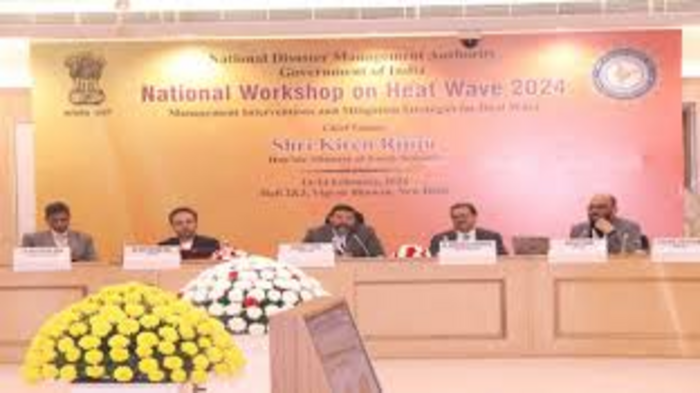
The Government of India has launched a National Mission on Heatwave Preparedness to address the rising frequency, intensity, and duration of heatwaves driven by climate change. The mission aims to reduce heat-related mortality and morbidity through a coordinated, preventive, and adaptive approach at national, state, and local levels.
A core component of the mission is the strengthening of Heat Action Plans (HAPs) across vulnerable regions. States and urban local bodies are encouraged to develop and update localised HAPs based on regional climate patterns, population vulnerability, and health infrastructure capacity. These plans focus on preparedness measures such as altering work schedules, ensuring availability of drinking water, and strengthening emergency medical response during extreme heat events.

The mission places strong emphasis on early warning systems. Enhanced collaboration between the India Meteorological Department (IMD), disaster management authorities, and local governments aims to improve heatwave forecasting and timely dissemination of alerts. Public advisories, mobile-based alerts, and community outreach are expected to help citizens take precautionary measures in advance.
Another key pillar is the promotion of urban cooling strategies to counter the urban heat island effect. Measures include increasing green cover, promoting cool roofs and reflective surfaces, protecting urban water bodies, and integrating heat-resilient design in urban planning. These interventions seek to reduce ambient temperatures and improve thermal comfort in densely populated cities.
The mission also focuses on protecting vulnerable populations such as outdoor workers, the elderly, children, and economically weaker sections. Capacity building of healthcare workers and awareness campaigns are integral to the strategy.
Significance
The National Mission on Heatwave Preparedness reduces climate-related health risks and strengthens disaster resilience. By combining early warning, urban planning, and public health measures, it safeguards vulnerable populations and enhances India’s adaptive capacity to climate change.

NIOS October Exam 2026: Class 10, 12 Theory Hall Tickets Released; Download Link Here

Haryana Open School Exams 2027: BSEH Extends Application Deadline to October 31

Gauhati University Places Six Faculty Members in World’s Top 2% Scientists List 2026

DU VC asks DUSU leaders to lead drug-free campus campaign, proposes wellness centers

Russia seeks to curb multiple university applications with upfront payment rule
.jpg&w=256&q=75)
From Class 8 to hospital owner: Rajasthan Police expose alleged fake doctor registration

Who will lead Keralam's universities? Government begins steps to appoint permanent VCs
%20(1)%20(1).jpeg&w=256&q=75)
Why does cracking JEE Advanced depend on coaching? IIT Kanpur Director calls for a revamp
.jpg&w=256&q=75)
NEET-PG 2026 answer key row: Supreme Court seeks NBEMS response on missing question papers
.png&w=256&q=75)
42 Iraqi universities feature in QS Arab Region University Rankings 2027

NIOS October Exam 2026: Class 10, 12 Theory Hall Tickets Released; Download Link Here
Haryana Open School Exams 2027: BSEH Extends Application Deadline to October 31
Gauhati University Places Six Faculty Members in World’s Top 2% Scientists List 2026
DU VC asks DUSU leaders to lead drug-free campus campaign, proposes wellness centers
Russia seeks to curb multiple university applications with upfront payment rule
From Class 8 to hospital owner: Rajasthan Police expose alleged fake doctor registration
Who will lead Keralam's universities? Government begins steps to appoint permanent VCs
Why does cracking JEE Advanced depend on coaching? IIT Kanpur Director calls for a revamp
NEET-PG 2026 answer key row: Supreme Court seeks NBEMS response on missing question papers
42 Iraqi universities feature in QS Arab Region University Rankings 2027
Copyright© educationpost.in 2026 All Rights Reserved.