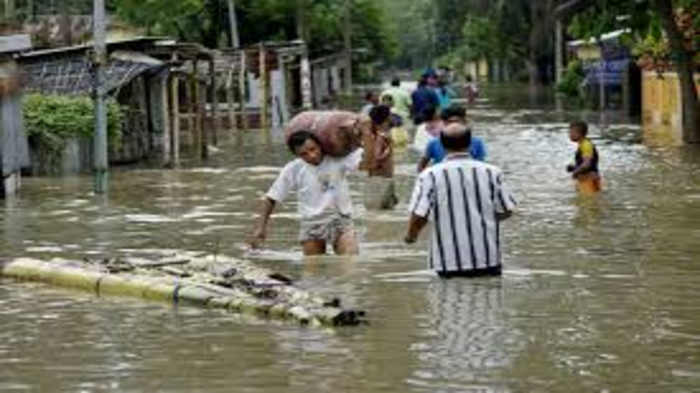
The National Disaster Management Authority (NDMA) has released updated guidelines for urban flood management, aiming to strengthen India’s preparedness and response to climate-induced disasters. With rapid urbanisation, changing rainfall patterns and increasing frequency of extreme weather events, urban flooding has emerged as a major governance and public safety challenge across Indian cities.
The guidelines place strong emphasis on early warning systems and real-time monitoring. NDMA has recommended the use of advanced weather forecasting, hydrological modelling, and sensor-based monitoring of rainfall and water levels to provide timely alerts. Integration of these systems with city-level emergency response mechanisms is intended to enable quicker evacuation and relief measures.

A key feature of the guidelines is the promotion of nature-based solutions to manage excess water. Measures such as restoration of urban wetlands, protection of floodplains, creation of green buffers, permeable pavements and rainwater harvesting are highlighted as cost-effective and sustainable ways to reduce runoff and enhance groundwater recharge.
The NDMA has also stressed the need for scientific and integrated drainage planning. Cities have been advised to assess and upgrade existing stormwater drainage systems, remove encroachments on natural water channels, and incorporate flood resilience into urban planning and building regulations. Climate risk assessments are to be mainstreamed into master plans and infrastructure projects.
Inter-agency coordination forms another central pillar of the guidelines. The NDMA has called for clearer roles and responsibilities among urban local bodies, state disaster management authorities, meteorological agencies and emergency services. Regular drills, capacity-building and data sharing are recommended to ensure effective coordination during flood events.
Experts have welcomed the guidelines as a timely response to escalating urban flood risks. If implemented effectively, the NDMA’s framework could significantly reduce loss of life and property, while enhancing urban resilience in the face of climate change.