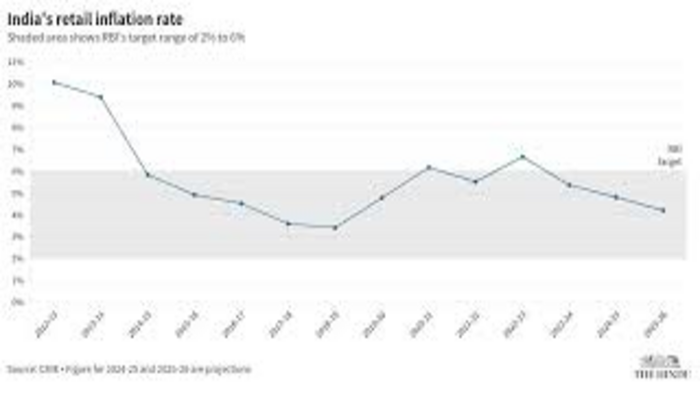
India’s latest inflation data has indicated a mild uptick in retail prices, prompting renewed debate over the Reserve Bank of India’s (RBI) near-term monetary policy stance. While inflation has edged up compared to the previous reading, it remains within the RBI’s prescribed comfort band, easing immediate concerns over price stability. This balance has encouraged market participants to reassess the possibility of a repo rate cut in the coming policy cycles.
The increase in retail inflation has been attributed largely to food and services, reflecting seasonal factors, supply-side pressures, and steady consumer demand. Core inflation, which excludes volatile food and fuel prices, has shown relative stability, suggesting that underlying price pressures are not accelerating sharply. This trend has strengthened the view that the inflationary environment is manageable, even as global uncertainties—such as commodity price volatility and geopolitical risks—continue to influence domestic prices.

Financial markets have responded by adjusting expectations around interest rates. Bond yields have softened and equity markets have shown cautious optimism, reflecting the belief that the RBI may now have greater room to support growth without undermining its inflation mandate. A potential rate cut is seen as a way to stimulate investment and consumption, especially in interest-sensitive sectors such as housing, automobiles, and small and medium enterprises.
At the same time, policymakers face a delicate balancing act. Sustained economic growth remains a priority, but premature easing could risk reigniting inflation if supply constraints or global shocks intensify. The RBI is therefore expected to remain data-dependent, closely monitoring inflation trends, monsoon outcomes, global monetary conditions, and domestic demand indicators before making any decisive move.
Overall, the recent inflation reading has not altered the broader narrative of moderation but has added nuance to policy expectations. It underscores the ongoing challenge for the central bank: maintaining price stability while providing adequate support to an economy seeking durable and broad-based growth.