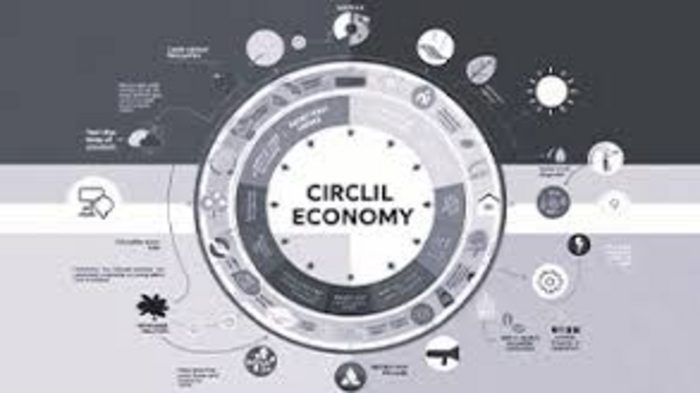
The Union Cabinet has approved a National Framework for Circular Economy, marking a significant step towards transforming India’s production and consumption patterns to reduce waste and improve resource efficiency. The framework aims to shift the economy from the traditional “take-make-dispose” model to a more sustainable system based on reuse, recycling and recovery.
The framework initially focuses on high-impact sectors such as plastics, construction and demolition waste, electronics and electrical equipment, batteries, and textiles. These sectors account for a substantial share of material consumption and waste generation in India. By targeting them, the government seeks to address environmental pollution while unlocking economic value from secondary resources.

A key feature of the framework is the strengthening of Extended Producer Responsibility (EPR), which places greater responsibility on manufacturers for the collection, recycling and environmentally sound disposal of products after their end of life. The framework also encourages eco-design, use of recycled materials and development of efficient waste management infrastructure.
The policy promotes innovation and private sector participation by supporting recycling technologies, material recovery facilities and circular business models. It is expected to generate new employment opportunities in waste management, recycling and remanufacturing, while reducing dependence on raw material imports.
Reducing reliance on landfills is a central objective of the framework. By improving segregation at source, expanding recycling capacity and incentivising reuse, the policy aims to significantly cut the volume of waste sent to dumpsites, thereby reducing land, air and water pollution.
The framework also emphasises coordination between the central and state governments, urban local bodies and industry to ensure effective implementation. Capacity-building, data collection and monitoring mechanisms have been proposed to track progress and ensure compliance.
Experts have welcomed the move, noting that a national circular economy framework aligns with India’s climate goals, resource security needs and commitments under the Sustainable Development Goals. If implemented effectively, the framework could help India transition towards a more sustainable, resilient and resource-efficient economy.