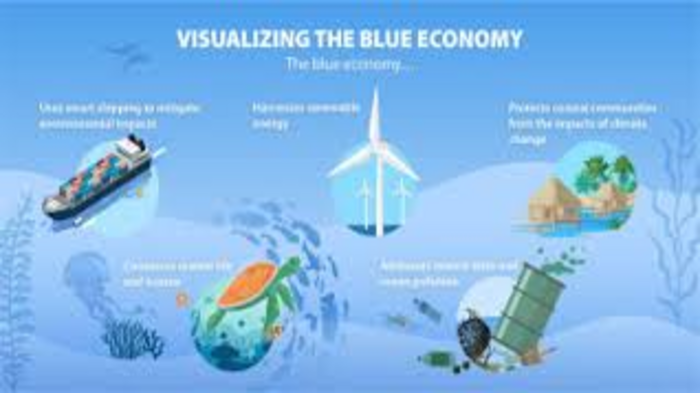
The Blue Economy emphasizes the sustainable use of ocean and coastal resources to promote economic growth, employment, and environmental sustainability. For India, with a coastline of over 7,500 kilometres and a vast exclusive economic zone, the Blue Economy presents significant opportunities for national development.
India’s coastal regions support diverse economic activities such as fisheries, aquaculture, tourism, shipping, and port-led development. The fisheries sector provides livelihoods to millions of coastal communities and contributes substantially to food security and exports. In addition, offshore renewable energy, including wind and tidal power, offers new avenues for clean energy generation. Maritime trade and logistics also remain crucial, with ports playing a central role in India’s international commerce.

The government has launched several initiatives to promote coastal and maritime development, including port modernization, coastal economic zones, and sustainable fisheries management. These efforts aim to enhance productivity while integrating technology and infrastructure to boost economic returns from ocean resources.
However, rapid coastal development poses serious environmental challenges. Marine pollution, overfishing, habitat destruction, and the impacts of climate change threaten fragile coastal and marine ecosystems. Rising sea levels and extreme weather events further increase the vulnerability of coastal communities, particularly small-scale fishers.
Experts stress that the success of India’s Blue Economy strategy depends on maintaining a balance between economic growth and environmental protection. Safeguarding marine biodiversity, promoting sustainable fishing practices, and ensuring livelihood security for coastal populations are essential. A holistic and inclusive approach will enable India to harness the potential of the Blue Economy while preserving its oceans for future generations.Bottom of Form