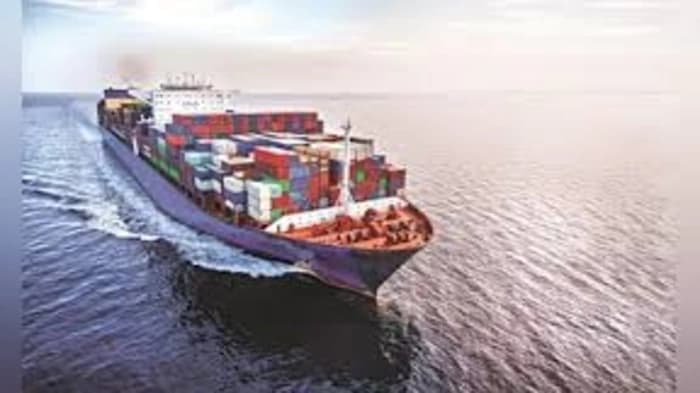
Large vessels are characterized as commercial ships that are Indian-owned and registered, with a gross tonnage of 10,000 or higher, or as Indian-built, owned, and flagged commercial vessels with 1,500 gross tonnage or higher.
The Ministry of Finance added “large ships” to the harmonized master list of infrastructure sectors within the “Transport and Logistics” category, granting them access to all advantages provided to infrastructure projects.

Importance of Inclusion
Allows access to infrastructure financing with more favorable conditions, such as increased loan limits.
Enables access to increased external commercial loans (ECB).
Creates possibilities for funding to address viability gaps and tax benefits.
Condition of India's Maritime Industry
India boasts a coastline of around 11,099 km, featuring 13 major ports and more than 200 minor ports.
India represents about 1.3% of the global fleet tonnage, even though it manages approximately 95% of its trade by volume and roughly 70% by value via maritime pathways.
India ranks as the second-largest supplier of seafarers, following the Philippines, providing nearly 10% of the world's maritime workforce and is among the top five countries for officer provision.
Difficulties
Low Indian-flag fleet: More than 70% of cargo in India is transported by foreign vessels, increasing the exposure to freight costs (~$75 billion each year).
Shipbuilding challenges: Elevated input expenses, minimal scale, restricted financing assistance, rivalry from East Asian shipyards.
Port efficiency gaps: Despite progress, turnaround times are still behind global frontrunners such as Singapore and China.
Recent Advancements (2024–25)
Initiation of the India Middle East Europe Economic Corridor (IMEC), enhancing the significance of Indian ports.
India became part of IMO’s Green Voyage 2050 initiative, pledging to sustainable shipping.
Sagarmala Initiative: Aimed at upgrading ports, enhancing connectivity, promoting port-related industrial growth, and supporting coastal community advancement.
Maritime India Vision (MIV) 2030: A plan for ₹3 lakh crore investment, targeting an increase in Indian flag tonnage to 23 million GT by 2030.