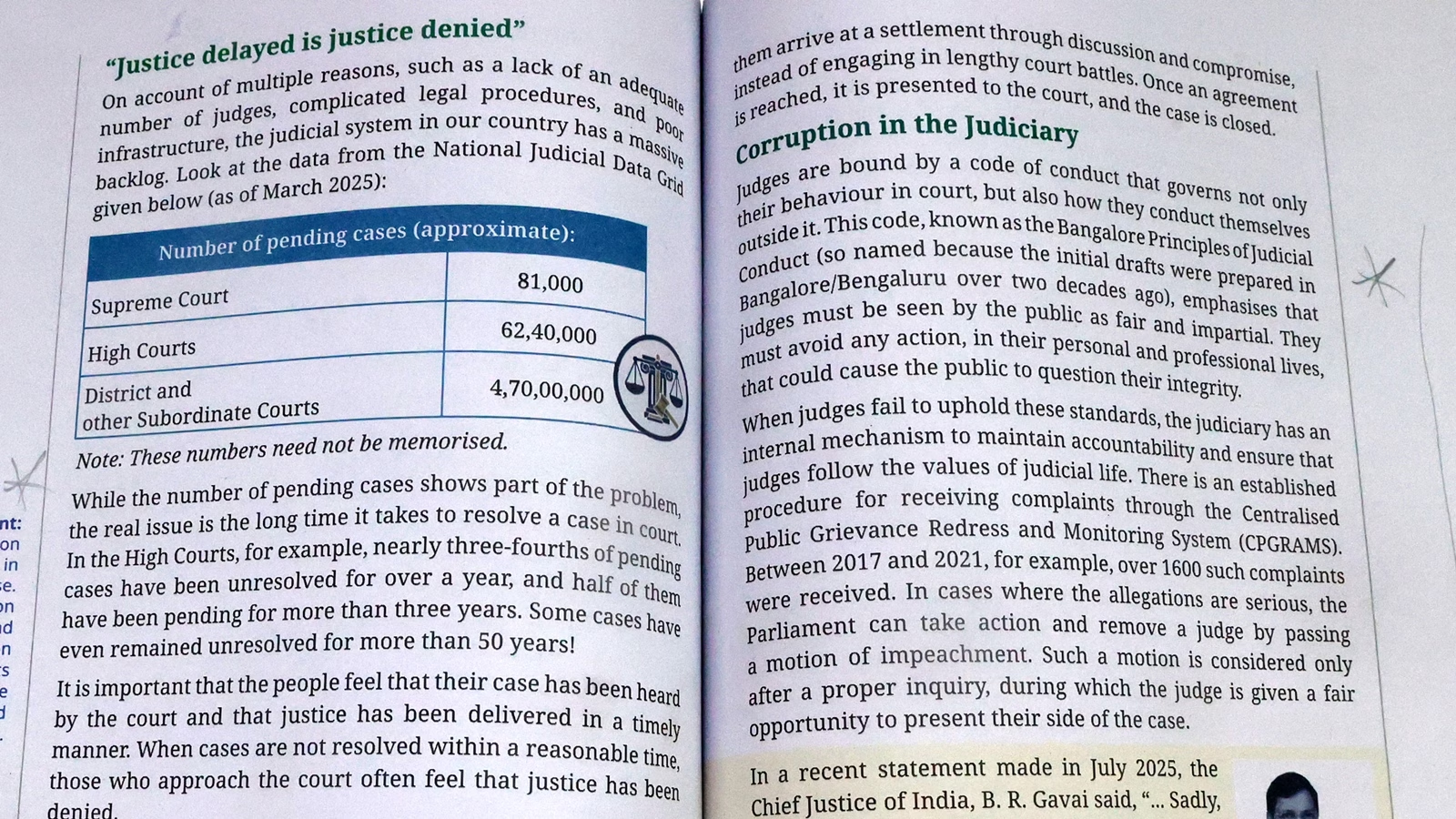
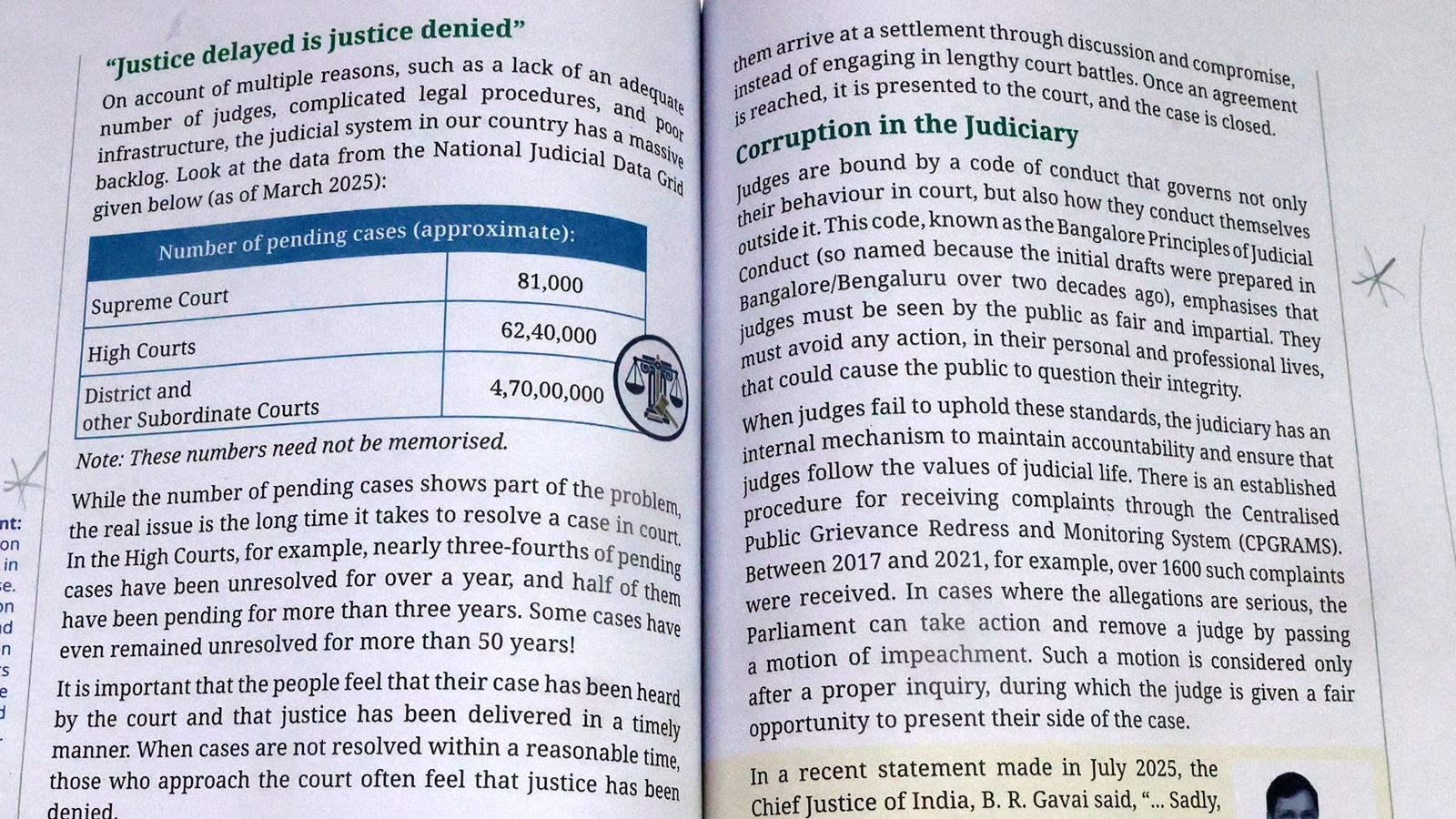
A middle-school classroom is meant to nurture inquiry — not host a contest of institutional authority. That is why the controversy surrounding the new Class VIII social science textbook of the National Council of Educational Research and Training (NCERT) raises troubling questions of intent and judgment.
After reports of book’s references to corruption within the judiciary, the Supreme Court of India, led by Chief Justice Surya Kant, moved swiftly to flag its concerns. The intervention was sharp — and justified. When the credibility of the judiciary is invoked in a school textbook, precision, context and institutional sensitivity are not optional; they are imperative.

It is reassuring that Education Minister Dharmendra Pradhan expressed regret, and that Prime Minister Narendra Modi underscored the need for accountability. Public corruption is an urgent national concern. Judicial corruption, if and when it occurs, is even more grave — because the judiciary is the constitutional sentinel tasked with holding every other institution to account.
Over the years, judges of the apex court have themselves stressed the primacy of probity. The textbook in question even quotes former Chief Justice B R Gavai acknowledging that instances of misconduct within the judiciary can erode public faith.
Yet that acknowledgment cannot be detached from context. The judiciary’s seminal role demands that any evaluation of its institutional record be framed with responsibility and balance. A stray paragraph in a middle-school text, stripped of nuance and historical scaffolding, risks appearing less like civic education and more like insinuation.
The NCERT’s expression of regret, therefore, rings hollow. This episode does not stand alone. It follows a pattern of controversial textbook revisions carried out under the rubric of “rationalization”. References to the 2002 Gujarat riots have been removed. Content on the Mughal era has been pruned.
Discussions of caste discrimination have been diluted. Mentions of the demolition of the Babri Masjid have vanished. Each deletion has been defended administratively; taken together, they sketch a pattern of selective editing shaped by political climate rather than purely pedagogical logic.
The present controversy must be seen against this larger backdrop. In an era marked by deep political polarization, the space for checks and balances appears increasingly constricted. The government frequently labels the Opposition “anti-national” and dismisses sections of the media as part of a hostile “ecosystem”. In such times, the judiciary’s role as constitutional arbiter becomes both more delicate and more indispensable. Even as critics accuse the court of granting the executive the benefit of doubt, the bench has repeatedly insisted that its allegiance is to the Constitution — not to partisan opposition.
Against this fraught landscape, Chief Justice Surya Kant’s anger is understandable. The Court cannot afford to let casual or careless representations chip away at institutional legitimacy. At the same time, sweeping bans and the spectre of contempt risk projecting intolerance to scrutiny. The Supreme Court’s authority has historically rested on its broad shoulders — its capacity to withstand criticism while upholding constitutional boundaries.
The Court has made its displeasure clear. The NCERT has withdrawn the book. That should mark closure. More importantly, it should serve as a signal — that textbook writing is not a playground for political calibration, and that institutional credibility, especially that of the judiciary, demands both honesty and restraint.