CJI Surya Kant calls for mandatory legal aid work, responsible AI use in law education
The proposal includes oral assessments to verify students' understanding, practical clinical training, common AI disclosure guidelines and standardized legal citation formats across Commonwealth countries.
Written by: Pragya Kumari7 Min Read · Updated:
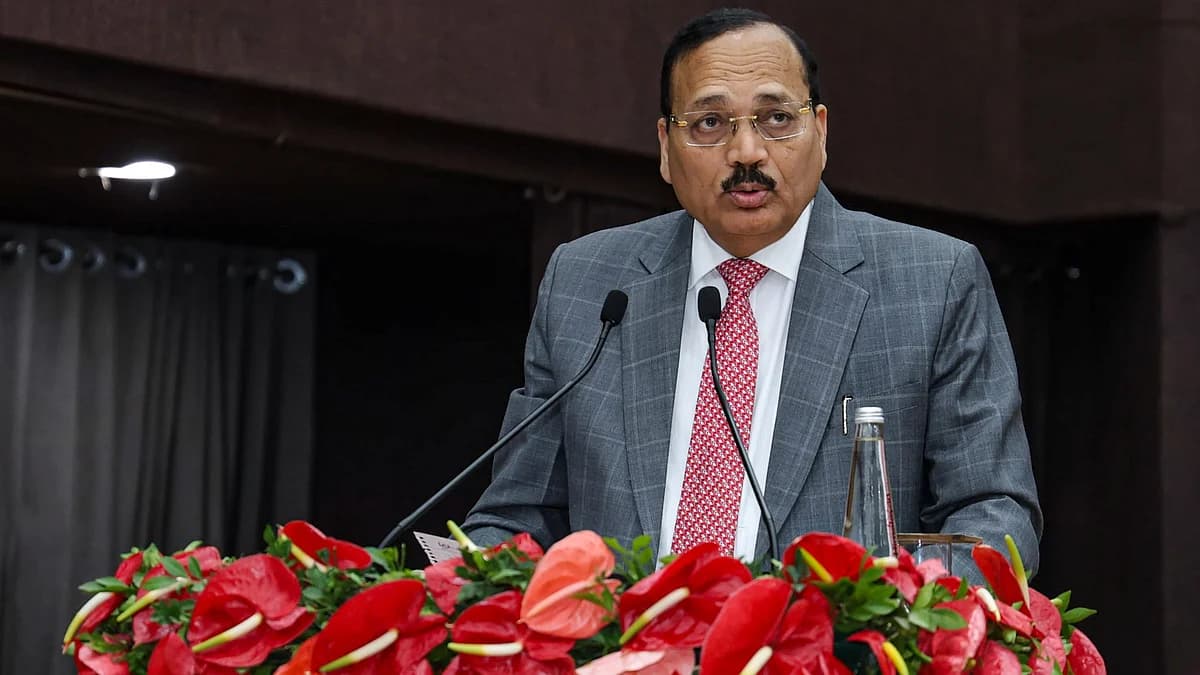
Chief Justice of India (CJI) Surya Kant has proposed making legal aid service compulsory for law students before graduation, alongside introducing additional academic credits for those who volunteer beyond the prescribed requirement.
He also called for common guidelines to regulate the disclosure of artificial intelligence (AI) assistance in legal research. He emphasized that law schools should prepare students to use emerging technologies responsibly instead of imposing a blanket ban on their use.
The proposals were presented during the inaugural session of the Commonwealth Legal Education Association (CLEA) 1st Annual International Conference on Legal Education 2026 in Hyderabad. The conference focused on the changing landscape of legal education, practical training and the growing influence of technology on legal research.
Addressing legal educators, judges and academic professionals, the CJI highlighted the need to make law students more accountable for their academic research and better equipped to handle the practical demands of the legal profession.
He also stressed that legal education must extend beyond classroom instruction, with greater opportunities for students to engage with communities, understand legal challenges and gain experience in real-world legal settings.
AI use in legal research: CJI seeks common disclosure guidelines
Discussing the growing use of generative AI in legal education, CJI Surya Kant said law schools must establish clear rules explaining which applications of the technology are permitted and when students are required to disclose its use.
He urged CLEA to develop model guidelines for disclosing AI assistance in legal research. These recommendations could be adopted or adapted by law schools and academic journals across Commonwealth countries.
The CJI acknowledged that AI tools can support students and researchers by helping them locate and organize legal materials, summarize judgments and develop legal arguments. However, he cautioned that the information generated by these applications is not always reliable.
AI systems can produce fabricated legal authorities that may appear credible to users. Therefore, students and researchers must verify every legal reference against its original source before incorporating it into their work.
“The question, therefore, is no longer whether students will use these tools, but whether the work they submit still reflects their own reasoning, understanding, and appreciation for the law,” he said.
He argued that neither unrestricted dependence on AI nor a complete prohibition on its use would be appropriate for legal education. A blanket ban could encourage students to use these applications without proper guidance or disclosure.
Instead, law schools should introduce transparent policies and teach students how to use AI as a research aid while retaining responsibility for the accuracy, reasoning and originality of their submissions.
The CJI also raised concerns about the increasing reliance on AI-detection software to identify academic misconduct. He referred to a 2023 study examining seven widely used AI detectors.
According to the study, the tools performed almost flawlessly when assessing essays written by schoolchildren in the United States. However, they incorrectly classified more than three in every five essays written by non-native English speakers as AI-generated.
He warned that such inaccuracies could disproportionately affect students across Commonwealth countries, where English is often used as a second or third language.
An incorrect assessment by automated detection software could result in genuine academic work being treated as misconduct. The CJI cautioned that allegations against students should not be based exclusively on machine-generated assessments.
“No student should be held guilty of misconduct on the word of a machine alone,” he said.
CJI suggests oral assessments to verify students' understanding
To address concerns surrounding AI-generated academic submissions, the CJI suggested that law schools reconsider their existing assessment methods.
He proposed supplementing written assignments with oral examinations in which students would be required to explain their submissions and demonstrate their understanding of the legal arguments presented.
Students could also be asked to defend the legal authorities cited in their research or identify inaccuracies in AI-generated answers. Such exercises would help teachers determine whether students genuinely understand the material they submit.
The approach would place greater emphasis on independent reasoning, legal interpretation and the ability to apply established principles rather than relying exclusively on written assignments.
The CJI maintained that students must understand the distinction between using AI to support research and allowing the technology to replace their own judgment.
Mandatory legal aid work proposed as graduation requirement
Apart from the use of AI in legal education, CJI Surya Kant called for practical legal training to become a more prominent part of university law programmes.
He proposed that every law student should complete a minimum period of legal aid service before becoming eligible for graduation. Students who undertake additional voluntary work beyond the prescribed requirement should receive extra academic credits.
He said legal aid clinics should not remain restricted to classroom exercises or function only during regular academic semesters. Instead, students should be encouraged to participate in legal assistance activities outside their institutions.
Under the proposed approach, law students could work alongside panel lawyers and para-legal volunteers through legal services authorities. Such activities could also extend to villages and settlements, allowing students to engage directly with communities that require legal assistance.
The CJI further suggested that students who continue their legal aid activities during academic breaks should receive certificates recognizing their contributions.
He also proposed developing legal aid clinics into continuing learning centers. Panel advocates, legal services officers and students could regularly discuss cases and exchange practical knowledge through these facilities.
The recommendations seek to strengthen the connection between legal education and the delivery of legal services, while providing students with opportunities to understand the legal challenges faced by people outside academic institutions.
Practical training to be integrated into core law subjects
CJI Surya Kant also emphasized the need to incorporate clinical legal education into the main law curriculum instead of treating practical learning as a separate component.
He suggested that law schools introduce practical exercises within core subjects, including Evidence, Criminal Procedure, Family Law and Constitutional Law.
This approach would allow students to connect theoretical concepts with their practical application in legal proceedings and other professional settings.
Referring to the vision of prominent lawyer and educationist Professor N R Madhava Menon, the CJI said legal education should take students beyond classrooms and connect them with people who need legal assistance.
He also recalled Menon's efforts to promote legal clinics for the poor, highlighting the importance of exposing law students to the social responsibilities associated with the legal profession.
CJI calls for uniform legal citation format across Commonwealth countries
The CJI also addressed the need to improve the accessibility and verification of legal judgments across Commonwealth jurisdictions.
Referring to the conference's technical session on 'Uniform Citation for the Commonwealth,' he suggested that neutral citations assigned by courts should serve as the primary identifiers of judgments.
The Supreme Court of India has adopted neutral citations since 2023. According to the CJI, introducing a common minimum citation format across Commonwealth countries could make legal decisions easier to locate, reference and verify.
He suggested that the format should include four essential elements: the year of the judgment, the court, the decision number and the relevant paragraph reference.
A standardized system could improve consistency in legal research and make it easier for researchers, students and legal practitioners to trace judgments across different jurisdictions.
Other legal experts highlight AI risks and curriculum changes
Supreme Court Justice and CLEA patron Justice P S Narasimha also raised concerns about the growing dependence on AI in legal education.
He cautioned that excessive reliance on such technologies could weaken students' ability to think independently. He emphasized that the process of learning law was as important as the final outcome.
“While AI could help address complex issues and improve the delivery of legal services, its greatest risk lay in replacing human thinking rather than merely assisting it,” he said.
Acting Chief Justice of the Telangana High Court Justice P Sam Koshy said the conference theme was timely and important. He noted that legal education needed to move beyond its conventional focus on teaching statutes, precedents and procedural rules.
Telangana Advocate General A Sudarshan Reddy also discussed changes being introduced in the state's undergraduate law curriculum. He said the state government was introducing 10 new subjects, including cyber laws and cybersecurity, emerging technologies and law.
“The inclusion of these subjects is academically justified and aligned with global best practices in legal education,” he said.
He added that legal education, the practice of law and the tools available to legal professionals were changing. However, he emphasized that the expectations of society from the legal profession and the foundations of profound learning and honor remained unchanged.
The event began with a welcome address by Justice E V Venugopal of the Telangana High Court and Prof. (Dr.) S Sivakumar, chairperson of the CLEA organizing committee.
Solicitor General of India Tushar Mehta and Attorney General for India Dr. R. Venkataramani also addressed the gathering.
The conference was attended by Chief Justices, High Court judges, vice-chancellors, deans, senior academics, legal practitioners, researchers and legal educators.
Also read