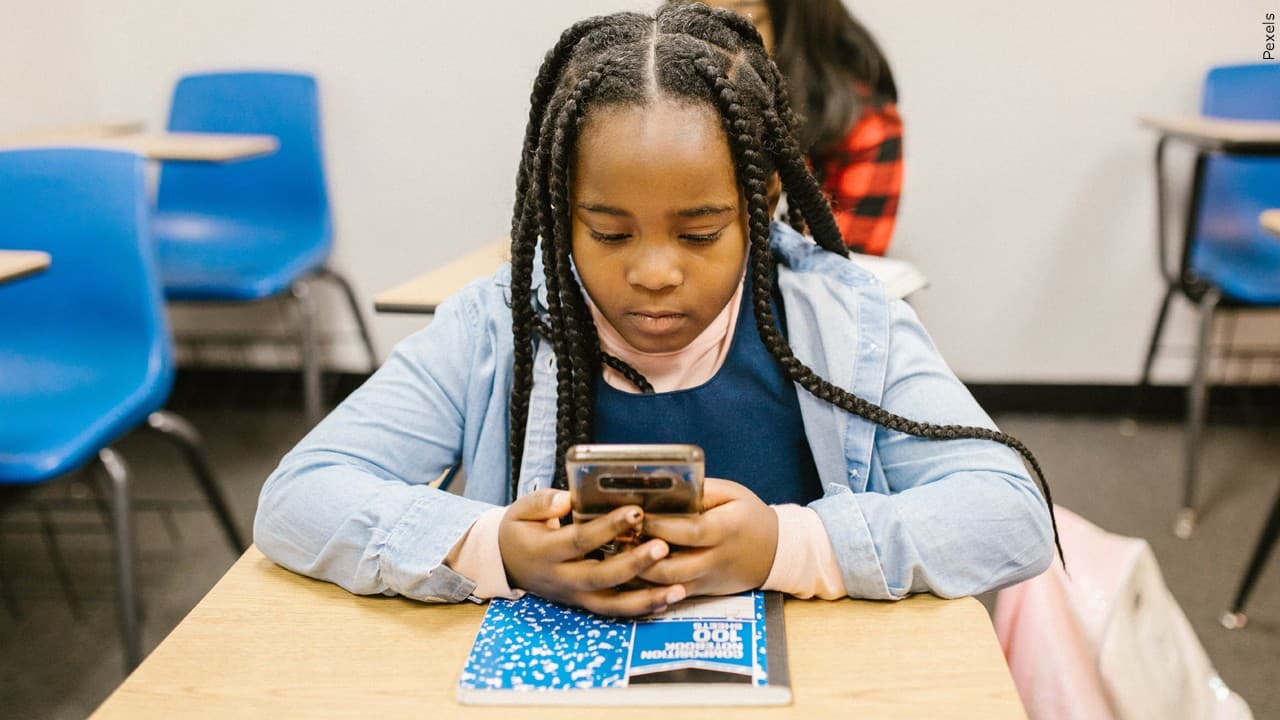
Chile is preparing to introduce a nationwide ban on smartphones for elementary and middle school students during class, aiming to curb digital distractions and improve student focus.
Lawmakers have approved the measure, and it is now awaiting President Gabriel Boric’s signature before it takes effect in the 2026 school year.

Under the proposed law, younger students will not be allowed to use mobile phones or other connected devices during lessons, except in emergencies or when supported by documented medical or educational needs.
The bill won strong backing in the lower house after the Senate signaled its support earlier.
Teachers and parents have long warned that constant phone use affects attention spans, mental health and social development.
Many believe that unrestricted access to devices pulls students away from academic work, limits in-person interaction and contributes to isolation.
Momentum for the legislation grew after a Santiago school tested a phone-free approach by placing devices in signal-blocking pouches from morning until dismissal.
Staff highlighted that students began spending more time talking with peers, playing outside, participating in sports and reading rather than scrolling through apps.
Surveys show that a significant number of Chilean students feel digital devices interrupt their learning, matching global findings in education assessments.
Chile’s move aligns with a growing international push toward reducing or prohibiting phone use in schools.
A monitoring body reported earlier this year that 79 education systems have adopted rules limiting smartphones.
France and the Netherlands are among the countries that have already enforced or expanded such measures to address classroom distractions.
Supporters of Chile’s policy say it should improve concentration, cut down on screen time and shield children from online risks such as cyberbullying and compulsive use of social media.
Opponents argue that removing phones entirely may limit opportunities for teaching digital responsibility or integrating technology into lessons in a controlled way.
Education Minister Nicols Cataldo welcomed the approval, saying, "With the regulation of cell phone use in classrooms, we are advancing a cultural change for children and adolescents who today need, more than ever, to see each other face to face, socialise during recess and regain concentration to further boost learning."
Parent groups and many school leaders have endorsed the measure, saying national guidelines will help schools manage digital distractions more effectively.
Once the president signs the law, Chile will join a growing number of countries promoting phone-free classrooms as a strategy to improve academic performance in a hyper-connected world.

Schools will have about a year to set up enforcement plans and inform families of the new expectations.
Many educators hope the 2026 implementation will encourage stronger social interaction, better focus and a healthier balance with technology.
A global review shows that by the end of 2024, around 40% of education systems worldwide had introduced some form of smartphone restriction, a figure expected to rise as concerns about digital wellness and learning outcomes continue to grow.