Beyond US and China: Where India can build its own global AI leadership, says UPSC Chairman
The UPSC Chairman Kumar highlights opportunities in regional language models, AI infrastructure, advanced skill development and technology solutions for healthcare and agriculture.
Written by: Pragya Kumari · Updated:
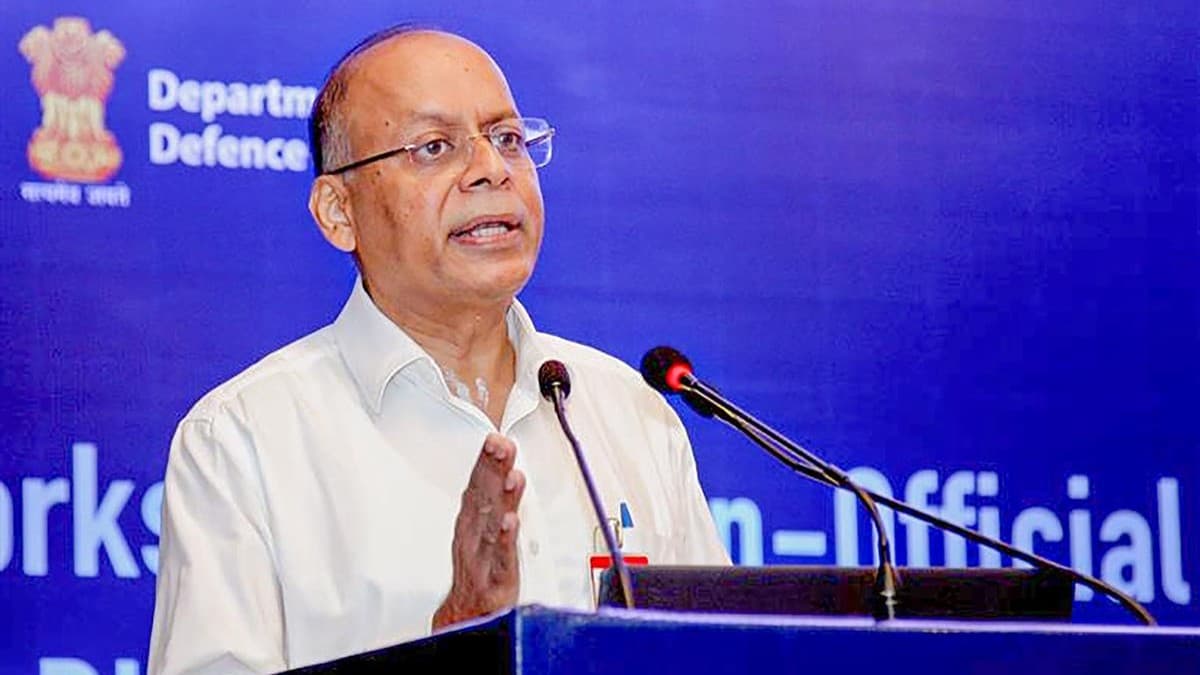
India should focus on its strengths in regional languages, small language models and AI solutions for developing economies rather than competing directly with the United States and China in the global artificial intelligence race, Union Public Service Commission (UPSC) Chairman Dr Ajay Kumar has said.
In an exclusive interaction with ETEducation, Kumar discussed India's potential to emerge as a global artificial intelligence (AI) leader, highlighting the importance of technological innovation, data infrastructure, research capabilities and skilled human resources.
The discussion also covered AI adoption in schools and higher education institutions, the changing employment landscape, the role of regional languages in developing AI technologies and the use of artificial intelligence in UPSC's administrative and recruitment processes.
Kumar, who is also the author of the book “AI Nation: Bharat's Path to AI Power,” said India should identify areas where it has inherent advantages instead of attempting to match the scale of AI development in countries such as the US and China, which are considerably ahead.
One such opportunity lies in India's linguistic diversity. According to Kumar, the capabilities of large language models in several Indian regional languages remain limited outside the country. India's linguistic resources and knowledge base could help it develop AI systems that address this gap.
He pointed to companies such as Sarvam and initiatives such as Bhashini that are already working to strengthen AI capabilities in Indian languages. Developing these technologies could help India establish a distinct position in the global AI ecosystem.
Another area where India could build technological leadership is the development of AI applications addressing challenges specific to the country and other developing economies.
Kumar cited healthcare and agriculture as sectors where India could create solutions with wider applications. Addressing health challenges such as tuberculosis and agricultural problems faced by developing countries could provide opportunities for Indian AI companies and researchers.
Small language models could offer India a competitive advantage
The UPSC Chairman also highlighted the potential of small language models (SLMs), particularly those designed to operate on edge devices and support decentralized applications.
Unlike the approach of competing solely through large-scale AI models, India could focus on developing smaller models that can run on devices and support a wider range of applications.
The SLM market is still evolving, creating an opportunity for India to establish an early leadership position. Kumar said the country's existing chip-design capabilities, nearly a billion smartphones and expanding consumer electronics market could support the development of technologies powering future smart devices.
He also emphasized the importance of India's participation in shaping international AI standards. The AI Summit in India has created an opportunity for the country to contribute to global discussions on AI governance.
According to Kumar, India should ensure that international AI standards also reflect the concerns and priorities of developing countries, particularly those belonging to the Global South.
He observed that network-based technologies tend to concentrate economic power and wealth. Although this tendency cannot be eliminated entirely, India can create its own space in the global technology landscape by concentrating on areas where it can build distinctive capabilities.
India needs stronger data infrastructure to support AI growth
Beyond developing AI models and applications, India must strengthen its domestic data infrastructure to establish itself as a global technology leader, Kumar said.
He highlighted the gap between the volume of data generated in India and the country's capacity to store it. India generates an estimated 20% of the world's data, but accounts for only around 1% to 2% of global data storage capacity.
As a result, a substantial proportion of the data generated within the country is stored outside India. The financial sector is an exception, as payment-related data is required to be stored domestically.
Kumar said expanding data center capacity should be among India's initial priorities. The country previously had around 900 MW of data center capacity, but efforts are underway to attract investments and expand the infrastructure.
He indicated that India's data center capacity could potentially double over the next three to four years as investments in the sector increase.
However, building storage infrastructure alone will not be sufficient. India also needs mechanisms that allow data to be used productively while ensuring that people who own the data can benefit from its use.
Kumar identified the Digital Personal Data Protection (DPDP) Act and the Data Empowerment and Protection Architecture (DEPA) as important components of this framework.
While the DPDP Act provides the legal foundation, DEPA offers a consent-based mechanism for sharing data. Its implementation needs to expand across sectors such as agriculture, education and healthcare.
So far, the adoption of DEPA has been more visible in the financial sector through account aggregators. Kumar said India needs a mission-mode approach to extend its use to other areas, similar to the efforts undertaken to expand digital payments.
He added that the country already has the legal framework and foundational architecture required for data sharing. The priority now should be to increase adoption and address the initial hesitation surrounding the sharing of personal data.
Is India's education system prepared for the AI revolution?
With artificial intelligence transforming industries and professional requirements, the preparedness of India's education system to develop future AI talent has become an important concern.
Kumar expressed confidence in the country's ability to adopt emerging technologies, drawing parallels with the introduction of computers in schools.
Recalling his tenure as IT Secretary in Kerala, he referred to the IT@School project introduced in 2008-09, through which computer education was made mandatory in schools.
At the time, questions were raised about whether computer education could reach children across a country with considerable differences between villages, smaller towns, government schools and private institutions.
However, technology adoption gradually expanded across the country, including in states that were not considered technologically advanced.
Kumar said India's education system has generally demonstrated an ability to adopt new technologies. Access to learning is no longer restricted to physical classrooms, as students in leading schools and children in villages increasingly use online learning platforms.
This has helped create a certain degree of a level playing field in access to educational resources. He expects schools and higher education institutions to similarly adopt artificial intelligence as its applications become more widespread.
"AI is an even more disruptive technology, and I have little doubt that schools and educational institutions will adopt and adapt to it. There is no real choice in the matter," he said.
UPSC uses AI for recruitment processes but not candidate evaluation
Kumar also explained how the Union Public Service Commission is incorporating artificial intelligence into its administrative and recruitment-related activities.
As one of India's largest recruitment bodies, UPSC receives a substantial volume of applications and documents from candidates. AI-based tools are helping the Commission manage certain processes that would otherwise be difficult to undertake manually.
One application involves identifying duplicate candidature applications. AI is also used to scrutinize the large number of documents submitted by candidates.
The Commission additionally uses face authentication at examination centers to prevent impersonation and strengthen identity verification during recruitment examinations.
Another application is in knowledge management. Technology helps UPSC examine similar disciplinary cases and maintain consistency in the penalties recommended.
Kumar explained that comparing cases across several years would be difficult to carry out manually, making technology useful in reviewing past decisions and supporting administrative processes.
However, the Commission has not introduced artificial intelligence for evaluating candidates' performance in recruitment examinations.
"We have not used AI for the evaluation of candidates, and we do not believe that the solutions available today can match the robustness of our existing human evaluation systems," Kumar said.
He added that the skills, knowledge and competencies expected from candidates change over time. AI has also emerged as an important subject area, with AI-related questions finding a place in recruitment examinations.
Nevertheless, the assessment of candidates continues to be conducted manually, and the Commission has no plans to introduce AI-based candidate evaluation at present.
India needs to develop millions of advanced AI professionals
While AI literacy is expected to become an essential part of school education, Kumar identified the development of advanced AI skills at scale as a much bigger challenge for India.
He pointed to the speed at which artificial intelligence has spread compared with earlier technological developments.
The internet expanded faster than technologies such as electricity and the steam engine. Mobile phones achieved wider adoption at an even faster pace, followed by social media platforms.
Artificial intelligence has advanced at an even greater speed, moving from research communities into everyday use through widely accessible platforms.
Kumar said governments and educational institutions must respond to this rapid technological transition by making AI literacy an integral part of school education.
However, simply familiarizing students with AI tools will not be enough. India must develop professionals with advanced capabilities to meet the growing demand for AI-related skills.
He said the country should aim to become a major supplier of AI talent to the global workforce while meeting its own domestic requirements.
Rather than limiting training initiatives to a few hundred or a few thousand professionals, India needs to develop advanced AI capabilities among millions of people.
Kumar compared this requirement with the growth of India's IT outsourcing industry, which benefited from coding education reaching smaller cities and communities across the country.
A similar broad-based approach is needed for AI training, covering the different categories of advanced skills required by the emerging technology sector.
He said building such a talent pool could create employment opportunities within India while enabling the country to supply skilled AI professionals to international markets.
Will artificial intelligence replace jobs? UPSC Chairman explains
The growing use of AI has raised concerns about its potential impact on employment, particularly entry-level positions that involve repetitive or routine tasks.
Addressing these concerns, Kumar said the technology would lead to job losses in certain areas while creating new employment opportunities in others.
He explained that some professionals would also need to retrain and adapt their working methods to remain relevant in an AI-driven economy.
Citing UPSC's experience, he said the introduction of face authentication and AI-based deduplication has made it possible to undertake tasks that were previously difficult to manage.
These technologies have created demand for professionals with technology-related expertise. At the same time, they have also increased the need for non-technical employees who can manage and operate such systems.
Kumar said the larger opportunity associated with AI extends beyond the creation of new jobs. The technology can help address problems that were previously considered difficult or impossible to solve.
Its ability to process enormous volumes of data could open up new possibilities in healthcare, space research, ocean exploration and understanding the human body.
He referred to a recent statement by the CEO of Anthropic suggesting that cancer could become history within a decade. While the prediction may or may not materialize, Kumar said it demonstrates the scale of possibilities that artificial intelligence could create.
According to him, the potential of AI should also be assessed through its ability to generate solutions to longstanding human challenges.
If the technology helps address problems that have affected humanity for generations, its contribution could extend far beyond the number of jobs directly created through its adoption.
Why creativity and critical thinking will matter in AI-driven education
Sharing his message for education leaders and policymakers, Kumar said institutions must recognize that artificial intelligence is already transforming traditional ways of working and learning.
He emphasized that the primary objective should be to ensure that technology serves human goals rather than allowing technological developments to determine the direction of education.
For students, one of the most important abilities to develop will be the capacity to frame relevant questions and think independently.
"The most important thing is to ensure that AI serves human goals and objectives. From the perspective of education, one of the most important responsibilities is to teach students how to ask the right questions. The ability to ask the right questions is what future education should be all about," he said.
Kumar explained that access to information and the ability to process it are unlikely to remain major challenges as AI tools become increasingly accessible.
Although teaching foundational concepts will continue to be important, educational institutions must place greater emphasis on developing creativity, originality and independent thinking.
He said students should learn to approach problems differently and identify questions that others may not consider. These abilities will become increasingly important as artificial intelligence takes on a larger role in processing information and completing routine tasks.
For education institutions and policymakers, the responsibility will therefore extend beyond introducing AI tools into classrooms. They must also ensure that students develop the intellectual capabilities needed to use technology effectively and contribute original ideas.
Also read