


BNP landslide reshapes Bangladesh politics; India weighs presence amid reset in ties and Hasina extradition shadow.
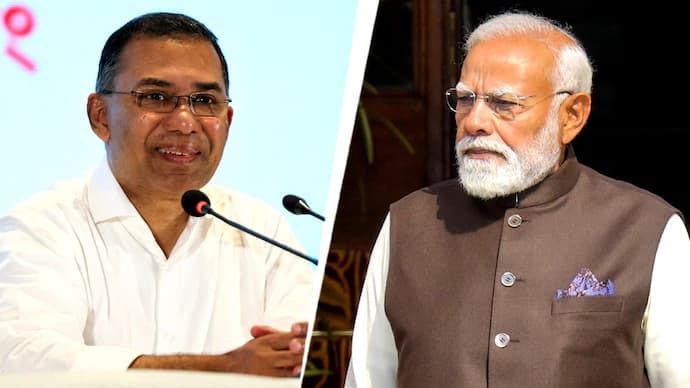
Prime Minister Narendra Modi has been invited to attend the February 17 swearing-in ceremony of Bangladesh’s Prime Minister-elect Tarique Rahman, marking a pivotal political transition in Dhaka after a sweeping electoral victory by the Bangladesh Nationalist Party (BNP).
Rahman, the BNP chief and son of former Prime Minister Khaleda Zia, is set to assume office following the first national election held after the ouster of Sheikh Hasina. While Dhaka has extended a formal invitation, New Delhi has yet to confirm whether Modi will attend, with a decision awaited amid efforts to recalibrate bilateral ties.

Pakistan Prime Minister Shehbaz Sharif is expected to be present at the ceremony in Dhaka. India is among 13 nations invited by interim Chief Adviser Muhammad Yunus, alongside China, Saudi Arabia, Pakistan, Turkey, the United Arab Emirates, Qatar, Malaysia, Brunei, Sri Lanka, Nepal, the Maldives and Bhutan.
Rahman’s ascent caps a dramatic comeback. After spending 17 years in self-imposed exile in London, he has led the BNP—founded by his father Ziaur Rahman—to power after nearly two decades out of office.
The BNP secured a commanding 209 of the 297 seats in Parliament. The right-wing Jamaat-e-Islami clinched 68 seats, while Hasina’s Awami League was barred from contesting the polls. Voter turnout stood at 59.44 per cent, underscoring both participation and polarisation in a sharply contested political landscape.
Soon after the results were declared, Modi spoke with Rahman, conveying his “best wishes and support” and reaffirming India’s commitment to shared peace and prosperity.
“As two close neighbours with deep-rooted historical and cultural ties, I reaffirmed India’s continued commitment to the peace, progress and prosperity of both our peoples,” Modi posted on X, adding that he looked forward to working together to advance common development goals.
Rahman, in his first remarks on India ties after the victory, struck a measured tone. Bangladesh’s “interests,” he said, would guide foreign policy towards New Delhi.
“The interests of Bangladesh and its people will determine our foreign policy,” Rahman stated, adding that Dhaka would pursue balanced relations with regional powers including India, China and Pakistan, and would not regard any country as a “master”.
Echoing that line, the BNP signalled openness to constructive engagement, stating it looked forward to advancing a multifaceted relationship with India based on “mutual respect” and sensitivity to each other’s concerns.
The political reset unfolds against the backdrop of unresolved tensions surrounding Sheikh Hasina. Ousted in August 2024 following massive student-led protests, Hasina fled to India, where she currently resides. Bangladesh has since sentenced her to death over deaths linked to the unrest and is seeking her deportation—an issue that could test diplomatic equations in the months ahead.
As Dhaka prepares for a new administration, the optics of Modi’s possible presence at Rahman’s oath ceremony carry strategic weight—signaling whether the two neighbours can swiftly stabilize ties after one of the most turbulent political transitions in Bangladesh’s recent history.
Rekha Sharma’s 40% Disability Certificate Disputed After Medical Board Reassessed It at 30%

Arctic Seals Face Rising Extinction Risk as Climate Change Accelerates Sea Ice Loss
India's Multi-Alignment Policy Faces Fresh Diplomatic Challenges

AI Model Can Identify Zero-Day Vulnerabilities in Critical Software
Patent Rejection Opens Possibilities for Generic Competition

Canada shifts focus to research talent as New Zealand targets growth in international education

Delhi to Attempt Artificial Rain Again as Pollution Chokes Capital; New Aircraft to Be Deployed

Want to speak Japanese with anime characters? Japan is developing an AI-powered language education app

Why are 3 in 4 Singapore parents turning to private tuition despite trust in schools?
Delhi-NCR schools go hybrid: Which classes are affected and what parents should know?

Rekha Sharma’s 40% Disability Certificate Disputed After Medical Board Reassessed It at 30%
Arctic Seals Face Rising Extinction Risk as Climate Change Accelerates Sea Ice Loss
India's Multi-Alignment Policy Faces Fresh Diplomatic Challenges
AI Model Can Identify Zero-Day Vulnerabilities in Critical Software
Patent Rejection Opens Possibilities for Generic Competition
Canada shifts focus to research talent as New Zealand targets growth in international education
Delhi to Attempt Artificial Rain Again as Pollution Chokes Capital; New Aircraft to Be Deployed
Want to speak Japanese with anime characters? Japan is developing an AI-powered language education app
Why are 3 in 4 Singapore parents turning to private tuition despite trust in schools?
Delhi-NCR schools go hybrid: Which classes are affected and what parents should know?
Copyright© educationpost.in 2026 All Rights Reserved.