


Top court calls reduction of sentence in lieu of enhanced compensation a “dangerous practice”, restores three-year rigorous imprisonment and lays down strict sentencing guidelines.
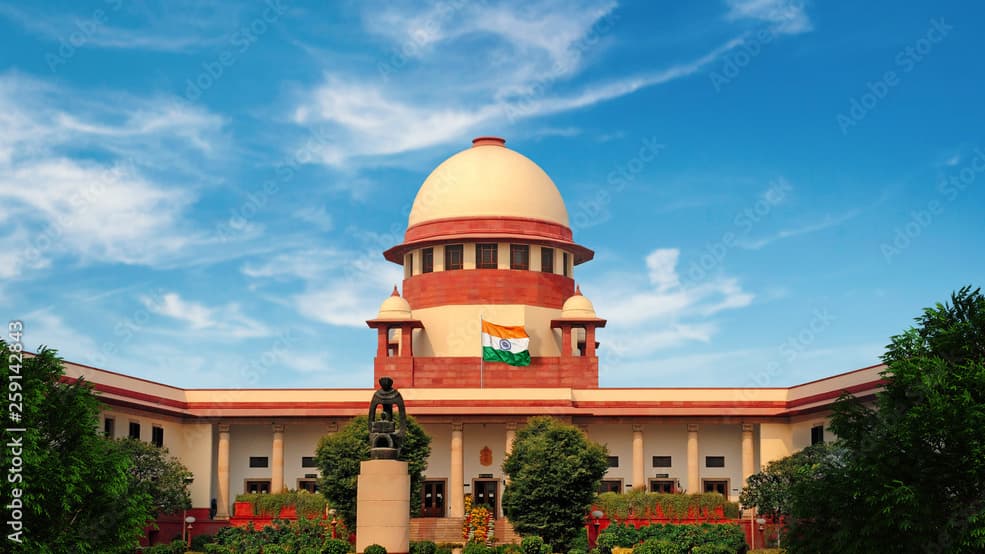
In a sharp rebuke to what it described as a “dangerous” and growing judicial trend, the Supreme Court of India has ruled that criminal punishment cannot be diluted merely by enhancing compensation to victims, warning that such practices risk sending a message that offenders can buy their way out of jail.
A bench of Justices Rajesh Bindal and Vijay Bishnoi set aside a judgment of the Madras High Court that had reduced the sentence of two men convicted of attempt to murder from three years’ rigorous imprisonment to the period already undergone, while increasing the fine from ₹5,000 to ₹50,000 each.

The apex court said the growing tendency among high courts to mechanically reduce sentences while enhancing compensation reflects a “misplaced understanding” of criminal jurisprudence.
“The practice of enhancing compensation payable to the victim and reducing the sentence is dangerous,” the court observed, cautioning that it may create a false impression that offenders can absolve themselves of criminal liability by paying money.
Calling the trend a matter of serious concern, the Bench noted that sentences awarded by trial courts are often reduced “capriciously and mechanically, without any visible application of judicial mind”.
Emphasizing that punishment cannot be substituted with monetary payments, the court laid down comprehensive guidelines to be followed by courts while imposing or modifying sentences:
The Bench underscored that compensation is restitutory — meant to rehabilitate victims — and cannot be equated with punishment, which is inherently punitive and deterrent in nature.
“Punishment is meant to send a social message that violation of the moral fabric of society will have consequences which cannot merely be ‘purchased by money’,” the court said.
The case stemmed from a 2009 incident in Tamil Nadu’s Sivagangai district, where the accused allegedly attacked the victim with knives over prior enmity. The victim suffered four stab injuries to the chest, ribs, abdomen and hand.
The trial court convicted the two men under Sections 307 (attempt to murder), 326 (grievous hurt) and 324 (hurt by dangerous weapons) of the IPC, sentencing them to three years’ rigorous imprisonment along with a fine of ₹5,000 each.
The conviction and sentence were upheld by the appellate court. However, in revision, the Madras High Court maintained the conviction but reduced the jail term to the period already undergone, while enhancing the fine to ₹50,000 each.
Terming the high court’s “undue sympathy” as unwarranted, the Supreme Court held that such overt displays of leniency risk undermining the administration of justice.
Setting aside the impugned judgment, the top court restored the original conviction and sentence passed by the trial court and affirmed by the sessions court.
It directed the two convicts to surrender before the trial court within four weeks and serve the remaining portion of their three-year sentence, after adjusting the period already undergone.
Reiterating the twin objectives of criminal justice — deterrence and reformation — the court made it clear: victim compensation cannot be a passport to escape imprisonment.

Brown University team joins NASA mission to study giant planets from Antarctica

Princeton marks 25 years of no-loan financial aid, says nearly 90% of graduates leave debt-free
UAE ministry dismisses viral first-term exam timetable as fake

IIT Kanpur to Establish ₹104-Crore UP Cyber Security Operations Centre

IIM Ahmedabad Summer Placements 2028: AI Startups, Fashion Brands and Top Companies Recruit Students

South Korea's student suicide toll nears 1,000 in four years, with India's figures also drawing attention

Want to explore the world without leaving your classroom? Seoul students show how

When smart glasses become cheating tools: South Korea draws tougher exam rules

Jeans out, formals in: Bihar rolls out stricter rules for government school staff

Auslan gains ground in Western Australian schools

Brown University team joins NASA mission to study giant planets from Antarctica
Princeton marks 25 years of no-loan financial aid, says nearly 90% of graduates leave debt-free
UAE ministry dismisses viral first-term exam timetable as fake
IIT Kanpur to Establish ₹104-Crore UP Cyber Security Operations Centre
IIM Ahmedabad Summer Placements 2028: AI Startups, Fashion Brands and Top Companies Recruit Students
South Korea's student suicide toll nears 1,000 in four years, with India's figures also drawing attention
Want to explore the world without leaving your classroom? Seoul students show how
When smart glasses become cheating tools: South Korea draws tougher exam rules
Jeans out, formals in: Bihar rolls out stricter rules for government school staff
Auslan gains ground in Western Australian schools
Copyright© educationpost.in 2026 All Rights Reserved.