The Election Commission (EC) is preparing to launch the countrywide Special Intensive Revision (SIR) of electoral rolls in phases beginning November, with the first round likely to cover states headed for assembly elections in 2026 — Assam, Kerala, Puducherry, Tamil Nadu, and West Bengal — along with a few others.
At a two-day conference that opened October 22, the EC reviewed the readiness of Chief Electoral Officers (CEOs) across states and Union Territories. While the final rollout plan will be announced after the conference concludes, officials indicated that the revision will proceed in stages.

However, Assam’s inclusion remains uncertain. The state officials have conveyed to the EC that they prefer to conduct the revision only after the publication of the National Register of Citizens (NRC), making it the only state with such a request due to its unique NRC process.
New eligibility benchmark likely to mirror Bihar model
The upcoming SIR will adopt a similar framework to that used in Bihar’s recent revision, pegging eligibility to the last intensive revision year — 2003 in Bihar’s case, according to sources. The EC is also considering a more flexible verification rule, allowing electors to submit extracts from the last intensive roll of any state, not just their current one.
This would mean, for instance, a migrant voter from West Bengal living in Mumbai could retain their registration in Maharashtra if they can show their name — or a family link — in the 2002 West Bengal electoral roll.
Mapping hurdles in urban areas
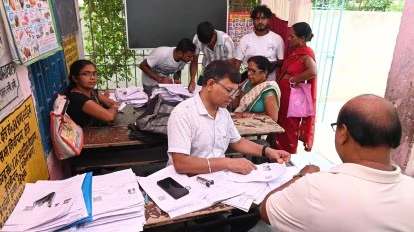
The EC’s ongoing effort to map current electors to those in the last intensive revision rolls (conducted between 2002 and 2008 across states) has hit obstacles, particularly in cities with high migration rates. At a previous meeting on September 10, the Commission had instructed CEOs to identify as many existing voters as possible from the older rolls to reduce document-based verifications.
The Commission, led by Chief Election Commissioner Gyanesh Kumar and Election Commissioners Sukhbir Singh Sandhu and Vivek Joshi, also reviewed progress in appointing and training officials at district, constituency, and booth levels.
A major shift after two decades
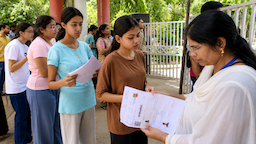
The June 24 order directing a nationwide SIR marked a significant departure from the EC’s two-decade-long practice of annual, incremental updates to electoral rolls. Under the new exercise, all registered voters must fill fresh enumeration forms to remain on the rolls, while those enrolled after their state’s last intensive revision must provide documents verifying birth details and citizenship.
The EC’s decision to resume a full-scale revision of rolls after years of computerised incremental updates has already been challenged in the Supreme Court. Despite the legal scrutiny, the Commission maintains that the SIR is essential to ensure the accuracy and authenticity of India’s electoral base ahead of upcoming state elections and the next Lok Sabha polls.



.png&w=256&q=75)



.png&w=256&q=75)
