The Madras High Court has delivered a sharp constitutional reminder in a dispute over a church cemetery, ruling that religious authority does not override the dignity of the dead and that cemeteries cannot be treated as disposable property.
Hearing a plea filed by a parish member, Justice L Victoria Gowri said the controversy went far beyond ownership rights and struck at the heart of the “right to dignity in death” and the “right to decent burial” guaranteed under Article 21 of the Constitution.

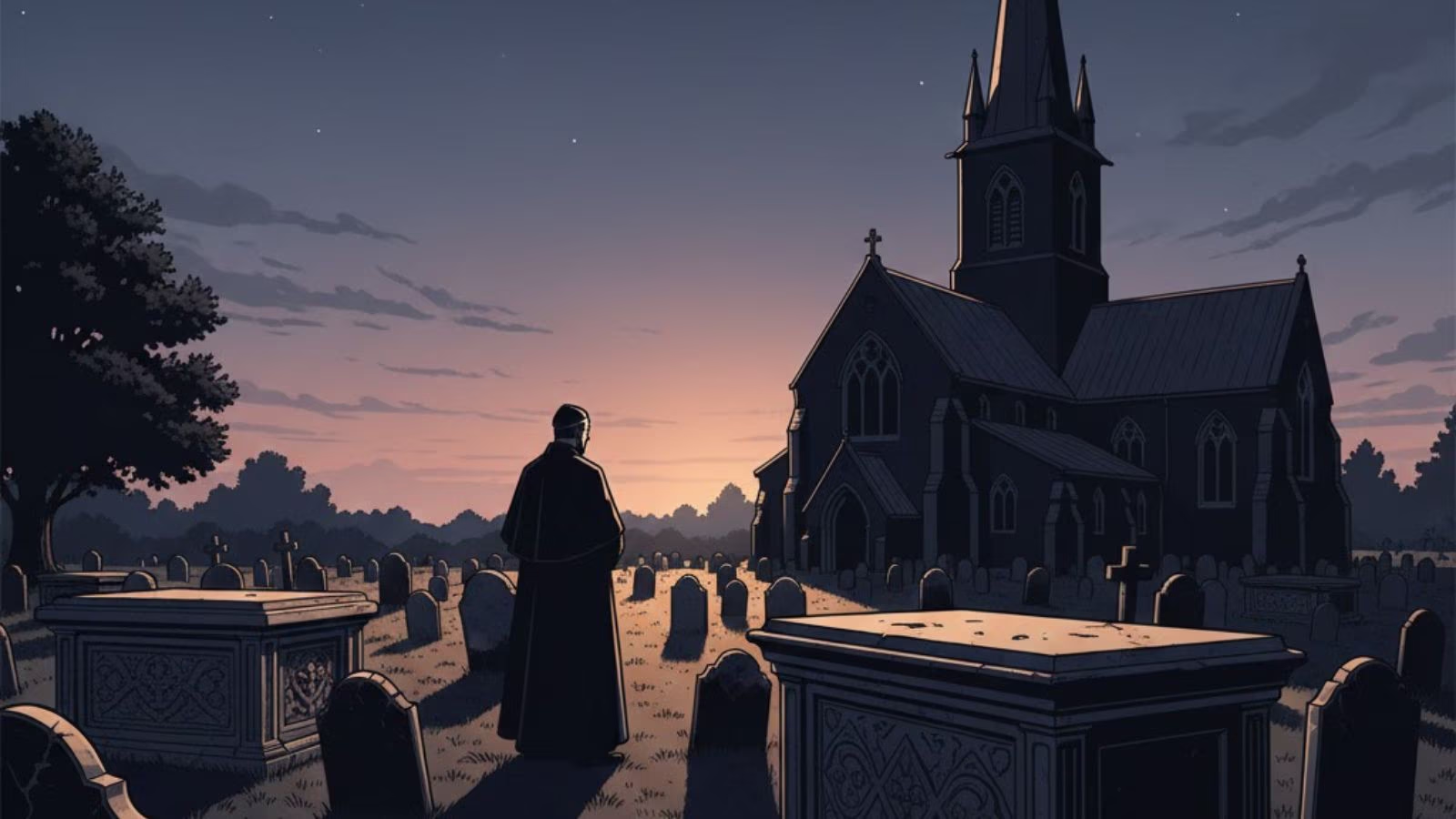
The case arose from allegations that church officials had, in January, razed tombs and graves in a century-old parish cemetery using three JCBs, without the consent of families of the deceased or the wider church membership. The court noted that the demolition of existing tomb structures, without consultation, prima facie amounted to “offering indignity to a human corpse” and “trespass in a place of sepulture”.
Rejecting the church office-bearers’ defense that canon law vested the bishop and parish priest with absolute control over church properties, including cemeteries, the court drew a clear constitutional line. Any holder of religious or community property, Justice Gowri said, functions as a trustee bound by constitutional limitations, statutory restrictions and human rights norms.
“Describing the Bishop as a ‘title holder’ does not mean that he has an absolute right to plough the cemetery like a field,” the court observed, underlining that a Christian burial ground is a “sacred trust” held for the benefit of the faithful and for posterity, not an asset at the mercy of administrators.
The cemetery in question, the court noted, has been in use for over a century, serving as a common burial ground for generations of parish families. The petitioner told the court that families paid ₹20,000 per burial for grave space, reinforcing the understanding that the site was a permanent, consecrated place of rest, not a temporary holding.
Justice Gowri also faulted the trial court for dismissing the matter on technical grounds due to the absence of a supporting affidavit. Holding that the defect was curable, the High Court remanded the case, directing the lower court to allow the petitioners to file the affidavit and decide the dispute on merits.
In a broader constitutional and human rights context, the court reaffirmed that human dignity does not end with death. “Human dignity attaches not only to the living but also to the dead,” the order said, adding that respectful treatment of human remains and burial practices are integral to that dignity.
The judgment also drew on international legal principles, noting their persuasive value in reinforcing the universal understanding that burial grounds are spaces of dignity, privacy, family memory and cultural identity. Arbitrary demolition or desecration of cemeteries, the court warned, is incompatible with contemporary human rights standards.
With its emphatic language and constitutional framing, the ruling sends a clear message: faith, authority and administration must bow before the sanctity of the dead.




.jpg&w=256&q=75)