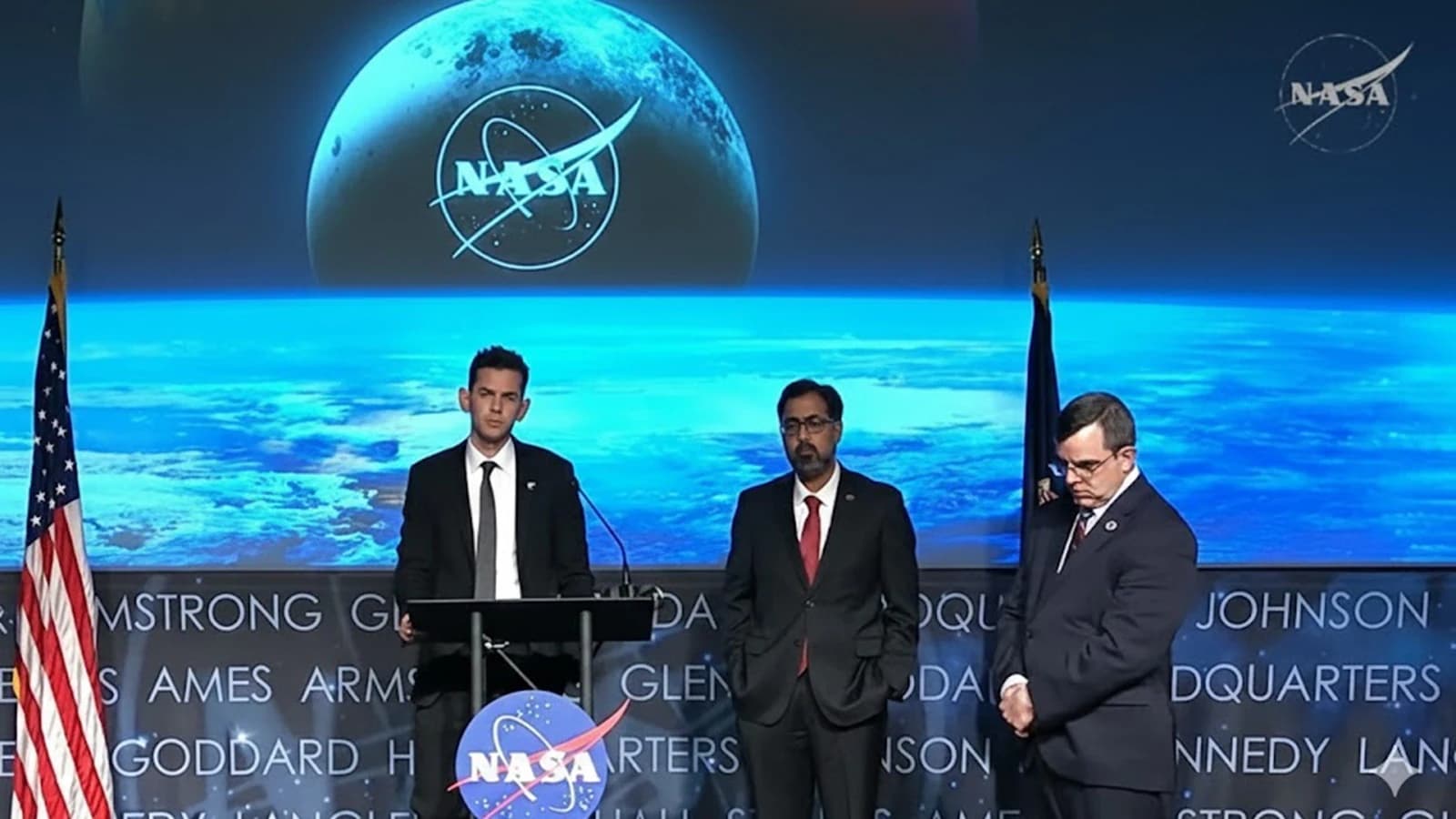
NASA on January 8 announced an early return of its four-member Crew-11 mission from the International Space Station (ISS) after one astronaut developed a serious medical condition in orbit—marking the first medical evacuation in the station’s 25-year operational history.
The unprecedented decision will see a fully trained international crew de-orbited before completing its scheduled six-month mission aboard the orbital laboratory, highlighting the inherent challenges of sustaining human health in microgravity.

Crew-11—comprising NASA astronauts Zena Cardman and Mike Fincke, Japan’s Kimiya Yui, and Russian cosmonaut Oleg Platonov—docked with the ISS in August last year and was slated to return in early February. NASA has not disclosed the nature of the illness or identified the affected astronaut.
Earlier on January 8, NASA had cancelled a planned spacewalk citing a medical issue. Hours later, during a late-night press briefing, the agency confirmed that the mission itself would be cut short.
“It is a serious medical condition, but the astronaut is stable,” NASA Administrator Jared Isaacman said. “Based on our training, operational experience, and in consultation with international partners, we have decided to prioritize crew safety above all else.”
A detailed timeline for undocking and splashdown is expected to be announced within 48 hours, he added.
The development comes shortly after the departure of Axiom-4, co-piloted by Indian astronaut Shubhanshu Shukla, which completed its mission successfully. While astronauts undergo months of intensive training—including medical simulations—the ISS remains a demanding environment, particularly due to prolonged exposure to microgravity.
“There is medical hardware and emergency equipment onboard the ISS, but it cannot compare to the capabilities of a fully equipped hospital emergency room,” said Dr James Polk, NASA’s chief health and medical officer.
Polk clarified that the condition was neither the result of an injury nor linked to routine station operations. “It developed due to the microgravity environment, but we cannot share diagnostic details at this stage,” he said, adding that comprehensive medical evaluations will be conducted once the crew returns to Earth.
He noted that minor health issues are common during long-duration missions. “Just as people experience ear pain or dental problems on Earth, similar issues occur in space—especially over months,” Polk said.
ISS astronauts are continuously monitored by ground-based flight surgeons and medical teams. According to Polk, the crew’s daily schedule has not undergone major changes despite the developing situation.
While an early return means a loss of valuable and costly station time, NASA officials said Crew-11 had already met its core scientific objectives.
“The ISS is capable of autonomous operations,” said Amit Kshatriya, associate NASA administrator. “Crew-11 has successfully completed its planned research, and crew safety remains our overriding priority.”