


The 12-coach non-AC local train, manufactured by Integral Coach Factory in Chennai, will undergo fresh trials on Mumbai's suburban network before receiving approval for regular passenger services.
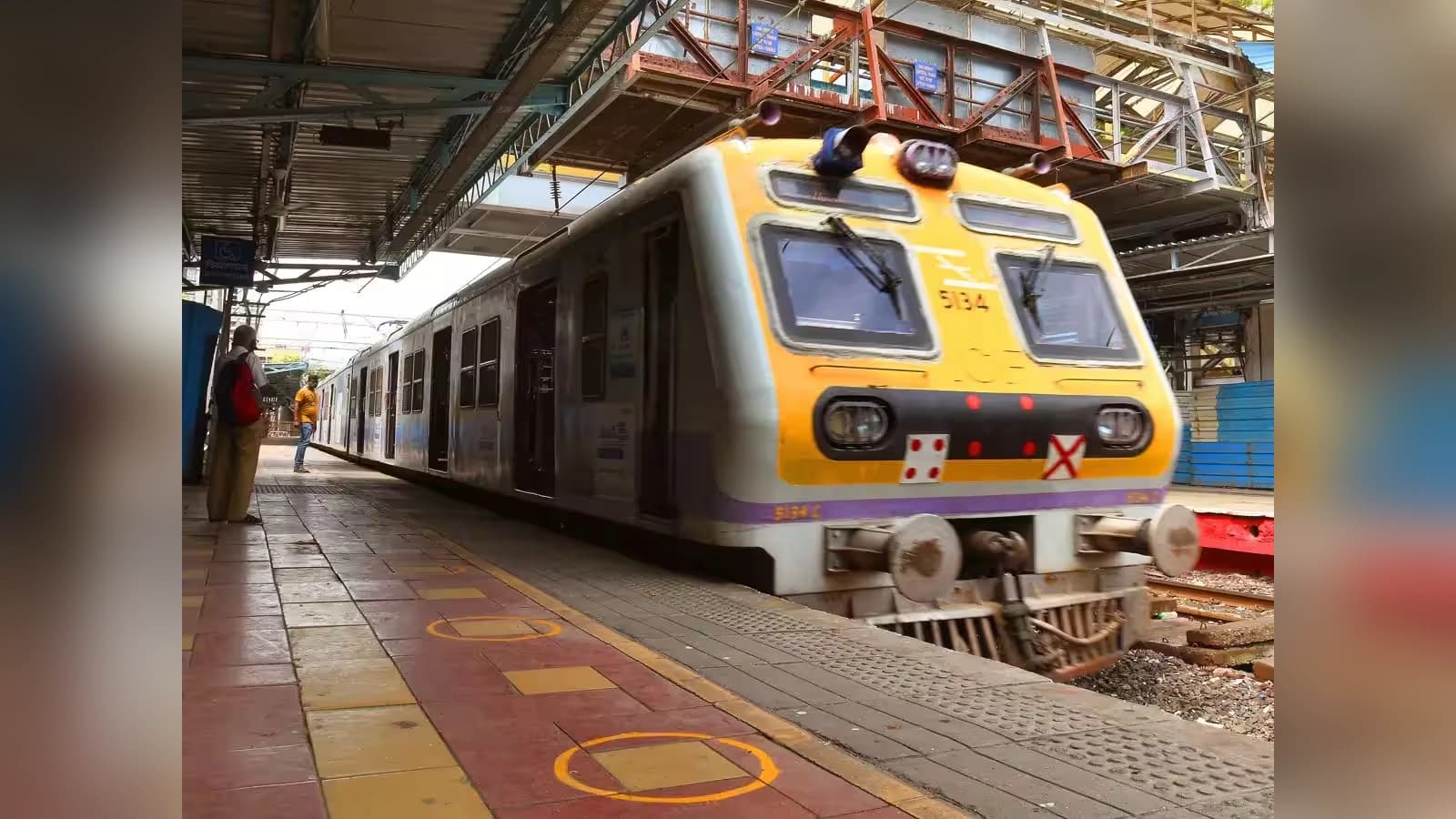
Mumbai's modified non-AC local train with automatic doors arrives for safety and operational trials.
Mumbai's daily local train commute could see a major safety upgrade as Central Railway prepares to test a modified non-air-conditioned suburban train fitted with automatic doors. The 12-coach train has arrived in Mumbai and will undergo technical and safety trials before being considered for regular passenger operations.
Manufactured by the Integral Coach Factory (ICF) in Chennai, the train is designed to reduce the risks associated with passengers travelling on footboards or hanging outside overcrowded local trains. The development comes amid continued concerns over railway accidents and passenger safety across Mumbai's suburban network. However, commuters will have to wait before travelling on the new train, as it must first clear the required testing and certification process.

Why Is Mumbai Introducing Automatic Doors in Local Trains?
The decision to introduce automatic doors gained urgency following the June 9, 2025, Mumbra train accident. The incident occurred between Diva and Mumbra railway stations, where passengers standing near the open doorways of two overcrowded trains fell onto the tracks. Five commuters lost their lives, while several others were injured. A five-member committee examining the accident identified overcrowding and open doorways as important contributing factors. It recommended introducing closed-door systems similar to those used in Metro trains. Following the incident, Railway Minister Ashwini Vaishnaw announced plans to introduce non-AC suburban trains equipped with automatic doors in Mumbai. The latest arrival of the modified train marks another step towards that objective.
What Are the Features of the New Automatic-Door Local Train?
The new 12-coach train includes several changes intended to improve passenger safety while maintaining ventilation inside non-AC compartments.
1. Automatic Sliding Doors
Unlike conventional Mumbai locals, the new train will keep its doors closed while moving. The doors will open at stations to allow passengers to board and exit. The system is designed to reduce the possibility of passengers falling from moving trains.
2. Improved Ventilation System
One of the biggest challenges with introducing closed doors in non-AC trains is maintaining sufficient airflow. To address this, the new coaches feature louvred sections in their doors that allow air to circulate even when the doors are closed. Roof-mounted ventilators have also been included to improve air circulation.
3. Connected Coaches
The train also features vestibule connections, allowing passengers to move between coaches. This arrangement could help distribute passengers across compartments rather than concentrating them near particular doorways.
4. Additional Safety Features
The updated train design also includes passenger safety and emergency facilities. Reported features include CCTV cameras, fire detection systems and emergency communication arrangements.
When Will the New Mumbai Local Train Start Operating?
The train's arrival does not mean it is immediately available to passengers. Before entering regular service, Central Railway will conduct fresh trials on different sections of Mumbai's suburban network. The train has previously undergone testing on the approximately 63-km Khajuraho-Mahoba railway section.
The next stage will involve assessing its performance under Mumbai's operating conditions. The Research Designs and Standards Organisation (RDSO), the technical body responsible for railway testing and standards, plays an important role in the required safety assessment. The trials will examine the automatic doors, braking systems, suspension, electrical equipment, train stability and other operational features. After satisfactory testing, the train will need the necessary fitness certification and clearance before passenger services can begin. A confirmed date for its regular introduction has not yet been announced.
Mumbai Local Train Deaths: Why Passenger Safety Matters
Mumbai's suburban railway network is one of India's busiest public transport systems. According to Mumbai Railway Police, approximately 70–80 lakh commuters use the network every day. Government Railway Police data reported by The Indian Express recorded 2,287 deaths across Mumbai's suburban railway network in 2025, compared with 2,468 in 2024.
Of the deaths recorded in 2025, 525 involved commuters falling from moving trains, while 1,063 involved people crossing railway tracks. These figures highlight the scale of the safety challenge. However, automatic doors alone cannot address every cause of railway-related deaths.
In 2019, Western Railway modified selected compartments of a 15-coach train at its Mahalaxmi workshop. The project reportedly cost around ₹75 lakh and covered general, first-class, ladies' and differently abled compartments. However, the experiment did not progress to regular passenger services, with inadequate ventilation emerging as one of the major concerns. Earlier experiments also faced problems with door sensors and overcrowding.
Passengers or their belongings obstructing the doors could prevent them from closing properly, potentially affecting train schedules. These previous experiences make the latest trials particularly important.
Can Automatic Doors Change Mumbai's Daily Commute?
The introduction of automatic doors could reduce the risks associated with travelling on footboards and standing near open doorways. However, the new system will also have to address Mumbai's overcrowding problem. Automatic doors may require additional time to open and close at stations. During peak hours, heavy passenger movement could slow down boarding and exiting, potentially affecting train punctuality.
Ventilation will also remain an important consideration, particularly during Mumbai's hot and humid weather. For now, the arrival of the modified non-AC local train represents a step towards safer suburban travel. Its actual impact will depend on the results of the trials, the required approvals and its ability to handle Mumbai's daily passenger rush.

Delhi Launches First Yamuna River Cruise: Check Route, Ticket Price and Facilities
Mumbai Local Trains to Get Automatic Doors: New Non-AC Train Arrives for Safety Trials

Lockdown lifted at New Zealand school after police respond to threat

New Zealand university staff withhold grades in pay dispute

New Zealand school apologises after NCEA English exam disrupted by computer failure
Mumbai Local Trains to Get Automatic Doors: New Non-AC Train Arrives for Safety Trials
New Zealand university staff withhold grades in pay dispute
New Zealand school apologises after NCEA English exam disrupted by computer failure

Indian Rupee Rises 7 Paise to ₹93.70 Against US Dollar as Foreign Investments Return
ICSE Class 10 Timetable 2027: Subject-Wise Exam Dates and Timings Announced

Delhi Launches First Yamuna River Cruise: Check Route, Ticket Price and Facilities
Mumbai Local Trains to Get Automatic Doors: New Non-AC Train Arrives for Safety Trials
Lockdown lifted at New Zealand school after police respond to threat
New Zealand university staff withhold grades in pay dispute
New Zealand school apologises after NCEA English exam disrupted by computer failure
Mumbai Local Trains to Get Automatic Doors: New Non-AC Train Arrives for Safety Trials
New Zealand university staff withhold grades in pay dispute
New Zealand school apologises after NCEA English exam disrupted by computer failure
Indian Rupee Rises 7 Paise to ₹93.70 Against US Dollar as Foreign Investments Return
ICSE Class 10 Timetable 2027: Subject-Wise Exam Dates and Timings Announced
Copyright© educationpost.in 2026 All Rights Reserved.