What began as a trickle of patients at a modest urban health centre in Indore quickly swelled into a public health emergency, laying bare the city’s civic vulnerabilities and pushing its healthcare system to the brink.
On December 28, just six patients reported symptoms at the Urban Primary Health Centre in Bhagirathpura. Within 48 hours, outpatient numbers surged dramatically — from a routine 129 visits to more than 300 in a single day. By the end of the week, a hastily mobilised army of health workers had screened 66,107 people across nearly 13,000 households.

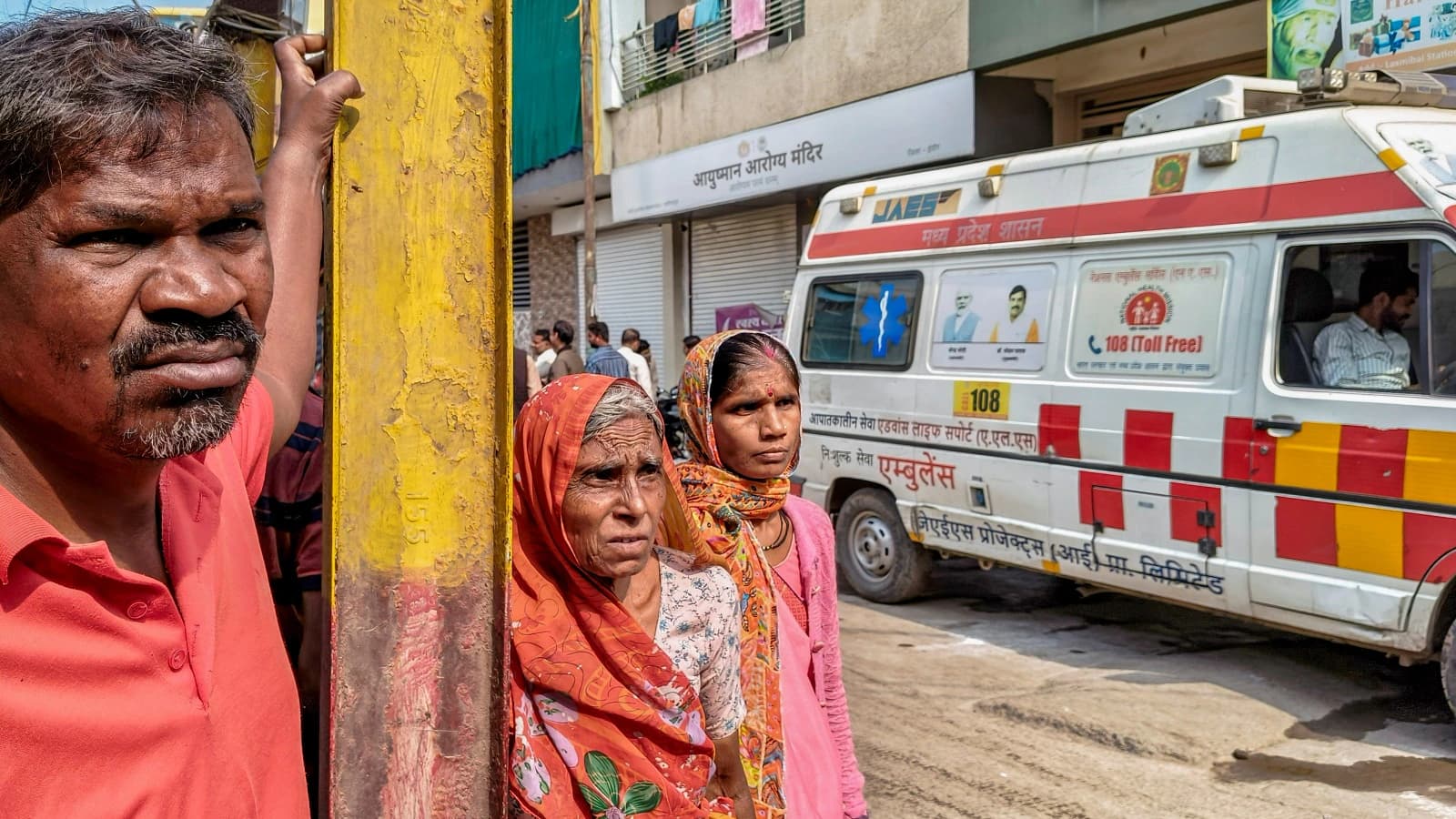
The crisis unfolded in a densely populated neighbourhood of Indore — a city repeatedly ranked among India’s cleanest. This time, however, the contamination of drinking water by sewage from a toilet shattered that image, exposing critical gaps in civic oversight and emergency preparedness.
At the heart of the response were frontline doctors and public health officials scrambling to contain the damage as patients flooded facilities with symptoms ranging from mild diarrhoea to acute dehydration and complete renal shutdown.
“We first had to identify the source and then trace patients across a large area,” said Dr Nitin Ojha, deployed to monitor health conditions in the city’s East zone. By the time authorities acknowledged the crisis following the first deaths, contaminated water had already flowed through Bhagirathpura’s pipelines for days. Residents, according to officials, had raised alarms as early as October.
Health teams were mobilised on December 29, but by then the infection had spread widely. “There was panic everywhere,” Dr Ojha said. “By the time advisories like boiling water were issued, it was already too late.”
A delayed response, an overwhelmed system
Outpatient data captures the speed of the outbreak. Attendance at the Bhagirathpura health centre hovered between 70 and 110 patients daily until December 27. On December 29, the figure jumped to 129, rising to 240 the next day and peaking at 310 on December 31. Though numbers declined after intervention, officials concede the damage had already been done.
One of the earliest challenges was the lack of adequate medical infrastructure in the locality. Many patients initially turned to small private clinics and nursing homes, guided by proximity and affordability.
“Most of these facilities were not equipped to handle complications arising from severe dehydration,” Dr Ojha said. “They lacked trained staff and specialists capable of administering IV fluids or managing renal complications.”
For patients with mild symptoms, basic treatment was sufficient. But many cases were far from simple. Elderly patients with pre-existing conditions — diabetes, heart disease, kidney disorders — required multispecialty care that smaller facilities could not provide.
By December 30, the health department had established a coordination system, assigning senior officials to oversee inter-departmental work, on-site supervision, data compilation and referrals. Still, the challenge was formidable: patients scattered across facilities, no central triage, and an urgent need to streamline care.
Women, elderly among worst affected
Dr Omesh Nandwar, overseeing the West zone, observed a striking pattern. “In hospitals I supervised, 95 per cent of patients were women, most suffering from severe dehydration,” he said. “Seventy to 80 per cent of them had renal shutdown.”
Health department data shows that since December 24, 310 patients have been hospitalised. Of these, 203 remain admitted, 107 have been discharged, and 25 are in intensive care units. The youngest patient is 10 years old.
Dr Abhishek Nigam, tasked with overseeing three hospitals simultaneously, said rapid protocol development was critical. “We quickly standardised treatment based on symptoms — fluids, antibiotics, pain management,” he said. But patients with comorbidities required specialist intervention.
“The advantage we had was multidisciplinary teams,” Dr Nigam added. “Having physicians, gastroenterologists and endocrinologists working together made a significant difference.”
Door-to-door battle to contain the spread
Beyond hospitals, containment depended on an extensive door-to-door screening operation. Vinod Neem, a 59-year-old health department official from Mahu, was among those drafted into service.
“From 8 am to 2 pm, we go house to house with ASHA and anganwadi workers, checking for symptoms and filling forms,” he said. Each household takes about 10 minutes to screen.
As of January 1, 48,112 individuals had been screened, and oral rehydration salts distributed to 2,714 patients. On December 31 alone, authorities procured over 62,500 strips of Dicyclomine, 50,000 zinc tablets and 22,500 ORS packets.
Paediatrician Dr Sachin Garg warned that children are particularly vulnerable. “In children, the infection escalates rapidly,” he said during a 12-hour shift. “They get infected quickly, and time is critical.” The youngest victim of the outbreak was just six months old.
“The real issue,” Dr Garg said, “is that this is a highly congested area with very limited access to quality healthcare. A handful of clinics cannot handle a crisis of this magnitude.”
As Indore grapples with the aftermath, the crisis stands as a stark reminder: even cities celebrated for cleanliness are only as safe as their most neglected pipelines.





.png&w=256&q=75)