


Government likely to table schedule in Parliament clarifying state-wise allocation, aiming to blunt opposition fears over delimitation impact.
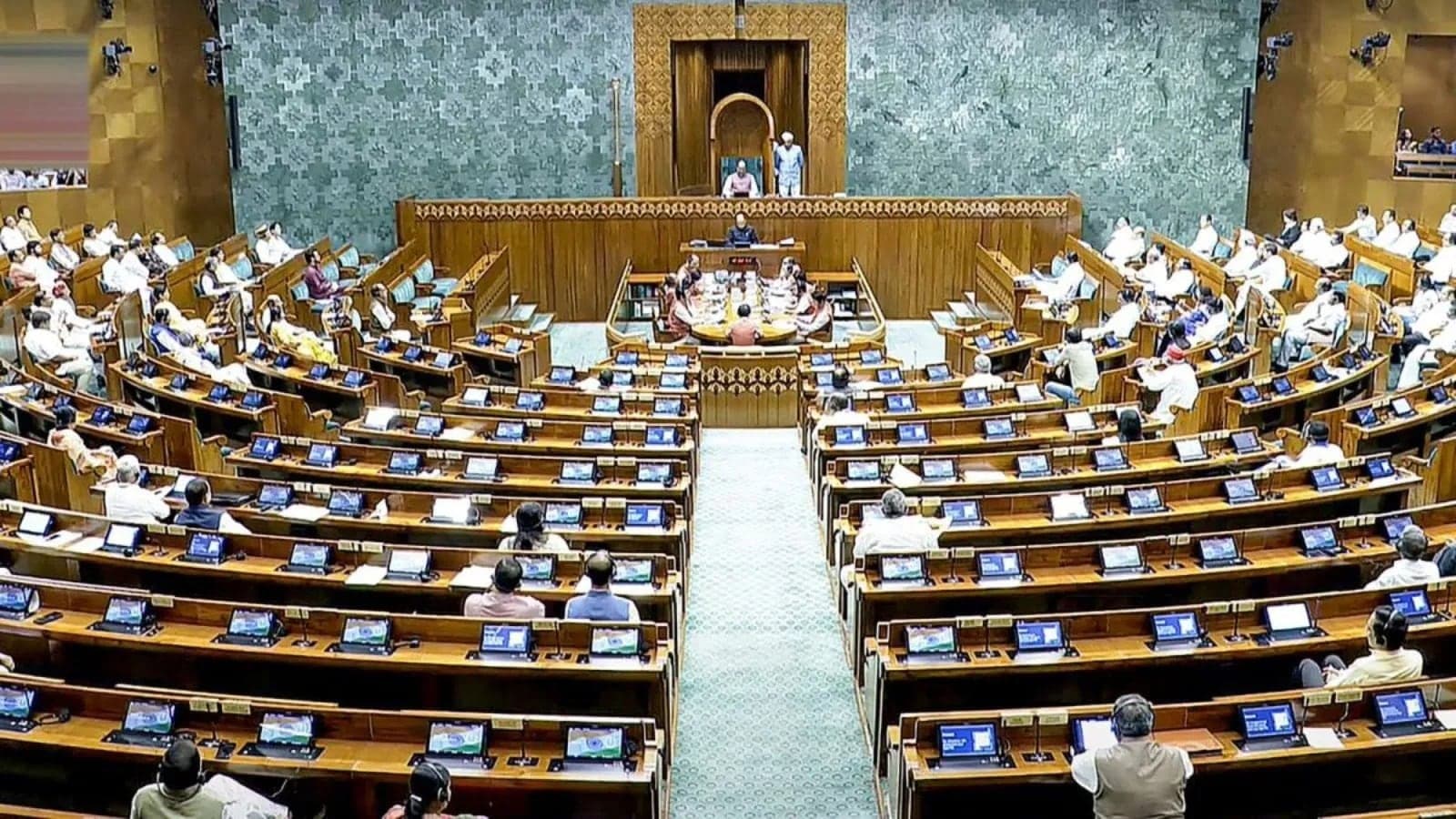
The government is expected to introduce a key “schedule” in Parliament on April 16 detailing the number of Lok Sabha seats allocated to each state, with top sources indicating that every state’s share in the House will remain proportionately unchanged despite a major expansion in total seats.
The move is aimed at addressing mounting opposition criticism, particularly from southern states, over the proposed delimitation exercise linked to the 2011 Census.

A schedule is an annexure to legislation that lays out specific operational details supporting the main text of a Bill.
According to sources, while the three Bills recently cleared by the Union Cabinet did not explicitly mention the formula for state-wise seat increases, the schedule will formally provide that clarity. “There will be no confusion… everything will be legally done,” a senior source said.
Under the proposed plan, Lok Sabha strength could rise from the current 550-member cap to as many as 850 seats. Sources said the number of seats for each state is likely to increase by nearly 50%, while preserving their current percentage share in the House.
For instance, Tamil Nadu, which currently holds 39 seats or around 7.2% of the Lok Sabha, would retain the same share in the expanded House. That would translate to approximately 57 or 58 seats.
The Centre believes the formula will counter claims that southern states would lose political influence if delimitation is based on population data.
Tamil Nadu Chief Minister MK Stalin has led protests against the proposed exercise, arguing that states such as Uttar Pradesh and Bihar, which recorded sharper population growth, would gain disproportionate representation if seats were reallocated solely on the basis of the 2011 Census.
Telangana Chief Minister Revanth Reddy has also criticized the move.
Opposition leaders had objected to the absence of explicit guarantees in the Bills regarding equal proportional increases for all states, questioning the government’s intent.
The Constitution (One Hundred and Thirty-First Amendment) Bill, 2026 seeks to raise the maximum strength of the Lok Sabha from 550 to 850 seats — 815 for states and 35 for Union Territories.
Article 82 has also been amended to delink future delimitation exercises from the 2026 Census and subsequent census cycles.
The Delimitation Bill, 2026 proposes redrawing constituencies based on the latest available Census figures, which currently means the 2011 Census.
Sources said intra-state constituency boundary revisions would be carried out using 2011 population data, replacing the current basis of the 2001 Census.
They also clarified that inter-state seat redistribution would not be population-driven but conducted on a pro-rata basis to preserve federal balance.
One-third of the total seats are also proposed to be reserved for women.
This would be the first major delimitation exercise since the 1971 Census. Redistribution of seats had been frozen in 1976 and extended again in 2001 for 25 years each to ensure states that successfully controlled population growth, particularly in the South, were not politically penalized.
The freeze was intended to incentivize family planning and population stabilization.
The biggest hurdle for the government during the extended Parliament session beginning April 16 will be passage of the Constitutional Amendment Bill, which requires a special majority in both Houses.
That means support of two-thirds of members present and voting, subject to at least half the total House strength.
In the Lok Sabha, if all members are present, the Bill would require 360 votes. The BJP has 240 MPs, while the NDA tally stands at 293, excluding seven independents. The opposition bloc has 241 members, with Congress holding 98 seats.
In the Rajya Sabha, where the current strength is 245, the two-thirds mark is 163. The NDA is estimated to command around 145 members.
BJP leaders said the party has been engaging floor leaders across parties to secure support for the three Bills.
“The discussion is likely to be led by Prime Minister Narendra Modi and Union Home Minister Amit Shah. Both leaders, especially the PM, are prepared to address concerns such as delimitation and its impact on South Indian states,” a senior BJP leader said.

International graduates could contribute $1 trillion to US, UK, Canada and Australia

NEET UG Stray Vacancy Result 2026: MBBS Seat Allotted at AIR 11.90 Lakh; Check Closing Ranks
Telangana to Implement 25% RTE Quota in Private Schools for EWS and Disadvantaged Children

Could smarter energy solutions make data centres more sustainable?

Cambridge and AstraZeneca extend joint PhD programme for three years
Could smarter energy solutions make data centres more sustainable?
Cambridge and AstraZeneca extend joint PhD programme for three years

China shuts three Tibetan schools, raising fears for language and cultural identity
.webp&w=256&q=75)
CCPA reports 3,940 delistings in crackdown on online sale of explosive substances
UGC seeks governors’ intervention as 82 Tamil Nadu institutions face 150 fee-refund complaints

International graduates could contribute $1 trillion to US, UK, Canada and Australia
NEET UG Stray Vacancy Result 2026: MBBS Seat Allotted at AIR 11.90 Lakh; Check Closing Ranks
Telangana to Implement 25% RTE Quota in Private Schools for EWS and Disadvantaged Children
Could smarter energy solutions make data centres more sustainable?
Cambridge and AstraZeneca extend joint PhD programme for three years
Could smarter energy solutions make data centres more sustainable?
Cambridge and AstraZeneca extend joint PhD programme for three years
China shuts three Tibetan schools, raising fears for language and cultural identity
CCPA reports 3,940 delistings in crackdown on online sale of explosive substances
UGC seeks governors’ intervention as 82 Tamil Nadu institutions face 150 fee-refund complaints
Copyright© educationpost.in 2026 All Rights Reserved.