A Madhya Pradesh government-funded research project that set out to explore whether traditional cow-based formulations could treat cancer has landed in the middle of a major financial controversy, with investigators questioning how nearly a decade of public money was spent.
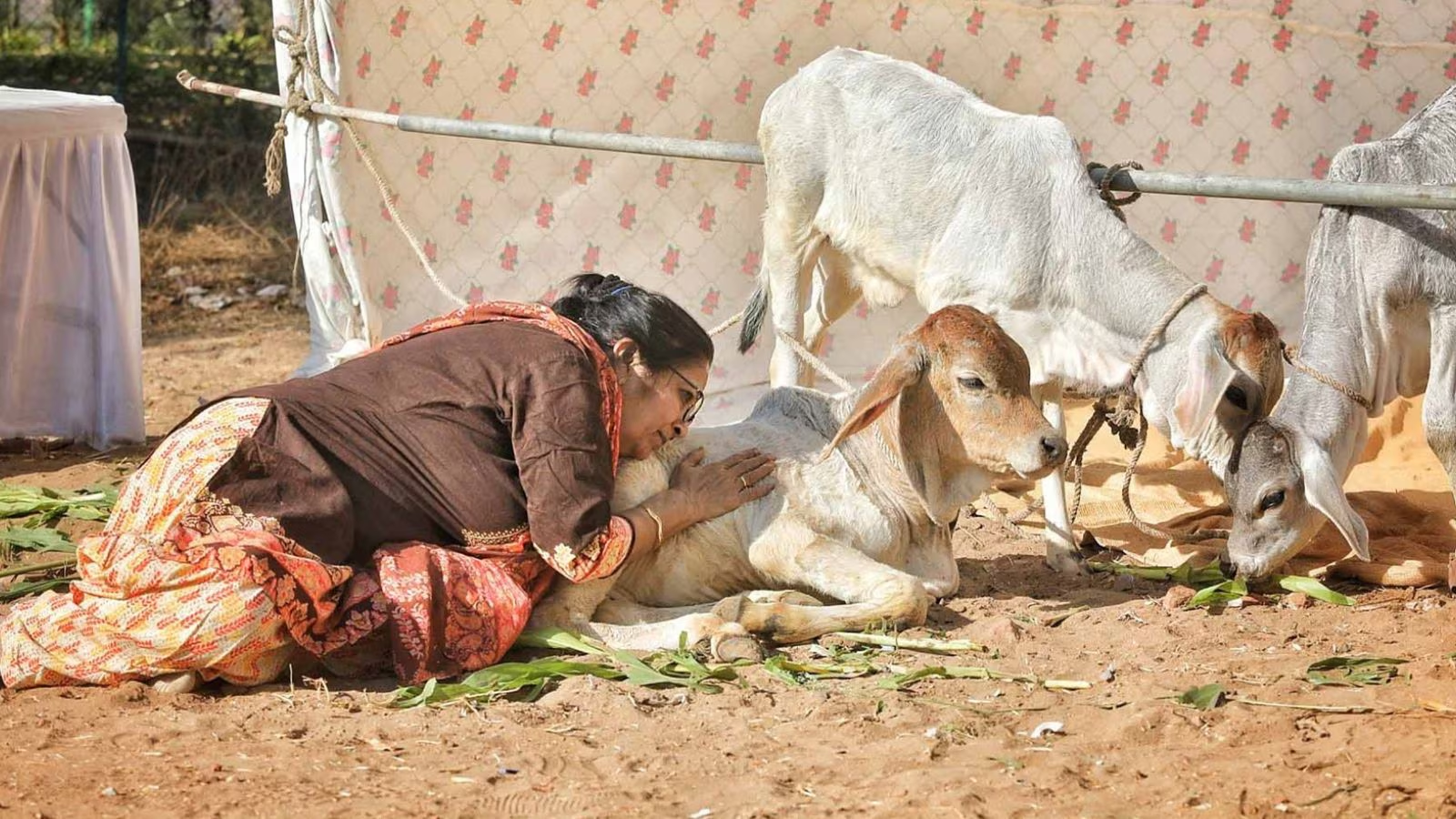
The project, launched in 2011 at Nanaji Deshmukh Veterinary Science University in Jabalpur, focused on Panchagavya — a mixture of cow dung, cow urine and dairy products — as a possible treatment for serious diseases. While the university initially sought ₹8 crore for the initiative, the state government approved ₹3.5 crore.

Now, a probe ordered by the Divisional Commissioner has cast a harsh spotlight on where that money went.
Probe flags inflated and unrelated spending
Following a formal complaint, an investigation team headed by an Additional Collector examined the project’s financial records and outcomes. Its report, recently submitted to the Collector, alleges large-scale irregularities, inflated purchases and spending that had little to do with the approved research plan.
According to officials familiar with the findings, between 2011 and 2018 nearly ₹1.92 crore was spent on basic materials such as cow dung, cow urine, storage vessels, raw materials and machinery — items investigators say should have cost just ₹15–20 lakh at prevailing market rates.
The report also questions 23–24 air journeys undertaken by the university team to different cities in the name of research, raising doubts about their necessity and propriety.
Vehicles, fuel, furniture — all under scanner
Investigators have further flagged the purchase of a vehicle worth about ₹7.5 lakh that was never part of the original sanctioned estimate. In addition, over ₹7.5 lakh was spent on fuel and vehicle maintenance, around ₹3.5 lakh on labour payments, and nearly ₹15 lakh on furniture and electronic equipment — all classified by the inquiry as non-essential for the project’s stated objectives.
More troublingly, the probe claims that the vehicles allegedly purchased under the project could not be traced.
Officials cite gaps in project execution
Additional Collector Raghuvar Maravi, who headed the inquiry, said the investigation was launched on the Collector’s directions after discrepancies emerged between what was sanctioned and what was spent.
“The university had demanded ₹8 crore under the Panchagavya scheme, and ₹3.5 crore was sanctioned. But documents showed purchases that were not part of the approved estimate, especially vehicles and extensive travel,” Maravi said.
He also pointed to gaps in how the project was carried out. “Training was to be given to farmers, but it was not clearly mentioned what training was actually provided. Research was to be done for treatment of serious diseases like cancer,” he said, adding that the full report has now been sent to the Collector for further action.
University denies any wrongdoing
The university, however, has firmly rejected all allegations of misappropriation.
Registrar Dr S S Tomar insisted that the Panchagavya project was conducted in accordance with government rules and procurement norms. “All purchases, whether machines or vehicles, were made through open tenders. Government rules have been followed; there has been no scam,” he said.
Dr Tomar added that the project has been regularly audited and all necessary certificates were submitted to authorities. “An investigation committee came and we provided all documents. No facts were hidden,” he said.
He also maintained that the project continues to benefit rural communities. “This project was worth ₹3.5 crore. We are still providing training to youth and farmers,” he said.
What happens next
The Collector will now forward the investigation report to the Divisional Commissioner, who will examine the findings and decide on further action — a step that could determine whether the controversial cow-based cancer research ends as a scientific footnote or a financial scandal.





.jpg&w=256&q=75)
.jpg&w=256&q=75)
.webp&w=256&q=75)
