The government is considering allowing multiple ministries to issue takedown orders to social media platforms, aiming to curb misinformation and deepfakes faster by decentralising authority currently held only by the IT Ministry.

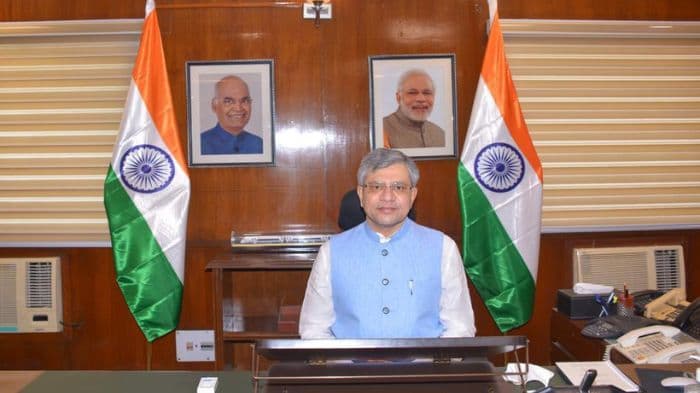
The Centre is considering a proposal to allow multiple ministries to issue blocking orders to social media platforms, in a move aimed at strengthening action against fake and harmful online content.
At present, such powers are largely restricted to the Ministry of Electronics and Information Technology under Section 69A of the Information Technology Act, 2000. The proposed change would extend similar authority to other key ministries.

According to officials, an inter-ministerial group is working on the proposal, which could enable departments such as Home Affairs, External Affairs, Defence and Information and Broadcasting to directly order content takedowns.
The move comes amid rising concerns over the spread of misinformation and AI-generated deepfakes online. Officials have indicated that faster response mechanisms are needed once such content is identified, to prevent it from spreading widely.
The proposal is aimed at decentralising decision-making so that ministries handling sensitive sectors can act quickly on content related to national security, foreign affairs or financial systems.
The discussions also follow recent instances of manipulated content circulating online, which have raised concerns within the government about the pace of current enforcement mechanisms.
If implemented, the change could significantly impact social media platforms, which may begin receiving takedown requests from a wider set of government agencies.
The proposal is still under consideration, and any changes would require modifications to existing legal provisions governing online content regulation.


University of London, Northeastern University to set up offshore campuses in Hyderabad

DoT warns mobile users against IMEI tampering, SIM misuse

Mithilesh Singh emerges as key accused in Jharkhand recruitment exam scam

IIT Madras, UNESCO MGIEP partner to develop AI, immersive learning technologies

KPSC job scam: CID raids Karnataka BJP leader Basavaraj Kannale’s house

University of London, Northeastern University to set up offshore campuses in Hyderabad

DoT warns mobile users against IMEI tampering, SIM misuse

IIT Madras, UNESCO MGIEP partner to develop AI, immersive learning technologies

Odisha waives admission fees for SC, ST students in govt medical, engineering colleges

BPSC postpones TRE 4.0 application process for over 32,300 Bihar teacher posts

University of London, Northeastern University to set up offshore campuses in Hyderabad

DoT warns mobile users against IMEI tampering, SIM misuse

Mithilesh Singh emerges as key accused in Jharkhand recruitment exam scam

IIT Madras, UNESCO MGIEP partner to develop AI, immersive learning technologies

KPSC job scam: CID raids Karnataka BJP leader Basavaraj Kannale’s house

University of London, Northeastern University to set up offshore campuses in Hyderabad

DoT warns mobile users against IMEI tampering, SIM misuse

IIT Madras, UNESCO MGIEP partner to develop AI, immersive learning technologies

Odisha waives admission fees for SC, ST students in govt medical, engineering colleges

BPSC postpones TRE 4.0 application process for over 32,300 Bihar teacher posts
Copyright© educationpost.in 2024 All Rights Reserved.
Designed and Developed by @Pyndertech