


Government Law College, Dharmapuri, wins the eighth edition as 42 teams compete in Tamil, with five women legal professionals adjudicating the final round.
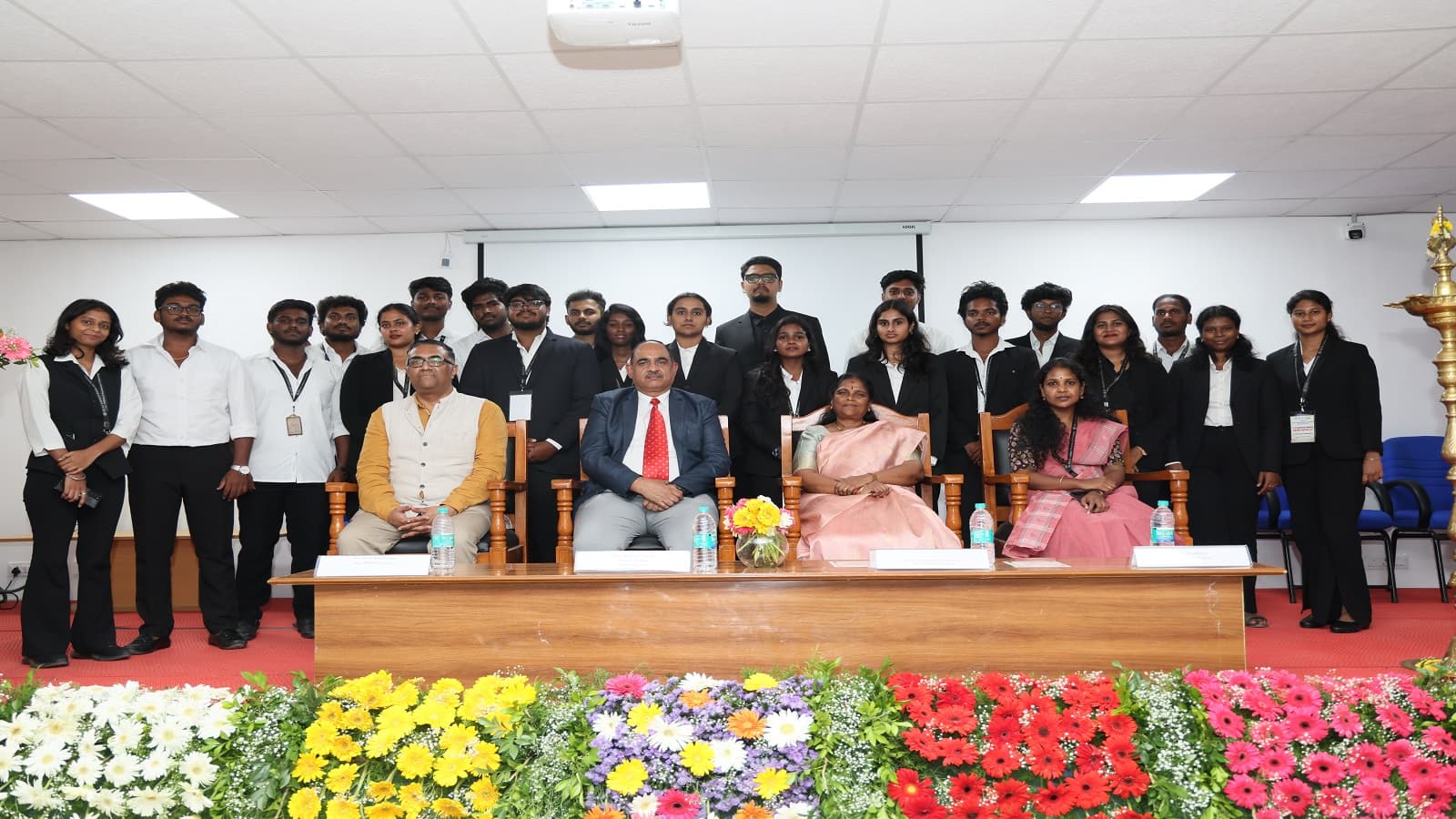
SRM School of Law, part of SRM Institute of Science and Technology (SRMIST), Kattankulathur, has hosted the eighth National Level Tamil Moot Court Competition 2026, bringing together 42 teams and 126 participants from law institutions across India. The event highlighted women's representation in the legal profession, with an all-women panel of five legal professionals presiding over the final round.
Government Law College, Dharmapuri, secured the winning position, while Mother Teresa Law College finished as runner-up. Participants from Government Law College, Karaikudi, received the Best Memorial and Best Researcher awards. The Best Speaker award went to a participant from Government Law College, Tirunelveli, according to the organisers.

The competition combined practical legal training with efforts to promote Tamil as a language of legal research, argumentation and courtroom advocacy. Its focus on women's leadership also reflected the broader objective of advancing gender equality in the legal profession, in line with United Nations Sustainable Development Goal 5.
The final round was evaluated by a panel comprising five women from the judiciary, legal practice and legal education. The panel included Justice (Retd.) Prabha Sridevan, former judge of the Madras High Court; Professor Dr N. Kayalvizhi, Principal of Dr Ambedkar Government Law College, Pattaraiperumbudur; Professor Dr Jaya Gowri, Principal of Dr Ambedkar Government Law College, Pudupakkam; Senior Advocate Geetha; and Senior Advocate G. V. Shobha, both associated with the Madras High Court.
The organisers presented the all-women panel as a central feature of this year's competition, drawing attention to the contribution of women in judicial, academic and advocacy roles.
The initiative also underscored the role of law schools in preparing future legal professionals by offering opportunities to learn from experienced judges, advocates and academic leaders.
Government Law College, Dharmapuri, won the competition, with Mother Teresa Law College securing second place. The awards recognised different aspects of legal preparation and courtroom performance.
Government Law College, Karaikudi, received recognition in both the Best Memorial and Best Researcher categories, while Government Law College, Tirunelveli, secured the Best Speaker award.
The results highlighted the importance of research, written legal submissions and oral advocacy in developing the practical skills required for legal practice.
The competition was conducted through multiple stages designed to evaluate participants' understanding of law, analytical reasoning and courtroom presentation.
During the preliminary rounds, judges assessed 42 teams on their interpretation and application of legal principles, use of legal authorities, quality of reasoning and responses to questions from the Bench.
Eight teams progressed to the quarterfinals, where the knockout format placed greater emphasis on persuasive arguments, legal precision, courtroom etiquette and the ability to defend submissions under questioning.
The competition provided students with an opportunity to apply classroom knowledge to simulated courtroom proceedings while strengthening their legal research, drafting, pleading and oral advocacy skills.
A key objective of the National Tamil Moot Court Competition was to promote Tamil as a language for legal discourse. The event gave students from institutions across India a platform to present complex legal arguments and develop their confidence in courtroom communication in Tamil.
By encouraging legal research and advocacy in an Indian language, the competition highlighted the importance of linguistic accessibility in legal education. It also offered participants practical exposure to the demands of courtroom proceedings, including structured argumentation, responding to judicial questions and presenting legal authorities effectively.
The initiative reflects an approach to legal education that combines professional training with greater linguistic inclusivity.
During the event, Justice (Retd.) Bhavani Subbarayan emphasised the importance of strengthening legal research, drafting, pleading and analytical abilities. She also highlighted the value of practical experience and a sustained commitment to justice.
Justice N. Mala of the Madras High Court encouraged participants to view both success and failure as important parts of their professional development. Drawing on her experience as a first-generation lawyer, she spoke about overcoming self-doubt, remaining persistent through challenges and developing confidence through experience.
She also urged students to maintain professional integrity, continue learning throughout their careers and follow strong ethical principles in legal practice.
The eighth edition of the competition brought together law students, judicial experts, senior advocates and academic leaders for a programme centred on advocacy, professional learning and legal research.
By combining a Tamil-language moot court format with a women-led final panel, SRM School of Law sought to highlight two important dimensions of legal education: access to courtroom learning in an Indian language and greater visibility for women in legal leadership.
The competition reinforces the importance of experiential learning in preparing aspiring advocates for professional practice, while encouraging a legal community grounded in competence, inclusion and ethical responsibility.
Education System Has Become ‘Marks-Wadi’, Says Pralhad Joshi; Calls for Experiential Learning
UGC NET December 2026 Registration Deadline Extended to October 31; Check Revised Exam Dates

MCD targets 50,000 new school admissions, sets 15-day deadline for MTS recruitment
Allahabad High Court Seeks CBSE Plan to Improve Traffic Management Around Lucknow Schools

Kerala NEET PG 2026 Provisional Merit List Released; 5,665 Candidates Included

Cyclone Arnab Explained: Landfall, Affected States, Wind Speed and How It Formed
South Africa study finds university mentors boost school pupils’ confidence

The Most Persistent Weakness in India’s Engineering Education System Is the Gap Between Knowing and Doing

Study in Singapore 2027: Top Universities, Fees, Scholarships, Student Visa and Jobs for Indian Students

Study in Taiwan 2027: Top Universities, Fees, Scholarships, Student Visa and Jobs for Indian Students

Education System Has Become ‘Marks-Wadi’, Says Pralhad Joshi; Calls for Experiential Learning
UGC NET December 2026 Registration Deadline Extended to October 31; Check Revised Exam Dates
MCD targets 50,000 new school admissions, sets 15-day deadline for MTS recruitment
Allahabad High Court Seeks CBSE Plan to Improve Traffic Management Around Lucknow Schools
Kerala NEET PG 2026 Provisional Merit List Released; 5,665 Candidates Included
Cyclone Arnab Explained: Landfall, Affected States, Wind Speed and How It Formed
South Africa study finds university mentors boost school pupils’ confidence
The Most Persistent Weakness in India’s Engineering Education System Is the Gap Between Knowing and Doing
Study in Singapore 2027: Top Universities, Fees, Scholarships, Student Visa and Jobs for Indian Students
Study in Taiwan 2027: Top Universities, Fees, Scholarships, Student Visa and Jobs for Indian Students
Copyright© educationpost.in 2026 All Rights Reserved.