The ‘Undruggable’ Target Finally Has a Drug: FDA Approves Pancreatic Cancer Pill That Nearly Doubles Survival
Rasonque, developed by Revolution Medicines, targets RAS-driven tumors and extended median survival to 13.2 months from 6.7 months in a 500-patient Phase 3 trial.
Prabhav Anand27 August 2026 12:09
The U.S. Food and Drug Administration has approved a first-in-class targeted drug for metastatic pancreatic cancer after a clinical trial showed that patients receiving it lived nearly twice as long, on average, as those receiving standard chemotherapy.
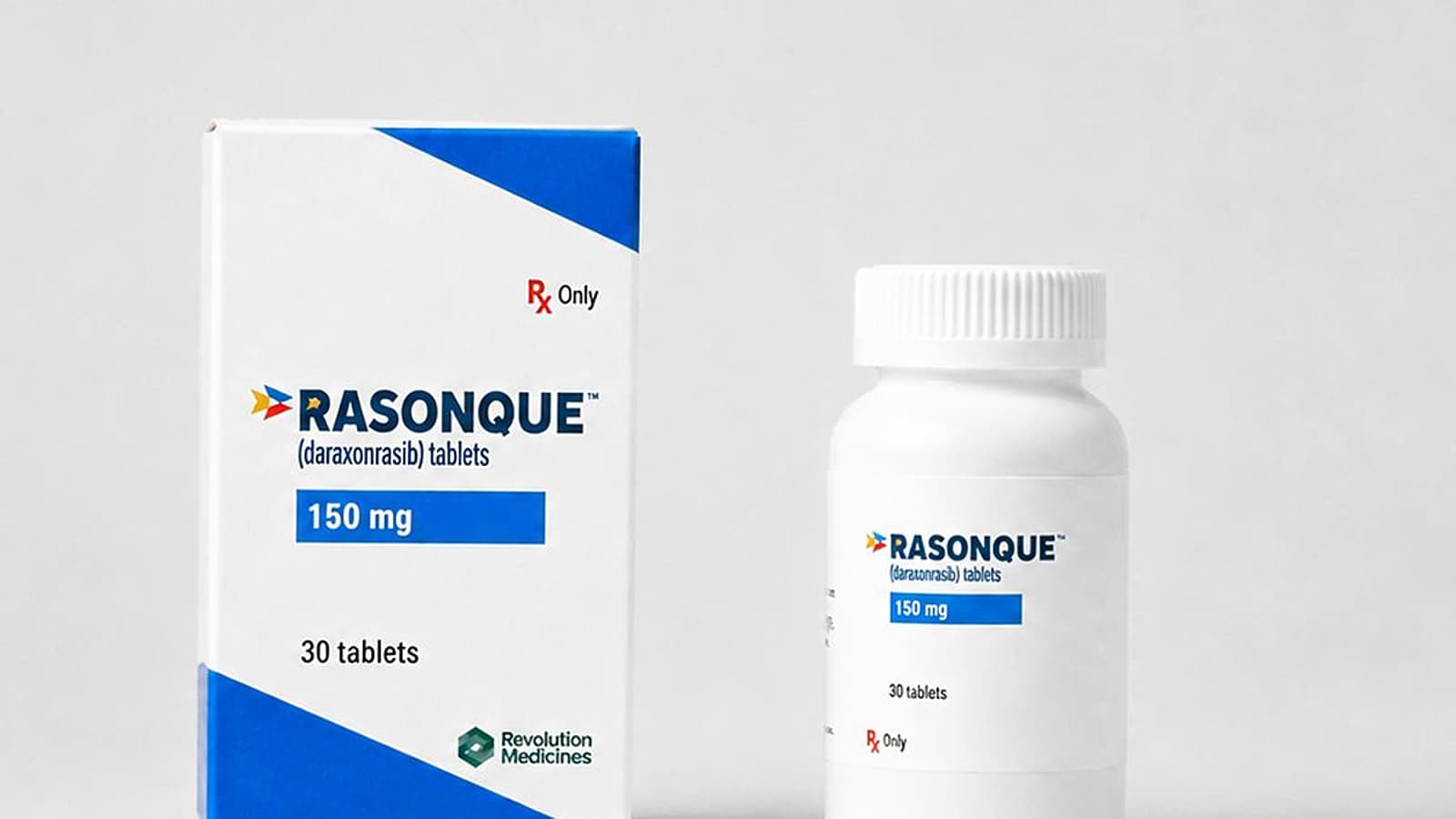
The drug, daraxonrasib, will be sold in the United States under the brand name Rasonque by Revolution Medicines. The once-daily tablet is approved for adults with metastatic pancreatic adenocarcinoma who have received at least one prior systemic treatment or who are not candidates for combination systemic therapy.
The FDA's decision on Wednesday, Aug. 26, marks a significant advance against pancreatic cancer, one of the deadliest major cancers and one that has proved particularly difficult to treat because it is frequently diagnosed after it has already spread.
In the Phase 3 RASolute 302 trial, involving 500 patients with previously treated metastatic pancreatic adenocarcinoma, those receiving daraxonrasib had a median overall survival of 13.2 months, compared with 6.7 months for patients receiving the physician's choice of standard chemotherapy. The drug reduced the risk of death by about 60% in the trial.
The results were published in the New England Journal of Medicine in May and had already generated considerable interest among pancreatic cancer specialists before the FDA approval.
A new way to attack pancreatic cancer
Daraxonrasib works by targeting the RAS family of proteins, which play a central role in signaling cells to grow and divide.
Mutations involving the RAS pathway are found in more than 90% of pancreatic cancers. For decades, researchers struggled to develop drugs capable of effectively targeting the mutated proteins because of their molecular structure.
That difficulty led researchers to describe RAS as an “undruggable” cancer target.
Rasonque is designed to bind to multiple forms of active RAS and disrupt the signals that drive tumor growth. The drug uses a mechanism described as a molecular-glue approach to interfere with RAS signaling.
The FDA described Rasonque as a RAS inhibitor targeting a key driver of tumor growth in most pancreatic adenocarcinomas.
What the trial found
The FDA's approval was based on the randomized, open-label, multicenter RASolute 302 trial.
The 500 participants were randomly assigned to receive either daraxonrasib or one of several standard chemotherapy regimens selected by their physicians. All had metastatic pancreatic adenocarcinoma that had progressed after one previous line of systemic therapy.
The results showed improvements across the trial's major efficacy measures.
Measure
Rasonque
Standard chemotherapy
Median overall survival
13.2 months
6.7 months
Median progression-free survival
7.2 months
3.6 months
Objective response rate
30%
11%
Risk of death
60% lower
—
The FDA reported that the differences in overall survival, progression-free survival and objective response rate were statistically significant.
The survival result is particularly notable because patients in the trial had already received treatment and had metastatic disease.
Doctors call the results a major advance
The approval has been welcomed by cancer specialists who have described the drug as a potentially important shift in pancreatic cancer treatment.
Dr. Andrew Coveler of the Fred Hutch Cancer Center told The Associated Press that the approval was among the most anticipated he could recall, while stressing that the drug is not a cure.
“This medicine is not a cure but a significant improvement.”
Dr. Pashtoon Kasi of City of Hope Orange County said the breakthrough could extend beyond pancreatic cancer as researchers explore similar approaches against RAS-driven tumors elsewhere.
“I think this has opened doors for many other companies,” Kasi told AP.
STAT quoted Dr. Andrew Ko, a gastrointestinal cancer specialist at the University of California, San Francisco, calling the development potentially transformative.
“It’s the biggest development we’ve had in pancreas cancer in decades,” Ko said.
FDA accelerated the approval
The FDA approved Rasonque approximately 6.5 months ahead of its target date.
The drug received Breakthrough Therapy and Orphan Drug designations and was granted Priority Review. Its application was also reviewed through the FDA Commissioner's National Priority Voucher pilot program, designed to accelerate review of treatments addressing major public-health priorities.
FDA Acting Commissioner Kyle Diamantas described the approval as an effort to make meaningful treatments available to patients more quickly.
“It is our fundamental duty to deliver more cures and meaningful treatments to patients as quickly as possible,” Diamantas said.
Angelo de Claro, director of the FDA's Oncology Center of Excellence, said the drug had produced unusually strong results in an area where patients have historically had limited options.
“This drug showed unprecedented results in an area of high unmet need,” de Claro said.
The drug is a daily pill
Unlike many existing chemotherapy regimens, Rasonque is an oral tablet taken once a day.
The FDA-approved dose is 300 milligrams once daily, continued until the disease progresses or side effects become unacceptable.
The oral format could also make treatment less burdensome for some patients compared with intravenous chemotherapy, although doctors will determine whether the drug is appropriate for individual patients based on their disease and treatment history.
Side effects remain a concern
The drug's benefits do not mean treatment is free of significant side effects.
The FDA lists rash, diarrhea, inflammation and sores of the mouth, nausea, fatigue, vomiting, abdominal pain, swelling, decreased appetite and hemorrhage among the most common side effects.
The prescribing information also contains warnings involving serious skin and soft-tissue reactions, gastrointestinal complications, interstitial lung disease or pneumonitis, and embryo-fetal toxicity.
In the RASolute 302 trial, treatment-related side effects that led to treatment discontinuation occurred less frequently among patients receiving daraxonrasib than among those receiving chemotherapy, according to post-approval reporting.
Doctors therefore emphasize that the drug's risks and benefits need to be assessed for each patient.
Ben Sasse helped bring attention to the drug
The drug gained public attention earlier this year after former U.S. Sen. Ben Sasse, who was diagnosed with stage 4 pancreatic cancer, publicly discussed his experience receiving daraxonrasib through a clinical trial.
Sasse said the treatment had substantially reduced his pain and reported a 76% reduction in tumor volume over four months. He previously described the drug as a “miracle drug” in an interview with CBS' 60 Minutes.
His experience helped draw public attention to the experimental treatment and contributed to wider discussion of expanded access for patients who could not wait for full regulatory approval.
The FDA subsequently allowed an expanded-access protocol before the drug's formal approval, permitting eligible patients to receive the investigational treatment outside clinical trials.
Sasse's individual response, however, should not be interpreted as evidence that every patient will experience a similar reduction in tumor size.
How deadly is pancreatic cancer?
Pancreatic cancer is particularly difficult to treat because it often produces few obvious symptoms in its early stages.
By the time many patients are diagnosed, the cancer has already spread to other organs, limiting the possibility of surgery and reducing treatment options.
The American Cancer Society estimates that roughly 67,000 people in the United States will be diagnosed with pancreatic cancer in 2026, while more than 52,000 are expected to die from it. AP reports an overall five-year survival rate of about 13%.
According to the FDA, about 90% to 95% of pancreatic cancer cases diagnosed in the United States are pancreatic adenocarcinoma, the cancer type for which Rasonque has been approved.
What the approval does — and does not — mean
The FDA approval does not mean Rasonque can treat every pancreatic cancer patient.
The approved indication is specifically for adults with metastatic pancreatic adenocarcinoma who have received at least one prior systemic therapy or who are not candidates for multiagent systemic therapy.
It also does not establish that the drug cures pancreatic cancer.
Instead, the evidence shows that, in the specific patient population studied, Rasonque substantially extended median survival compared with standard chemotherapy and delayed disease progression.
That distinction is important because survival outcomes in a clinical trial represent averages across a group of patients and cannot predict exactly how long an individual patient will live.
The price could become another issue
Revolution Medicines has set the wholesale acquisition cost of Rasonque at approximately $39,800 for a 30-day supply at the recommended dose.
The figure is the company's wholesale acquisition cost and is not necessarily what every patient will pay after insurance coverage, discounts or assistance programs.
The high list price could make access and insurance coverage an important part of the drug's rollout, particularly as physicians begin deciding which eligible patients are most likely to benefit.
A possible opening for a new generation of cancer drugs
The significance of Rasonque extends beyond pancreatic cancer.
Researchers have spent decades trying to target RAS proteins because mutations in the pathway drive many cancers. The successful development of daraxonrasib could encourage further research into drugs using similar strategies against other RAS-driven tumors.
Revolution Medicines is already studying its RAS-targeting technology in other cancers, including lung cancer.
The approval therefore represents both a new treatment option for a specific group of pancreatic cancer patients and a proof of concept for targeting a biological pathway that researchers once considered extremely difficult to drug.
For patients with metastatic pancreatic cancer who have already exhausted or cannot tolerate conventional treatment options, the approval provides a new possibility — but one that still requires careful medical assessment.
(Rasonque is not a cure for pancreatic cancer. But its approval marks a substantial change in what doctors can offer some patients with advanced disease, after decades in which RAS was considered one of cancer biology's hardest targets to treat.)