


Air-conditioned comfort may be masking silent dehydration, as doctors warn of rising kidney stone risk even among those staying indoors.
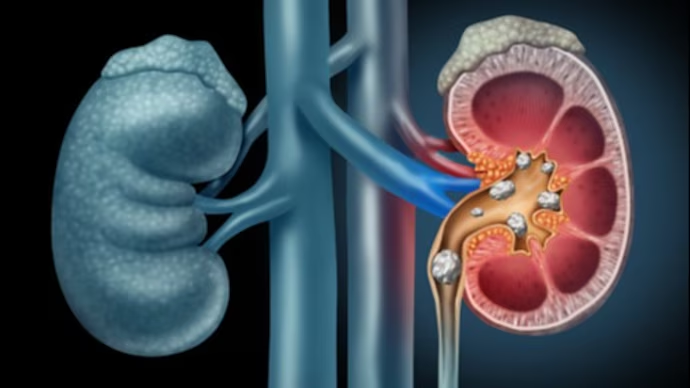
As temperatures climb across India in yet another punishing summer, doctors are raising alarm over a less visible but fast-growing health risk: kidney stones. Once linked largely to outdoor labor and visible dehydration, the condition is now increasingly affecting people who spend most of their time inside air-conditioned homes and offices — challenging long-held assumptions about who is truly at risk.
India already records more than one million new kidney stone cases every year, with an estimated prevalence of 12%. While the northern region — often called the “stone belt”— has historically seen the highest burden, successive years of extreme heat are expanding the risk far beyond traditional boundaries.

The belief that staying indoors offers protection is proving misleading. Air-conditioned spaces may feel cool and comfortable, but they come with a hidden cost. By reducing humidity, these environments increase what doctors describe as “insensible fluid loss”— a gradual loss of water that occurs without noticeable sweating.
“You may not feel thirsty, and you may not sweat visibly, but your body is still losing fluids,” said Dr Deepak Ragoori, senior urologist at the Asian Institute of Nephrology and Urology in Hyderabad.
Over long workdays, many people turn to tea, coffee or sugary drinks instead of water. The result is a quiet but steady slide into dehydration. By the time thirst is felt, the body is often already running low on fluids.
This silent dehydration is emerging as a major trigger behind the seasonal spike in kidney stones. As fluid levels drop, urine becomes more concentrated, allowing minerals such as calcium, oxalate and uric acid to crystallize more easily. What would typically remain dissolved can begin forming solid deposits — sometimes within days.
Doctors say the science is simple, but frequently overlooked. In hot weather, the body loses large amounts of water through sweat. If that loss is not replaced, urine volume falls. The lower the volume, the higher the concentration of stone-forming substances.
Dr Anurag Khaitan, head urologist at Paras Health in Gurugram, explained that dehydration “reduces urine volume, making it more concentrated and allowing minerals to crystallize and form stones.”
Lifestyle habits are compounding the risk. Many people replace water with aerated drinks or packaged juices during summer—choices that can worsen dehydration rather than relieve it.
Cultural habits also play a role. In many households, salted buttermilk is a staple summer drink, valued for replenishing electrolytes. While beneficial in moderation, excess salt increases calcium excretion in urine, inadvertently encouraging stone formation.
Dietary patterns can further tilt the balance. Foods rich in oxalates — such as spinach, beets, nuts, chocolate and soy products — are healthy but can contribute to stone formation if consumed excessively without adequate hydration. Experts advise moderation, along with pairing such foods with calcium-rich items to reduce absorption of oxalates in the kidneys.
For those who have previously suffered from kidney stones, the risk is even higher. Underlying metabolic factors — such as elevated urinary calcium or low citrate levels — make recurrence more likely. “Even a short period of inadequate hydration in summer can tip the balance,” Dr Ragoori said.
The problem is often worsened by increased physical activity during the season. Travel, sports and outdoor exercise all add to fluid loss, and without deliberate rehydration, the body struggles to maintain the balance needed to prevent crystallization.
Despite the rising numbers, doctors stress that prevention is neither complex nor costly—it demands consistency and awareness.
The single most important step is maintaining adequate fluid intake. “The goal should be to maintain a urine output of at least 2–2.5 litres per day,” Dr Ragoori said, noting that this usually requires drinking significantly more water during hot weather.
Dr Khaitan recommends consuming 2.5 to 3 litres of fluids daily, or more for those who sweat heavily.
Hydration need not rely on water alone. Coconut water and lemon water can help dilute urine while offering some electrolyte balance. At the same time, experts advise limiting excess salt, sugary beverages and processed drinks, all of which can disrupt the body’s urinary chemistry.
Dietary adjustments also matter — but not in the way many assume. Doctors caution against cutting out calcium entirely, noting that balanced intake can actually help prevent stones. Instead, moderation across food groups remains key.
For individuals with a history of kidney stones, vigilance is critical. Regular check-ups and closer monitoring during the summer months can help catch early warning signs—before discomfort turns into a medical emergency.

Critical Security Flaws Prompt Emergency Action
.png&w=256&q=75)
Four Members Warn of Broadening Price Pressures
Section 17A of Prevention of Corruption Act Does Not Cover Every Act of Public Servants

Hamas Rejects Disarmament, US and Israel Consider Iran Strikes

Compromised Cryptographic Keys Trigger Global Cybersecurity Concerns
.jpg&w=256&q=75)
Egypt insists international schools include Arabic, history in final scores

China’s Chery unveils AI companion robot designed to ease loneliness
.jpg&w=256&q=75)
New Zealand reforms could leave more students without school qualifications

Alfred Nobel’s will created one of the world’s most recognised prizes. Here’s how

Pepperdine University earns Google recognition and Digital Education Council membership for AI initiatives

Critical Security Flaws Prompt Emergency Action
Four Members Warn of Broadening Price Pressures
Section 17A of Prevention of Corruption Act Does Not Cover Every Act of Public Servants
Hamas Rejects Disarmament, US and Israel Consider Iran Strikes
Compromised Cryptographic Keys Trigger Global Cybersecurity Concerns
Egypt insists international schools include Arabic, history in final scores
China’s Chery unveils AI companion robot designed to ease loneliness
New Zealand reforms could leave more students without school qualifications
Alfred Nobel’s will created one of the world’s most recognised prizes. Here’s how
Pepperdine University earns Google recognition and Digital Education Council membership for AI initiatives
Copyright© educationpost.in 2026 All Rights Reserved.