


Russia plans to introduce AI modules across all university degree programmes from 2027, joining a wider global shift to integrate artificial intelligence into education. The move reflects growing efforts to prepare students for AI-driven workplaces, with countries also expanding AI education in schools.
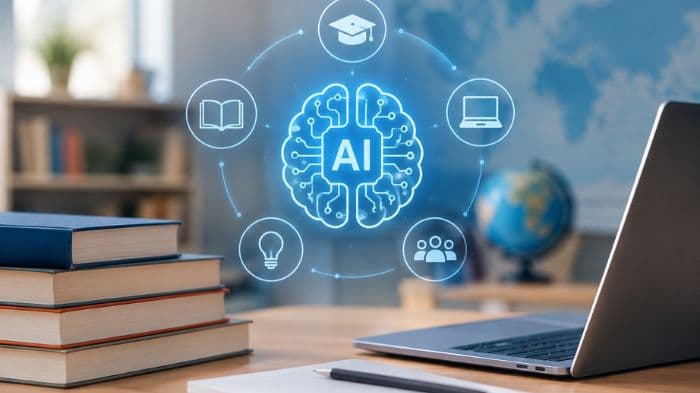
Russia will introduce compulsory artificial intelligence (AI) modules across all university educational programmes from 2027, adding to a wider international debate over how education systems should prepare students for a workforce increasingly shaped by AI.
Russian Science and Higher Education Minister Valery Falkov announced the plan on Oct 14, saying the modules would include foundational AI instruction for first-year students and specialised training tailored to their future professions. The curriculum is being developed with Russia’s AI Alliance, according to Interfax.

The move comes as universities worldwide grapple with a central question: should AI be taught as a specialised technical subject, or should every student learn how to use and evaluate the technology, regardless of their degree?
Russia’s approach favours the latter. By incorporating AI instruction into every university programme, the government intends to extend AI education beyond students pursuing computing and engineering degrees.
Russia warns against dependence on AI
Falkov said AI tools could help students complete assignments faster and obtain better grades in the short term, but warned that these immediate gains might not translate into deeper learning.
He cautioned that students who rely on AI without learning to use it appropriately could struggle to solve problems independently. Over time, he said, uncritical dependence on the technology could weaken critical-thinking skills.
The proposed curriculum therefore has two components: a basic module for first-year students and a specialised module linked to their chosen professions, expected to be taught in the second or third year depending on the programme.
Russia already has approximately 1,500 AI-related programmes at its universities, Falkov said. The planned rollout would make AI instruction a component of every university educational programme rather than restricting it to dedicated AI courses.
China and UAE bring AI education into schools
Russia’s plan follows moves by China and the United Arab Emirates to introduce AI education at school level.
According to Stanford University’s 2026 AI Index, China and the UAE mandated AI education for the 2025–26 school year. In China, the requirements were introduced in Beijing, Guangdong and Hangzhou, with instruction progressing from foundational AI literacy to more advanced concepts, including designing AI systems.
The UAE has also mandated AI education across all school grades from the 2025–26 academic year. Its curriculum covers foundational concepts, data, algorithms, software applications, innovation, project design and ethical awareness.
These initiatives show that AI education is moving beyond optional technology lessons in some education systems. However, the approaches differ: China and the UAE have introduced school-level requirements, while Russia's announced measure targets university programmes.
The distinction matters because familiarity with AI tools does not necessarily mean students understand how they work, where they can fail or how to assess the reliability of their outputs.
Universities face a curriculum challenge
Higher education institutions in other countries are also exploring ways to incorporate AI into teaching, research and professional training. Some are embedding AI literacy across disciplines, while others are developing specialised courses and institutional policies governing its use.
A Financial Times report on universities' AI strategies highlighted efforts to integrate AI education into subjects ranging from medicine to broader undergraduate programmes. It also noted challenges involving staff training, costs, ethical concerns and unequal access to technology.
These issues complicate the push to make AI education universal. Universities must decide not only which tools students should learn to use, but also how to teach them to verify AI-generated information, protect data and retain responsibility for their own academic work.
UNESCO's guidance on generative AI in education and research similarly advocates a human-centred approach, emphasising human agency, privacy, ethical use and the need to assess AI systems for their educational suitability.
The challenge is particularly significant for students in non-technical disciplines. Future doctors, journalists, lawyers, economists and teachers may all encounter AI in their professional lives, but the knowledge needed to use it responsibly will vary by field.
The question is how to teach AI, not just whether to teach it
The emerging policy direction points towards a distinction between using AI and understanding it. Students may already use generative AI for research, brainstorming and editing, but formal education must address the limitations of these tools as well as their practical applications.
For universities, this means balancing technical competence with subject knowledge, independent reasoning and the ability to challenge inaccurate or misleading outputs.
Russia's 2027 plan offers one model by combining foundational instruction with profession-specific training. China and the UAE have taken steps to introduce AI education earlier, at school level, while other institutions are experimenting with different ways to integrate the technology into existing courses.
Whether these approaches improve learning will depend on curriculum design, teacher preparation, access to appropriate tools and how students are assessed. Making AI education compulsory may ensure wider exposure to the technology, but it will not automatically guarantee that students develop the judgement needed to use it well.
As AI becomes more deeply embedded in education and employment, the broader task for universities is to prepare students not merely to work with the technology, but to understand when to trust it, when to question it and when to solve a problem without it.

Germany’s Student of the Year 2027: Nominations open for €5,000 award

UP Scholarship 2026-27: Renewal Deadline October 15, Fresh Applications Open Till October 31; Check Eligibility

MIT Bengaluru Launches Quantum Hub to Advance Quantum Computing Research in India
Italy’s education minister responds to student housing protests, cites 73,223 additional beds

upGrad and MICA Digital Marketing Programme Reaches 100 Cohorts, Trains Over 21,000 Marketers

ICFAI Hyderabad, Sheffield Hallam University sign MoU to strengthen research and academic collaboration

Hindu College protest puts governance, financial transparency and Delhi University's oversight under scrutiny

Ambedkar University Delhi protest: Attendance rules, campus restrictions and suspensions deepen standoff

NEET-UG 2026 paper leak: CBI files supplementary chargesheet against 14th accused

UK visa crackdown drives student withdrawals, putting universities at financial risk

Germany’s Student of the Year 2027: Nominations open for €5,000 award
UP Scholarship 2026-27: Renewal Deadline October 15, Fresh Applications Open Till October 31; Check Eligibility
MIT Bengaluru Launches Quantum Hub to Advance Quantum Computing Research in India
Italy’s education minister responds to student housing protests, cites 73,223 additional beds
upGrad and MICA Digital Marketing Programme Reaches 100 Cohorts, Trains Over 21,000 Marketers
ICFAI Hyderabad, Sheffield Hallam University sign MoU to strengthen research and academic collaboration
Hindu College protest puts governance, financial transparency and Delhi University's oversight under scrutiny
Ambedkar University Delhi protest: Attendance rules, campus restrictions and suspensions deepen standoff
NEET-UG 2026 paper leak: CBI files supplementary chargesheet against 14th accused
UK visa crackdown drives student withdrawals, putting universities at financial risk
Copyright© educationpost.in 2026 All Rights Reserved.