


The two-day meeting will bring together policymakers, academics and university representatives to discuss the future of higher education in the region, including research cooperation, student wellbeing and skills for the workforce beyond 2030.
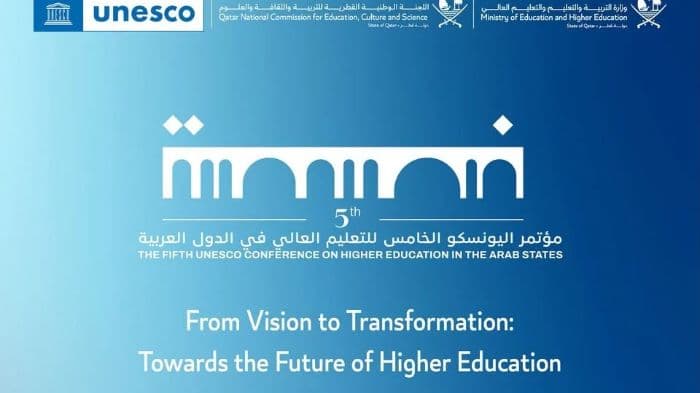
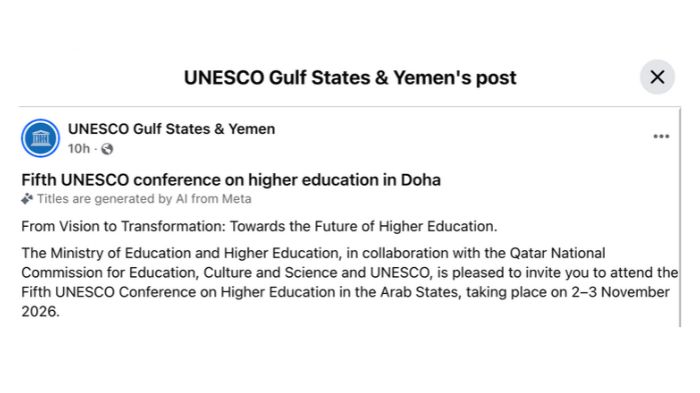
Doha is hosting the fifth UNESCO Conference on Higher Education in the Arab States on Nov 2 and 3, bringing together academics, policymakers and representatives of universities and international organisations to discuss changes shaping higher education across the region.
Held under the theme The New Learning Landscape in Higher Education in the Arab Region, the conference is being organised by Qatar's Ministry of Education and Higher Education, UNESCO and the Qatar National Commission for Education, Culture and Science.

The meeting will examine how universities in Arab countries can respond to developments in artificial intelligence (AI), digital technologies and scientific research, while improving the quality and accessibility of higher education. Discussions will also look at the sector's priorities beyond 2030.
Recognition of qualifications and regional cooperation on agenda
One of the key areas of discussion will be the recognition of academic qualifications across Arab countries. The conference will examine ways to strengthen regional cooperation, academic mobility and trust in degrees and diplomas awarded by institutions in the region.
The discussions will also consider the Arab States Convention on the Recognition of Studies, Diplomas and Degrees in Higher Education, which provides a framework for cooperation on the recognition of academic qualifications.
Responsible use of AI in universities
Digital transformation and the use of AI in higher education will form another major part of the conference agenda. Participants will discuss the responsible and ethical use of AI in teaching, learning, research and university administration, along with the need to develop digital competencies and maintain educational quality and inclusion.
The programme will also address higher education and scientific research, including how research partnerships and evidence-based policies can support innovation and sustainable development.
Student wellbeing and future workforce
The second day of the conference will include discussions on student wellbeing and resilience, as well as the skills required for future employment. Participants will examine institutional support systems that can help students manage academic pressures and continue their education during periods of crisis.
Other discussions will focus on entrepreneurship, innovation, lifelong learning and closer links between universities and labour market requirements. The programme will also consider academic freedom and the changing needs of higher education teaching staff.
UNESCO to launch Arabic edition of higher education roadmap
A key event on Nov 2 is the launch of the Arabic edition of UNESCO's roadmap, Transforming Higher Education: Global Collaboration on Visioning and Action. The session will examine how the roadmap's recommendations can inform higher education policies and institutional action across Arab countries.
A university exhibition will also allow participating institutions to present their academic programmes and research and innovation initiatives. The programme includes visits to Qatar University, the University of Doha for Science and Technology, and Qatar Science and Technology Park.

Can Six Years of MBBS Abroad Still Leave Indian Students Unable to Practise in India?

What kind of future are schools preparing children for? Singapore educators explore question
1 in 5 Indian Children Live in Poverty; Poverty Rate Highest at 21.3% Among Adults Without Education: World Bank

Gujarat Makes Mental Health Support and Counsellors Mandatory in Schools to Prevent Student Suicides
Chennai, Tiruvallur Schools Closed Today, November 2, Due to Cyclone Murasu; Check Rain Alert and Holiday Details
Can Six Years of MBBS Abroad Still Leave Indian Students Unable to Practise in India?
What kind of future are schools preparing children for? Singapore educators explore question

Two universities, two countries, one academic bridge: China and Egypt launch joint faculty
Missed CLAT 2027 registration? Consortium extends application deadline for law aspirants
Who sets, secures and conducts exams? Centre considers separating responsibilities to prevent leaks

Can Six Years of MBBS Abroad Still Leave Indian Students Unable to Practise in India?
What kind of future are schools preparing children for? Singapore educators explore question
1 in 5 Indian Children Live in Poverty; Poverty Rate Highest at 21.3% Among Adults Without Education: World Bank
Gujarat Makes Mental Health Support and Counsellors Mandatory in Schools to Prevent Student Suicides
Chennai, Tiruvallur Schools Closed Today, November 2, Due to Cyclone Murasu; Check Rain Alert and Holiday Details
Can Six Years of MBBS Abroad Still Leave Indian Students Unable to Practise in India?
What kind of future are schools preparing children for? Singapore educators explore question
Two universities, two countries, one academic bridge: China and Egypt launch joint faculty
Missed CLAT 2027 registration? Consortium extends application deadline for law aspirants
Who sets, secures and conducts exams? Centre considers separating responsibilities to prevent leaks
Copyright© educationpost.in 2026 All Rights Reserved.