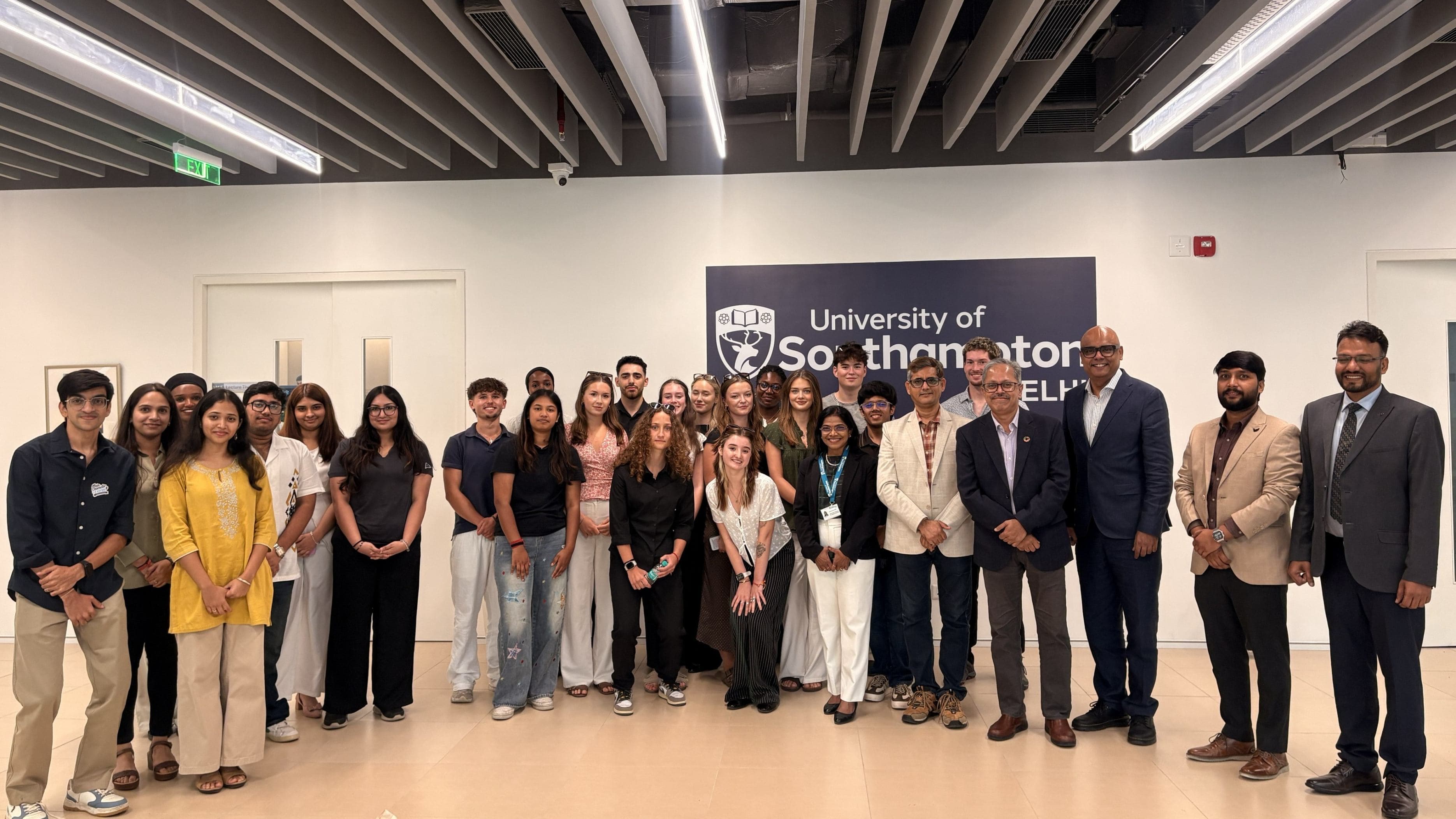
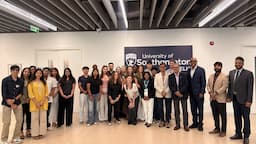
The University of Southampton Delhi hosted students from the University of Southampton, UK, for a 10-day India Experiential Learning Programme (IELP-26), where participants worked on socio-environmental and civic challenges through interdisciplinary projects.
The program, developed and implemented by the University of Southampton India Centre in the UK, brought together 33 participants, including 18 students from the University of Southampton, 11 students from the University of Southampton Delhi and four research scholars from Jawaharlal Nehru University (JNU) and the University of Delhi (DU).

IELP-26 is designed as a UK-India student mobility programme that combines classroom learning with field-based and experiential education. Participants collaborated on issues relevant to local communities while interacting with policymakers, public institutions, practitioners and other stakeholders.
The University of Southampton students came from a wide range of academic backgrounds, including geography, medicine, law, computer science, biology, psychology, fashion marketing management, chemical engineering, accounting and finance, business management, criminology and philosophy.
The interdisciplinary composition of the group allowed students to bring different academic perspectives to the challenges explored during the programme.
The four project themes focused on clean air and environmental sustainability, river rejuvenation and water conservation, sustainable tourism, and constitutional values and civic participation.
At University of Southampton Delhi, the students presented projects developed during a five-week virtual internship.
The presentations highlighted approaches aimed at developing solutions suited to local contexts and involving communities in addressing socio-environmental and civic concerns.
The project themes were identified in consultation with stakeholders from government and non-government organizations. This enabled the student teams to examine issues of national and community relevance while incorporating interdisciplinary research and locally informed perspectives.
One of the projects, titled Promoting Clean Air in Delhi NCR: Adapting Global Best Practices for Context-Specific Solutions, examined air-quality concerns in the Delhi NCR region. The team explored how approaches used in other parts of the world could be adapted to address local environmental conditions.
Another project, Reviving the Yamuna: Community-Led Behavioural Solutions for a Living River, focused on the role of community participation and behavioral change in supporting the rejuvenation, conservation and long-term sustainability of the Yamuna.
The third project, Responsible Tourism in Uttarakhand: Behavioural Solutions for Sustainable Eco-Tourism in Haridwar and Rishikesh, examined ways to encourage responsible tourism in two major destinations in Uttarakhand.
The project looked at how behavioral interventions could contribute to more sustainable tourism practices.
The fourth project, Community-Led Civic Transformation: Sustaining and Scaling the ChandraJyoti Abhiyan for Wider Social Impact, explored ways to sustain and expand community-led civic initiatives. The project examined how such efforts could encourage greater civic participation and create broader social impact.
Speaking about the program, Professor Eloise Phillips, Academic Provost, University of Southampton Delhi, said, “IELP provides students with an opportunity to take learning beyond the classroom and engage with real-world challenges through cross-cultural and interdisciplinary collaboration. By bringing together students from the UK and India, the programme strengthens global perspectives while creating meaningful shared learning experiences.”
The program gave students from different disciplines and institutions an opportunity to apply research, analytical and problem-solving skills to practical challenges.
Through the collaboration, participants also gained exposure to different perspectives on environmental, social and civic issues affecting communities in India.