


The five-day initiative under Samagra Shiksha focused on NEP 2020, digital education, child-centric learning and updated curriculum frameworks to strengthen teaching practices.
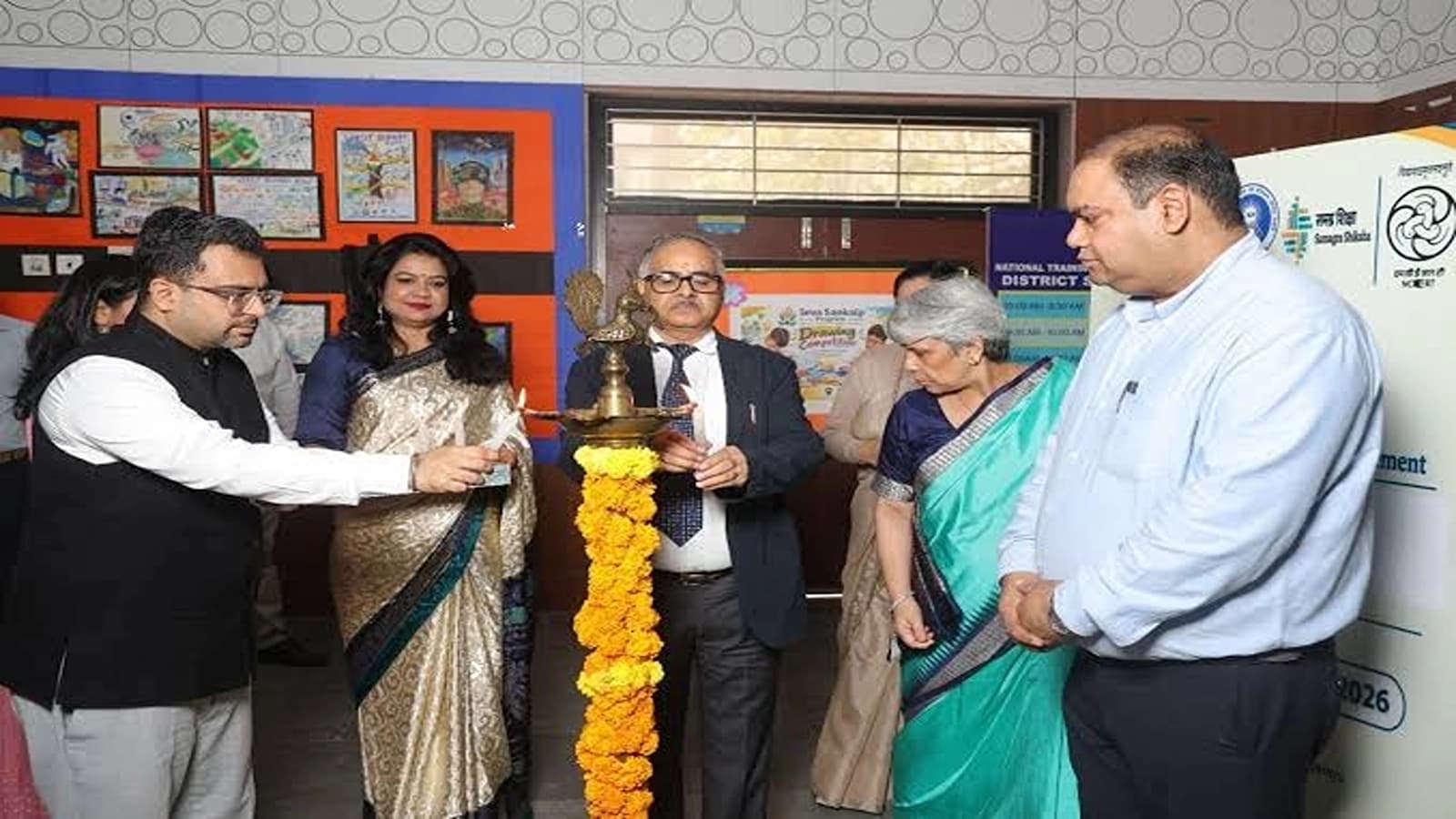
The National Council of Educational Research and Training (NCERT), in collaboration with the State Council of Educational Research and Training (SCERT), Delhi, has conducted a five-day capacity-building programme for teachers and school heads under the Reimagined NISHTHA initiative.The programme was held from November 2 to 6, 2026, at Shaheed Hemu Kalani Sarvodaya Bal Vidyalaya in Lajpat Nagar, New Delhi. Organised under the Samagra Shiksha scheme, the initiative focused on strengthening teaching and school leadership across the foundational, preparatory and middle stages of education.
The training programme aimed to improve educators' understanding of the National Education Policy (NEP) 2020, National Curriculum Frameworks (NCFs) and newly developed textbooks. It also sought to support the effective implementation of education reforms through improved classroom practices.

The five-day programme addressed several important aspects of school education and teacher development. The major areas covered during the sessions included:
NEP 2020 and NCFs: Understanding the objectives of the National Education Policy and updated curriculum frameworks.
School leadership: Strengthening school culture, institutional leadership and management practices.
Digital education: Exploring the role of technology and digital resources in teaching and learning.
Child-centric learning: Promoting student-focused teaching approaches.
Inclusive education: Addressing diversity, inclusion and student well-being.
Teaching methodologies: Understanding stage-specific and subject-specific pedagogical approaches.
Assessment practices: Improving student evaluation methods and the use of the Holistic Progress Card (HPC).
Apart from classroom-focused discussions, participants took part in group activities, presentations and collaborative exercises. They also prepared classroom action plans to translate the training concepts into practical teaching strategies.
The programme was inaugurated by NCERT Director Professor Dinesh Prasad Saklani, who attended the event as the chief guest. Jatin Goel, Director of SCERT Delhi, was also present during the inaugural session.The participation of senior education officials highlighted the importance of strengthening teachers' professional development and improving the quality of school education.
The programme concluded with a valedictory session chaired by Sridhar Srivastava, Dean (Coordination) at NCERT. Addressing participants, he stressed the need to continue the initiative in mission mode to ensure that the objectives of NEP 2020 are effectively implemented in schools.During the closing session, Anand Arya and representatives from different curricular groups shared their experiences and observations from the training.
Suniti Sanwal presented the programme's concluding report, while Sukhvinder discussed the future roadmap for NISHTHA. A post-training survey was also conducted to gather participants' feedback.The programme ended with a renewed commitment to incorporating the principles of NEP 2020 into everyday classroom teaching and learning practices.
NISHTHA stands for the National Initiative for School Heads' and Teachers' Holistic Advancement. It is a teacher-training initiative designed to strengthen the professional capabilities of teachers and school leaders and improve learning outcomes.
The programme is aligned with NEP 2020 and focuses on continuous professional development through different training modules. NCERT's guidelines also highlight the importance of at least 50 hours of continuous professional development opportunities annually for teachers and head teachers.

Karnataka plans English-medium sections in all govt schools while retaining Kannada classes

Australian universities oppose proposed expansion of higher education regulator's powers
Odisha Schools Reopen After 23 Days in Flood-Hit Ganjam; Six Government Schools Remain Closed
India-US Plan Joint Crackdown on Global Drug Cartels: Synthetic Drugs and Chemical Supply Chains in Focus
NCERT, SCERT Organise 5-Day NISHTHA Training Programme for Teachers and School Heads
Karnataka plans English-medium sections in all govt schools while retaining Kannada classes
India-US Plan Joint Crackdown on Global Drug Cartels: Synthetic Drugs and Chemical Supply Chains in Focus

Facing risk of losing ancient knowledge, China establishes rare disciplines school

From smart classrooms to surveillance concerns: Why China's Nanjing University rolled back AI feature

Screen time concerns shape Japan's digital textbook policy, printed books to remain primary

Karnataka plans English-medium sections in all govt schools while retaining Kannada classes
Australian universities oppose proposed expansion of higher education regulator's powers
Odisha Schools Reopen After 23 Days in Flood-Hit Ganjam; Six Government Schools Remain Closed
India-US Plan Joint Crackdown on Global Drug Cartels: Synthetic Drugs and Chemical Supply Chains in Focus
NCERT, SCERT Organise 5-Day NISHTHA Training Programme for Teachers and School Heads
Karnataka plans English-medium sections in all govt schools while retaining Kannada classes
India-US Plan Joint Crackdown on Global Drug Cartels: Synthetic Drugs and Chemical Supply Chains in Focus
Facing risk of losing ancient knowledge, China establishes rare disciplines school
From smart classrooms to surveillance concerns: Why China's Nanjing University rolled back AI feature
Screen time concerns shape Japan's digital textbook policy, printed books to remain primary
Copyright© educationpost.in 2026 All Rights Reserved.